Aug 05 , 2026
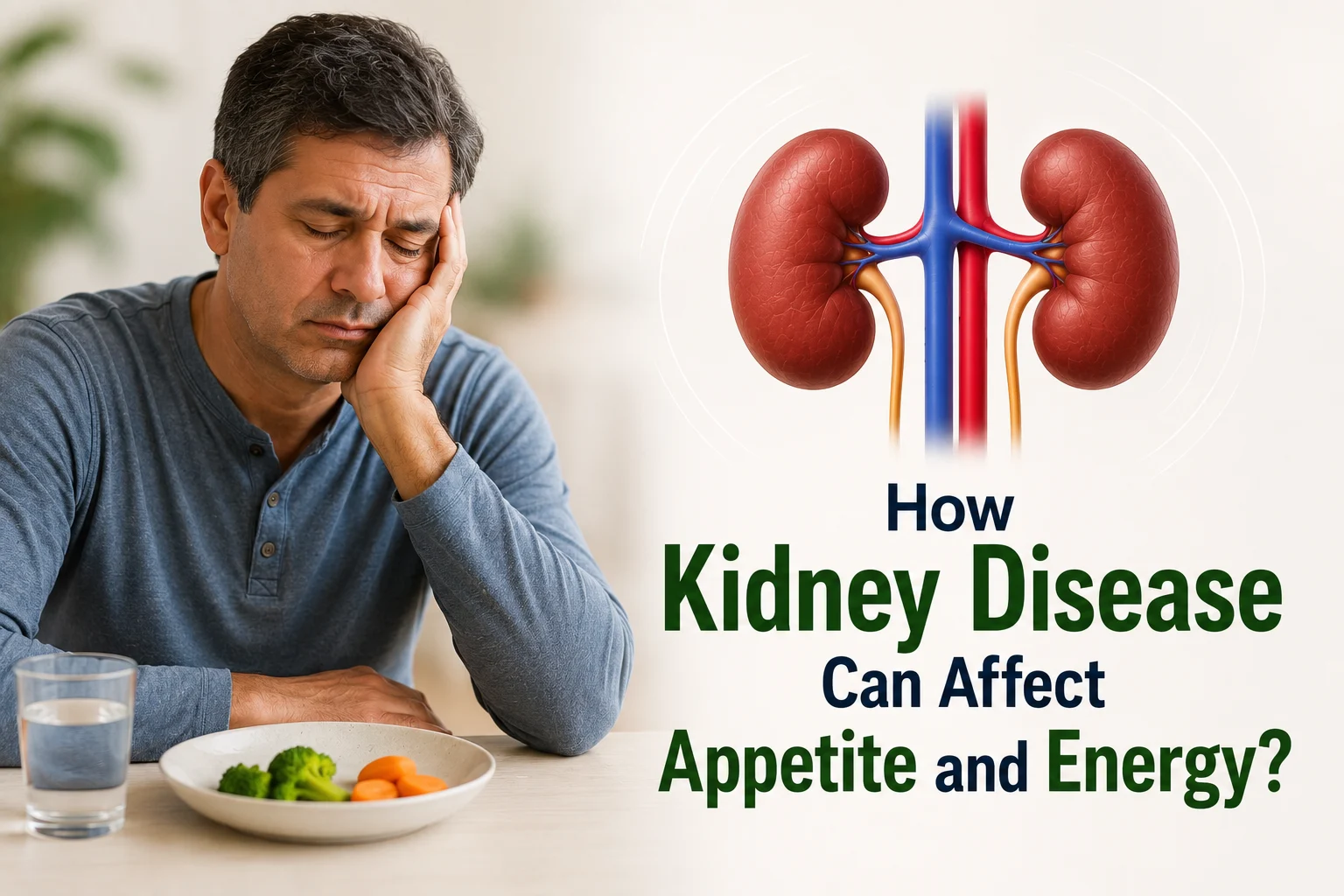
Losing your appetite and feeling wiped out all the time can absolutely be a sign of kidney disease; your kidneys are the body's cleanup crew, and when they slow down, toxins build up and mess with both your stomach and your energy tank. Stick with me, because once you understand why this happens, it stops feeling like a mystery and starts feeling like something you can actually manage.
When kidneys aren't filtering properly, waste products called uremic toxins start hanging around in the bloodstream longer than they should. Think of it like leaving dishes in the sink for a week; eventually the smell (and the mess) affects the whole kitchen. These toxins can genuinely alter taste, make food smell unappealing, and trigger nausea, which is a big reason appetite loss in kidney disease is so common. A review of appetite disorders in uremic patients found that anorexia gets more severe as kidney disease progresses, and it isn't just "in someone's head”; it’s tied to actual metabolic and hormonal changes in the body.
At the same time, the kidneys are responsible for producing erythropoietin, the hormone that tells your body to make red blood cells. Less kidney function often means less erythropoietin, which means fewer red blood cells, which means anemia; and anemia is basically a one-way ticket to feeling drained and heavy-limbed. A large US-based study published using NHANES data found anemia was roughly twice as common in people with chronic kidney disease compared to the general population, and it climbed sharply as kidney disease got more advanced. A separate cross-sectional study on dialysis patients found that fatigue affected just over half the group, and it was strongly linked to lower quality of life.
📞 Get a Kidney Health Consultation – Call Now!
If any of these sound familiar, it's worth mentioning to your doctor, since they can be an early sign of kidney disease:
Food suddenly tasting "off" or metallic
Feeling full after just a few bites
Nausea, especially in the morning
Unexplained tiredness that sleep doesn't fix
Muscle weakness or feeling winded doing normal tasks
Trouble concentrating (often called "brain fog")
None of these are exclusive to kidney problems, of course; but together, and especially if they stick around, they deserve a proper check-up rather than a shrug.
📞 Get a Kidney Health Consultation – Call Now!
|
Situation |
Healthy Kidneys Day |
Struggling Kidneys Day |
|
Breakfast |
Devours it like it's a competition |
Stares at toast like it personally offended them |
|
Afternoon energy |
Ready to run errands, maybe even the stairs |
Ready for a nap, possibly two |
|
Taste buds |
Coffee tastes like coffee |
Coffee tastes like regret |
|
Mood about food |
"What's for dinner?" |
"Please don't talk about dinner" |
|
Overall vibe |
Functioning adult |
Extremely tired houseplant |
📞 Get a Kidney Health Consultation – Call Now!
The good news: appetite and energy issues aren't something a kidney disease patient just has to silently accept. A few things genuinely make a difference:
Treating anemia, when present, often lifts that constant tiredness noticeably
Small, frequent meals instead of three big ones; easier on a fussy stomach
Working with a renal dietitian to adjust protein, sodium, and potassium without starving your appetite further
Staying on top of lab work so declining kidney function gets caught early
Gentle movement, like short walks, which paradoxically helps energy more than resting all day does
Good kidney care really is a team sport; nephrologists, dietitians, and the person living with it all working from the same playbook. And protecting renal health early, through blood pressure control, blood sugar management, and regular checkups, is still the best way to avoid getting to this point at all.
Loss of appetite and constant tiredness are worth paying attention to, not just brushing off as "a phase"
Uremic toxin buildup affects taste and appetite; reduced erythropoietin production drives anemia-related exhaustion
Studies show anemia and low energy are both significantly more common as kidney disease advances
Small dietary changes, anemia treatment, and light activity can meaningfully improve day-to-day energy
Don't ignore the "off" feeling; a simple blood test can catch a lot early
Not always; it can mean plenty of things, but if it's new and paired with constant tiredness, it's worth getting checked.
Mostly because of anemia and toxin buildup, which together drain your energy far more than a bad night's sleep ever could.
Yes; smaller, well-balanced meals and correcting nutrient deficiencies genuinely help many people feel more like themselves.
It helps a lot by clearing out toxins, though some people still deal with appetite dips and tiredness that need separate management.
If tiredness and appetite loss last more than a couple of weeks with no obvious cause, that's your cue to book an appointment.
Disclaimer: This blog is for general informational purposes only and isn't a substitute for professional medical advice, diagnosis, or treatment. Kidney disease symptoms vary widely from person to person, so please talk to a qualified healthcare provider about your specific situation before making any health decisions.