Sep 22 , 2026
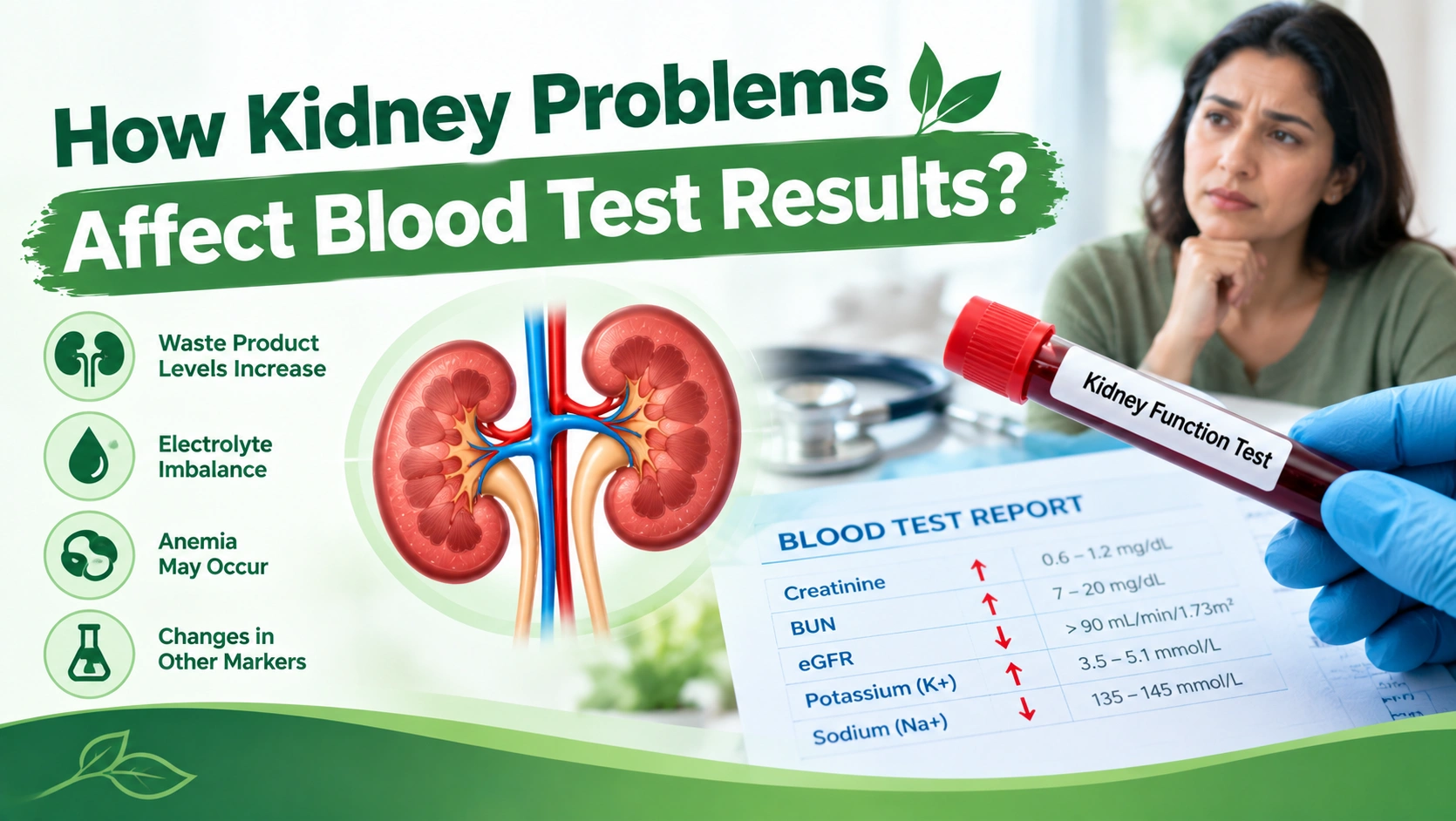
Short version: when your kidneys aren't filtering properly, waste products that should've been flushed out start hanging around in your blood instead, and that's exactly what a kidney test picks up. Your kidneys are kind of like that one friend who quietly cleans up after every party without anyone noticing. The moment they slack off, though, the mess is impossible to miss.
And honestly, most of us don't think about our kidneys until a lab report shows up with words like "creatinine" and "eGFR" and we're left staring at it like it's written in another language. So let's just talk about it like normal humans, no medical-textbook voice, promise.
People remember kidneys exist mostly when there's a joke about beer or when someone mentions a "kidney stone" horror story at a dinner party. Fair. But these two organs are doing a lot more than that in the background.
On a regular day, your kidneys are busy:
When everything's working, you genuinely don't feel a thing. That's actually the tricky part.
📩 Ask a Kidney Expert (Free 10-Min Consultation)
Here's the annoying bit about kidney trouble: it rarely knocks first. No dramatic symptom warning you months in advance. Often, the very first clue is a slightly odd number tucked into a routine kidney test, one you might've done for something totally unrelated.
A few numbers doctors keep coming back to:
KDIGO (Kidney Disease: Improving Global Outcomes), a body doctors globally rely on for guidelines, uses pretty much this exact combo: creatinine-based eGFR along with a urine protein check, to figure out how advanced a kidney issue actually is. It's the reference point behind how most kidney blood test results get interpreted.
This is usually where people end up frantically Googling at midnight, so let's just sit with it for a second.
|
Creatinine Level |
What's Going On |
Basically... |
|
0.6 – 1.2 mg/dL |
Typically within normal range |
Kidneys doing their thing, unbothered |
|
1.4 mg/dL |
A bit on the higher side |
Kidneys leaving a "we should talk" voicemail |
|
5.0 mg/dL or above |
Usually significant, advanced territory |
Kidneys have called in sick and aren't coming back soon |
For creatinine 1.4 treatment, the approach is usually not dramatic; think blood pressure control, some dietary adjustments, reviewing medications that might be adding strain, better hydration, and repeat testing to track the trend. It's more "catch it early and course-correct" than emergency mode.
Creatinine 5 treatment, though, is a different conversation entirely. By this point, kidney function has usually dropped quite a bit, and care tends to be more hands-on: closer monitoring of renal function, more frequent check-ins, and sometimes talks around dialysis or other interventions, depending on the person's overall health picture.
Research in the American Journal of Kidney Diseases has pointed out something worth remembering: catching even mild creatinine bumps early and acting on them tends to slow disease progression meaningfully. Basically, nobody wants to first find out about kidney trouble when the number's already sitting at 5 and rising.
A handful of usual suspects show up again and again:
The Lancet has flagged diabetes and hypertension repeatedly as the two biggest drivers of kidney disease worldwide. So if either of those applies to you, your kidney test results deserve a bit more attention; not obsessive worry, just don't skip the yearly check.
If your reports keep showing creeping creatinine, a dropping eGFR, or electrolytes that won't settle, that's your cue to book time with a kidney disease doctor- a nephrologist- instead of trying to self-diagnose from forum threads at 1 AM. They'll look at your whole history and the trend over time, not just react to one odd number on one report, because one number out of range isn't automatically a crisis.
📩 Ask a Kidney Expert (Free 10-Min Consultation)
Yes, that's actually the usual way it happens; creatinine and eGFR often shift long before you'd notice anything's wrong.
Not really; it's often an early nudge that's quite manageable with the right lifestyle and medical adjustments.
It generally points to more advanced kidney damage and usually calls for closer, specialist-guided care.
Once a year is a common baseline, though your doctor might suggest more frequent checks depending on your history.
Staying hydrated definitely helps kidneys function better, but it won't undo actual kidney disease on its own.
This blog is meant for general awareness, not medical advice. Kidney health depends heavily on individual history, other conditions, and the specific lab's reference ranges. Please talk to a qualified doctor or nephrologist before concluding your own test results.