

Aug 14 , 2026
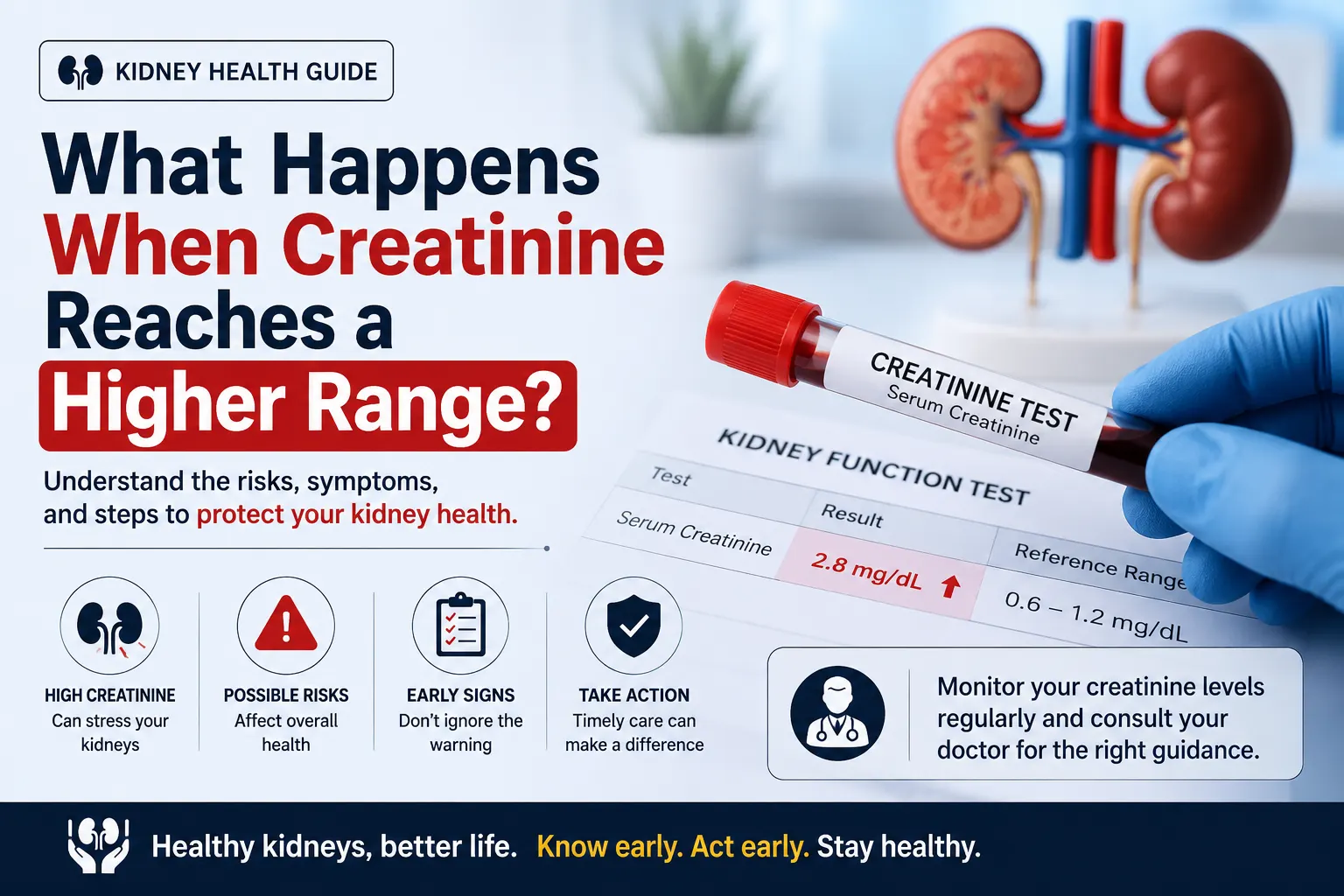
So, what actually happens when your creatinine climbs into a "higher range"? Short answer: your kidneys are basically waving a little red flag, telling you they're working overtime and need some backup. Let's talk about what that flag means, why it shows up, and what you can actually do about it; minus the scary medical jargon and the doom-scrolling panic.
If you've ever squinted at a lab report and thought, "wait, what even is creatinine," you're not alone. It's a waste product your muscles make constantly, and healthy kidneys filter it out like clockwork. When that number starts climbing, it usually means the filtering system is slowing down. And once people start Googling numbers like 5, 6, 7, or 8, they land straight into the world of creatinine 8 treatment searches, wondering if this is a "call the doctor immediately" situation or a "just cut back on the protein shakes" situation. Spoiler: it's usually the former.
Creatinine isn't the villain here; it's more like the messenger who shows up with bad news. A few common reasons it rises:
Reduced kidney filtration due to chronic kidney disease (CKD)
Dehydration, which concentrates everything in your blood, including creatinine
Certain medications (some painkillers and antibiotics aren't kidney's best friends)
High blood pressure or diabetes, the two biggest long-term culprits behind declining kidney function
Muscle-related factors, like intense workouts or supplements (less common, but it happens)
The Modification of Diet in Renal Disease (MDRD) study, one of the most cited pieces of research in nephrology, actually helped establish how creatinine levels connect to estimated GFR (glomerular filtration rate); basically the report card for how well your kidneys filter blood. The higher the creatinine, generally, the lower the GFR, and the more sluggish the filtering.
Normal creatinine usually sits somewhere between 0.6 to 1.3 mg/dL, depending on age, muscle mass, and gender. Once it crosses into the 3, 4, 5 territory, doctors start paying closer attention. By the time it hits 7 or 8, it's generally considered a marker of advanced kidney impairment, and this is exactly why so many people start researching creatinine 8 treatment options; because at that stage, "wait and see" is not really on the table anymore.
|
Creatinine Level |
What It Roughly Means |
What You Should Probably Do |
|
0.6 – 1.3 mg/dL |
Kidneys chilling, doing their job |
Keep hydrating, don't overthink it |
|
2 – 4 mg/dL |
Kidneys sending "hey, notice me" signals |
Book that appointment already |
|
5 – 6 mg/dL |
This needs a proper creatinine 5 treatment plan |
See a nephrologist, not a health forum |
|
7 – 8+ mg/dL |
Kidneys are basically shouting |
Please, for the love of all things filtration, go see a kidney disease doctor |
📞 Get a Kidney Health Consultation – Call Now!
When creatinine sits persistently high, the kidneys are struggling to clear waste, extra fluid, and toxins from the blood. Left unmanaged, this can progress toward kidney failure, where the kidneys can no longer keep up with the body's basic filtering needs. In more advanced or sudden cases, doctors may use the term renal failure, especially when function drops sharply and quickly rather than gradually.
This is the point where high creatinine management becomes less about home remedies and more about a structured medical plan; think regular monitoring, blood pressure control, diet adjustments (lower sodium, moderated protein, careful potassium intake), and in more advanced stages, dialysis or transplant conversations. A study published in the American Journal of Kidney Diseases has repeatedly shown that early intervention and blood pressure control significantly slow the progression of CKD, which is basically science's way of saying: don't wait until it's an emergency.
Here's the thing nobody tells you enough: a rising creatinine number isn't an automatic death sentence for your kidneys. It's a signal, not a verdict. Plenty of people stabilize their numbers with the right combination of medical treatment, diet tweaks, and consistent follow-ups. The key is catching it early and not treating Dr. Google as your primary physician (no offense to Dr. Google, he tries).
Creatinine is a waste product filtered by your kidneys; rising levels usually signal reduced kidney function
Numbers above 5 or 6 often require a dedicated creatinine 5 treatment approach under medical supervision
Levels around 7–8 typically call for urgent creatinine 8 treatment, guided by a specialist
Left unaddressed, high creatinine can progress toward kidney failure or even sudden renal failure
Diet, hydration, blood pressure control, and regular check-ups form the backbone of good high creatinine management
Always consult a qualified kidney disease doctor rather than self-treating based on online numbers
📞 Get a Kidney Health Consultation – Call Now!
Not always, but it's usually a strong sign of significant kidney impairment that needs immediate medical attention.
Sometimes yes, especially if it's caused by dehydration or medication, but chronic kidney damage is often managed rather than fully reversed.
Generally, it helps to cut back on excess protein, sodium, and high-potassium foods, but this should be personalized by your doctor.
It can help a little if dehydration is the cause, but it won't fix an underlying kidney problem on its own.
As soon as your creatinine trends upward across two or more tests, rather than waiting for it to reach an alarming number.
Disclaimer: This blog is for general informational purposes only and isn't a substitute for professional medical advice, diagnosis, or treatment. Creatinine levels and kidney health vary by individual, so please consult a qualified nephrologist or physician before making any health decisions based on this content.

Karma Ayurveda, established in 1937, is an Ayurvedic hospital with a rich legacy of over eight decades. Led by Dr Puneet Dhawan, the fifth generation... Read More About Us
100 Church Street, Suite 800, New York, NY 10007

US FDA Reg. No.: 14568299376

How may we help you?