Jul 31 , 2026
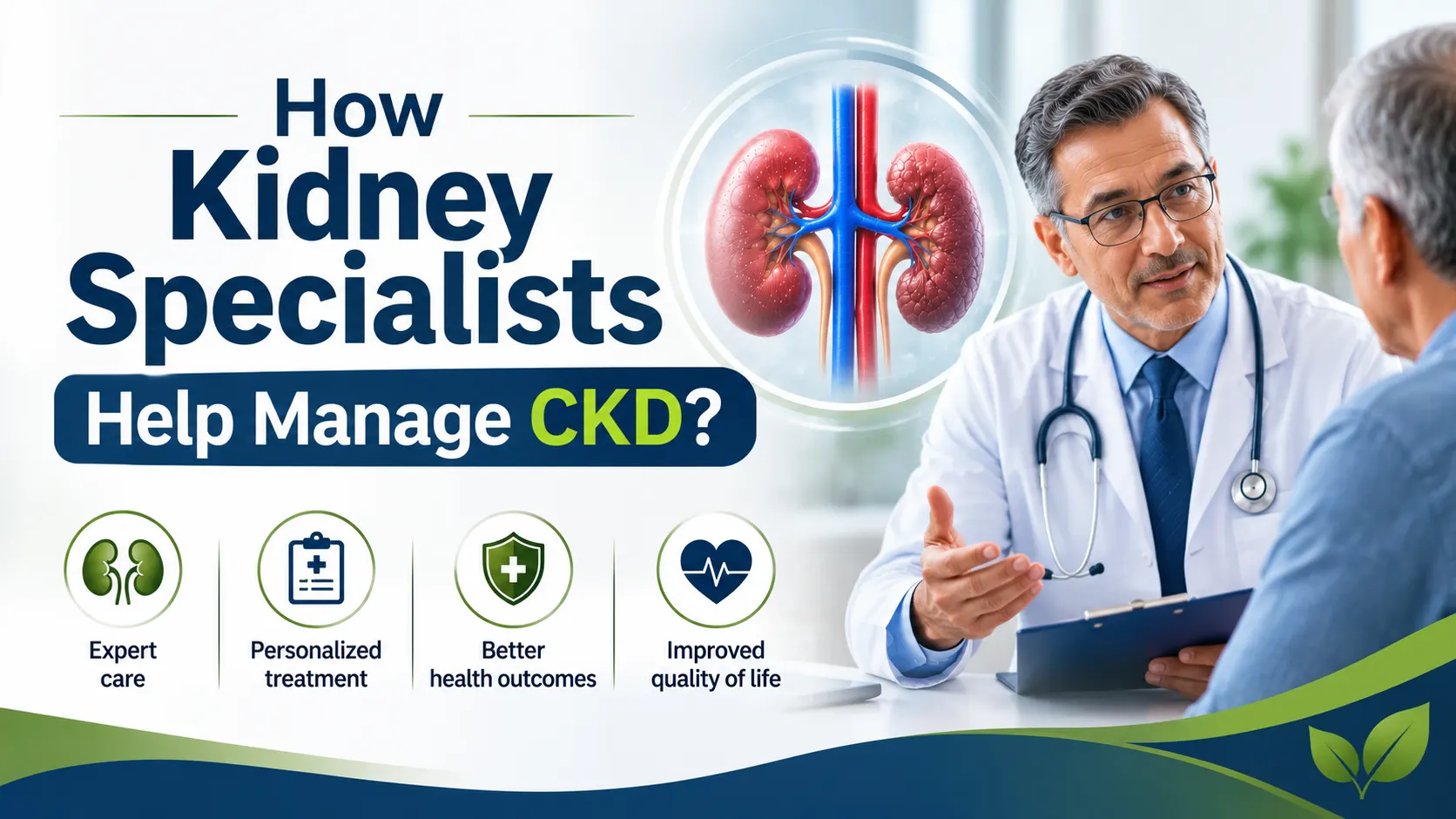
Kidney specialists help manage CKD by catching damage early, slowing its progression with personalised treatment plans, and keeping an eye on the dozen little things (blood pressure, potassium, anaemia, bones) that go sideways when kidneys start slacking off. In short, a good kidney expert is part detective, part mechanic, and part very patient teacher.
Here's the thing about kidneys: they're the most underappreciated organs in the body. Nobody writes love songs about kidneys. Nobody's Instagram bio says "kidney enthusiast." And yet these two bean-shaped overachievers filter about 50 gallons of blood a day, quietly, without complaint, until one day they're not doing it so quietly anymore.
That's usually when chronic kidney disease (CKD) enters the chat. And that's exactly when you need a nephrologist; the fancy medical term for a doctor who has devoted their entire career to understanding an organ most of us can't even point to correctly on a diagram.
📞 Get a Kidney Health Consultation – Call Now!
CKD is sneaky. It doesn't announce itself with fireworks. It shows up as mild fatigue, slightly puffy ankles, or blood work numbers that creep in the wrong direction over months or years. By the time symptoms are obvious, a fair amount of kidney function may already be gone, and kidneys, unlike lizard tails, don't grow back.
This is precisely why a kidney disease doctor is worth their weight in gold. They don't just react to symptoms; they play the long game, tracking trends in your labs (like eGFR and creatinine) the way a stock trader watches the market, except with much higher stakes than your portfolio.
Research published in the Journal of the American Society of Nephrology has repeatedly shown that patients under regular nephrology care before reaching kidney failure have significantly better outcomes, including fewer emergency dialysis starts, than those referred late. Translation: seeing a specialist early isn't optional homework; it's the whole assignment.
Contrary to popular imagination, they're not just staring at pee in cups (though, yes, urine tests are involved). A kidney expert typically handles:
Diagnosing the root cause; diabetes, high blood pressure, autoimmune issues, or genetics could all be the culprit
Building a custom CKD treatment plan; because no two kidneys fail in quite the same dramatic fashion
Monitoring complications; anaemia, bone disease, and electrolyte chaos all love to crash the CKD party
Coordinating with other doctors; cardiologists, dietitians, endocrinologists; kidney care is a team sport
Deciding on advanced options; dialysis or transplant planning, if and when it's needed
The landmark SPRINT trial (a large U.S. government-funded study) found that tighter blood pressure control significantly reduced kidney and cardiovascular complications in at-risk patients; a finding nephrologists now lean on daily when adjusting medications.
📞 Get a Kidney Health Consultation – Call Now!
A lot of chronic kidney disease management honestly comes down to unglamorous daily choices; sodium intake, protein portions, staying hydrated (but not overdoing it), and taking medications on schedule instead of "whenever I remember."
Newer drug classes have also changed the game. The DAPA-CKD trial, published in the New England Journal of Medicine, showed that SGLT2 inhibitors; originally developed for diabetes; significantly slowed kidney function decline even in non-diabetic CKD patients. It's the medical equivalent of finding out your umbrella also works as a fan.
|
Category |
Googling Symptoms at 2 AM |
Actual Kidney Expert |
|
Diagnosis accuracy |
"Could be anything from dehydration to doom" |
Based on actual labs, not WebMD panic |
|
Treatment plan |
Random supplements from a forum |
Evidence-based, personalised medicine |
|
Emotional support |
None, just more anxiety |
Reassurance from someone with an actual medical degree |
|
Long-term outcome |
Rolling the dice |
Slower progression, fewer surprises |
CKD progresses quietly, so early specialist involvement matters more than most people realise
A kidney expert builds a personalised plan rather than a one-size-fits-all approach
Blood pressure and blood sugar control are two of the biggest levers in slowing CKD
Newer medications (like SGLT2 inhibitors) are reshaping how CKD treatment looks today
Good kidney care is a team effort involving diet, medication, and regular monitoring
📞 Get a Kidney Health Consultation – Call Now!
As soon as your regular doctor flags abnormal kidney labs or you have risk factors like diabetes or high blood pressure.
Not usually reversed, but its progression can often be slowed significantly with the right care.
No, many people manage CKD for years, even decades, without ever needing dialysis.
Yes, sodium and protein intake genuinely influence how fast or slow CKD progresses.
No, they're just as valuable in the early stages, where their guidance can prevent things from getting worse.
Disclaimer: This blog is for general informational purposes only and isn't a substitute for professional medical advice, diagnosis, or treatment. Kidney health is personal and complex, so please consult a qualified nephrologist or healthcare provider for guidance specific to your situation.