Aug 06 , 2026
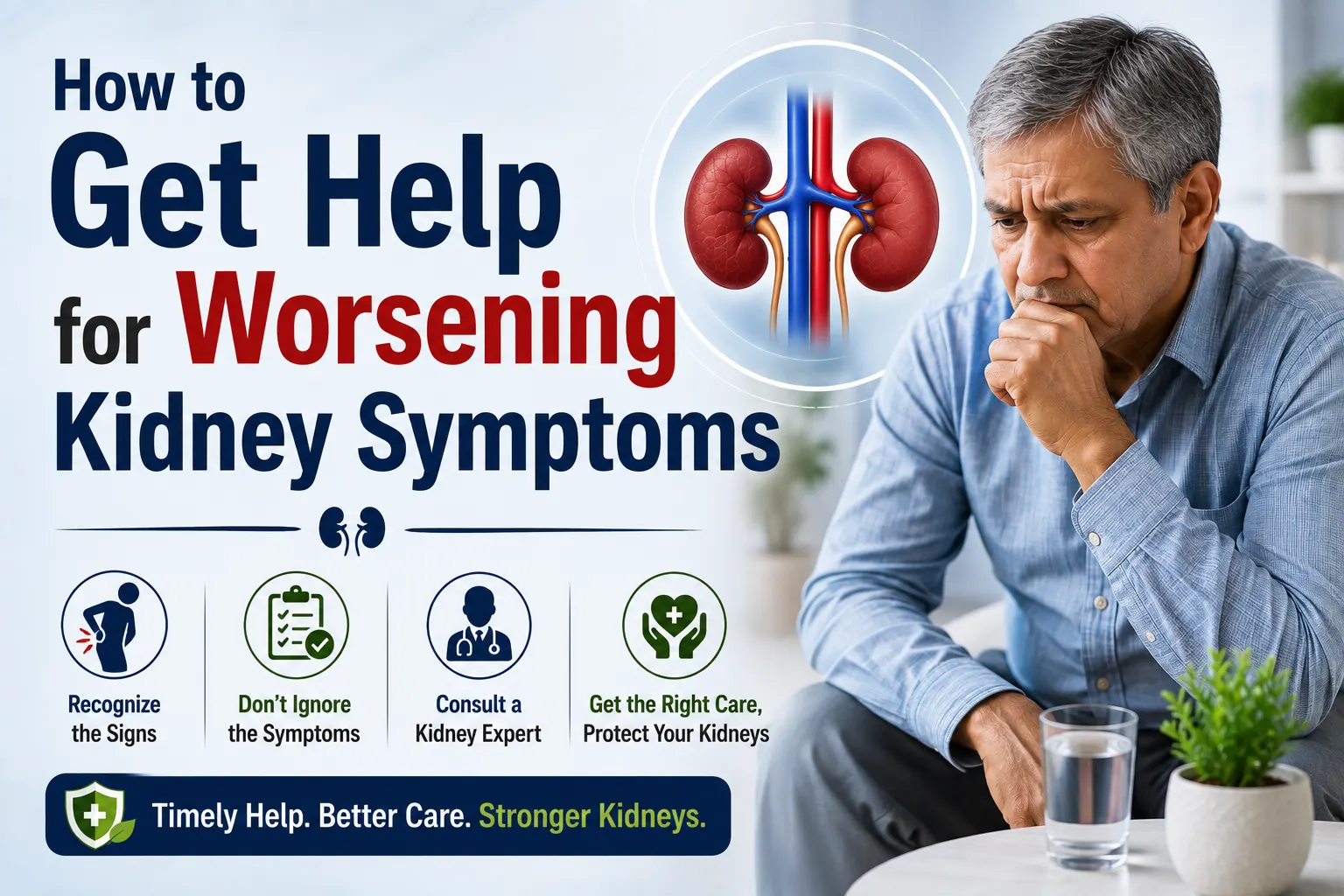
If your kidney symptoms are getting worse, the fastest route to kidney disease help is calling your doctor today, not googling at 2 AM and self-diagnosing off a symptom checker. Kidneys are quiet organs; they rarely complain until things are genuinely serious, so worsening symptoms are basically your body sending an urgent memo that deserves a same-day reply, not a "seen, will respond later."
Let's be honest, most of us treat our kidneys like that one coworker who never asks for anything; we assume they're fine because they never make noise. Then one day you notice you're swelling up like a water balloon, peeing like it's a part-time job, or feeling tired in a way that coffee can't fix. That's usually when people start typing "kidney disease help near me" into their phone at midnight, which, fair, but let's talk about doing this properly instead.
📞 Get a Kidney Health Consultation – Call Now!
Kidneys filter your blood, balance your fluids, and manage a bunch of hormones behind the scenes. When something's off, the sign of kidney disease usually shows up as one (or several) of these:
Puffy ankles, feet, or face that wasn't there last week
Peeing way more or way less than usual, or foamy/bubbly urine
Fatigue that feels bone-deep, not "I didn't sleep well" tired
Nausea, loss of appetite, or a metallic taste that won't quit
Muscle cramps, itchy skin, or trouble concentrating
A recent global analysis published in The Lancet found that CKD affected roughly 788 million adults worldwide in 2023, up from about 378 million in 1990, and it's now sitting among the top causes of death globally. That's not a small club. And here's the kicker: a lot of people don't even realize what's happening to them. A 2023 primary care study out of Türkiye found that nearly 79% of participants had low awareness of CKD causes and symptoms, even though most correctly clocked swelling as a red flag once asked. Translation: your body might be waving flags you're just not trained to notice yet.
Step one: stop diagnosing yourself via forums written by strangers named "kidneywarrior92." Step two, call a kidney disease doctor; this can be your regular GP to start, since they can run basic blood and urine tests before referring you onward. If those tests point to trouble, that's your cue to get a proper kidney specialist (a nephrologist, if you want the fancy word) involved.
Here's roughly how the escalation usually goes:
|
Symptom Vibe |
Who to Call |
Urgency Level |
|
Occasional puffy ankles, mild tiredness |
Your regular doctor |
"This week" energy |
|
Foamy pee, real fatigue, appetite issues |
Doctor + likely referral to a specialist |
"This week, seriously" energy |
|
Barely peeing, confusion, chest pain, severe swelling |
Emergency room |
"Drop everything now" energy |
The 2024 KDIGO clinical guidelines actually push for this same team approach, noting that CKD detection and screening should happen broadly across primary care and other specialties like cardiology and endocrinology, not be restricted to nephrologists alone. So no, you don't need to hunt down a super-specialist on day one; your regular doctor is a perfectly legitimate first stop.
While you're getting things sorted, a few boring-but-effective habits genuinely support your renal function:
Drink water like it's your job, but don't overdo it if you've been told to limit fluids
Go easy on salt, processed foods, and painkillers like NSAIDs (they're sneaky on kidneys)
Keep blood pressure and blood sugar in check; both are major CKD troublemakers
Actually take medications as prescribed instead of "when you remember"
Good ongoing kidney care isn't about one dramatic lifestyle overhaul; it's about a bunch of small, unglamorous habits stacking up over months and years.
Worsening kidney symptoms (swelling, foamy urine, fatigue, appetite loss) deserve a doctor's visit, not a Google diagnosis
Millions of adults worldwide live with CKD, and many don't realize it until symptoms worsen
Start with your regular doctor for kidney disease help, then escalate to a specialist if needed
Severe symptoms; barely peeing, confusion, chest pain; mean the ER, not "I'll wait and see"
Small daily habits (hydration, low salt, blood pressure control) protect kidney function long-term
📞 Get a Kidney Health Consultation – Call Now!
Swelling in the ankles or feet and unusually foamy urine are often the first things people actually notice.
Go straight to the ER if you're barely urinating, feel confused, or have chest pain along with swelling.
Your regular doctor can run the first tests and only refers you to a specialist if the results actually need it.
Not on its own; staying hydrated helps, but it won't reverse existing kidney damage or replace medical treatment.
Early-stage kidney disease can often be slowed or stabilized significantly, though "reversible" depends heavily on the underlying cause.
Disclaimer: This blog is for general informational purposes only and isn't a substitute for professional medical advice, diagnosis, or treatment. Kidney symptoms can vary widely in cause and severity, so please consult a qualified healthcare provider about your specific situation before making any health decisions.