Aug 04 , 2026
Can you really improve kidney function just by changing a few daily habits? Yeah, actually. And no, you don't need to buy a $40 green juice or start meditating on a mountain somewhere.
Think about it; your kidneys never get a day off. They're down there filtering your blood, kicking out waste, balancing your fluids, and doing it all quietly while you binge another season of something on Netflix and forget to drink water for six hours straight. Nobody thanks them. Nobody even thinks about them, honestly, until a doctor says something like "your renal function looks a little off" and suddenly you're wide awake at midnight reading forums you shouldn't be reading.
So let's talk about this the normal way; not the scary way, not the "10 superfoods that will SHOCK you" way. Just what actually helps, based on stuff that's been studied, and stuff regular people can realistically stick to.
📞 Get a Kidney Health Consultation – Call Now!
Everyone's heard "drink more water" so many times it's lost all meaning, like a word you've stared at too long. But there's a reason it keeps getting repeated; it's genuinely one of the easiest things you can do. Water helps your kidneys flush waste out instead of letting it hang around and turn into stones, which, if you've ever had one, you already know is not a fun surprise.
There's research in the Clinical Journal of the American Society of Nephrology showing people who kept their fluid intake up had less decline in kidney function over time compared to folks who didn't bother. You don't have to chug it like you're doing a competition. Just keep a bottle nearby and sip through the day like a normal person.
Here's the annoying part: it's not just your saltshaker. Sodium hides in bread, sauces, that soup you thought was "healthy," basically anywhere flavor lives. Too much of it makes your kidneys work overtime and can push your blood pressure up too, which is basically a double hit against decent kidney care.
The American Heart Association has linked high-sodium diets to extra strain on kidney filtration more than once. You don't have to go bland forever; just start reading labels and cooking a little more at home instead of relying on stuff that comes in a box.
Nobody's saying train for a marathon. A regular walk- nothing fancy- helps manage blood pressure and blood sugar, and both of those matter a lot when it comes to protecting your kidneys long-term. Honestly, a 30-minute walk most days probably does more real kidney support than half the supplements sold online with dramatic packaging.
If you're the type who pops ibuprofen every time your head hurts even a little, your kidneys are quietly side-eyeing you. Long-term overuse of NSAIDs has been tied to lower kidney function in several studies, including some published in the American Journal of Kidney Diseases. Use them when you actually need them. Not as a lifestyle.
Diabetes is one of the biggest reasons people end up with kidney trouble, according to the National Kidney Foundation. Keeping blood sugar steady isn't just about dodging that 3 p.m. crash; it's one of the more overlooked kidney-friendly habits out there.
|
Habit |
Your Kidney's Honest Reaction |
|
Drinking water regularly |
"Oh thank god, finally." |
|
Chips for dinner again |
"Sure. More overtime. Great." |
|
A daily walk |
"Wait... is this appreciation?" |
|
Popping painkillers for fun |
"Please. Stop." |
|
Yearly checkup |
"Oh, you remembered I exist." |
If you notice swelling around your ankles, constant tiredness that sleep doesn't fix, foamy pee, or you're going way more or way less than usual; that's the point to stop self-diagnosing at 2 a.m. and actually talk to someone qualified. Getting kidney disease help early almost always leads to a much better outcome than waiting and hoping it fixes itself.
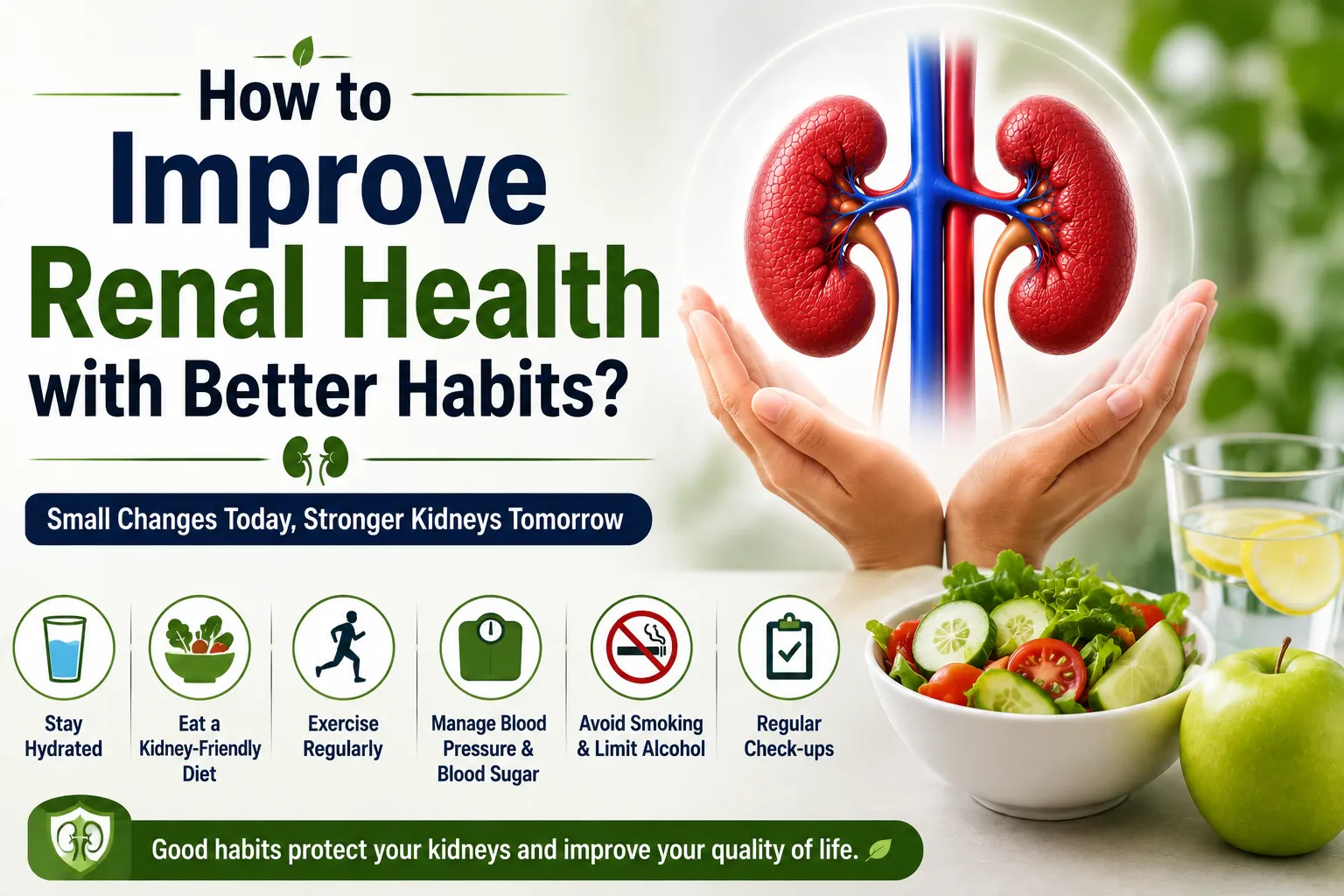
If you're wondering how to improve renal health without flipping your whole life upside down, it really does come down to the boring basics: drink water, watch your salt, move a bit, don't overdo the painkillers, and keep an eye on your sugar. None of it is glamorous. All of it works.
📞 Get a Kidney Health Consultation – Call Now!
Sip water steadily through the day instead of one dramatic gulp session
Keep an eye on sodium hiding in packaged and processed food
A regular walk genuinely counts as exercise; don't overthink it
Don't treat NSAIDs like candy
Manage blood sugar and blood pressure before they become a problem
See a doctor early if something feels off; don't wait it out
📞 Get a Kidney Health Consultation – Call Now!
Often yes, especially early on; hydration, diet, and movement can genuinely help alongside a doctor's guidance.
Some people see changes in a few months with consistent habits, but it really depends on the person.
Yes, oddly enough; too much water can strain kidneys just like too little, so balance matters more than volume.
Yes, very high protein intake can add extra load on kidneys, especially if you already have kidney concerns.
Yes, ongoing stress can raise blood pressure, which over time puts extra strain on your kidneys.
Disclaimer: This blog is for general information only and isn't medical advice, diagnosis, or treatment. Please talk to a qualified doctor or nephrologist about your own kidney health, symptoms, or before changing your diet, exercise routine, or medications.