Aug 03 , 2026
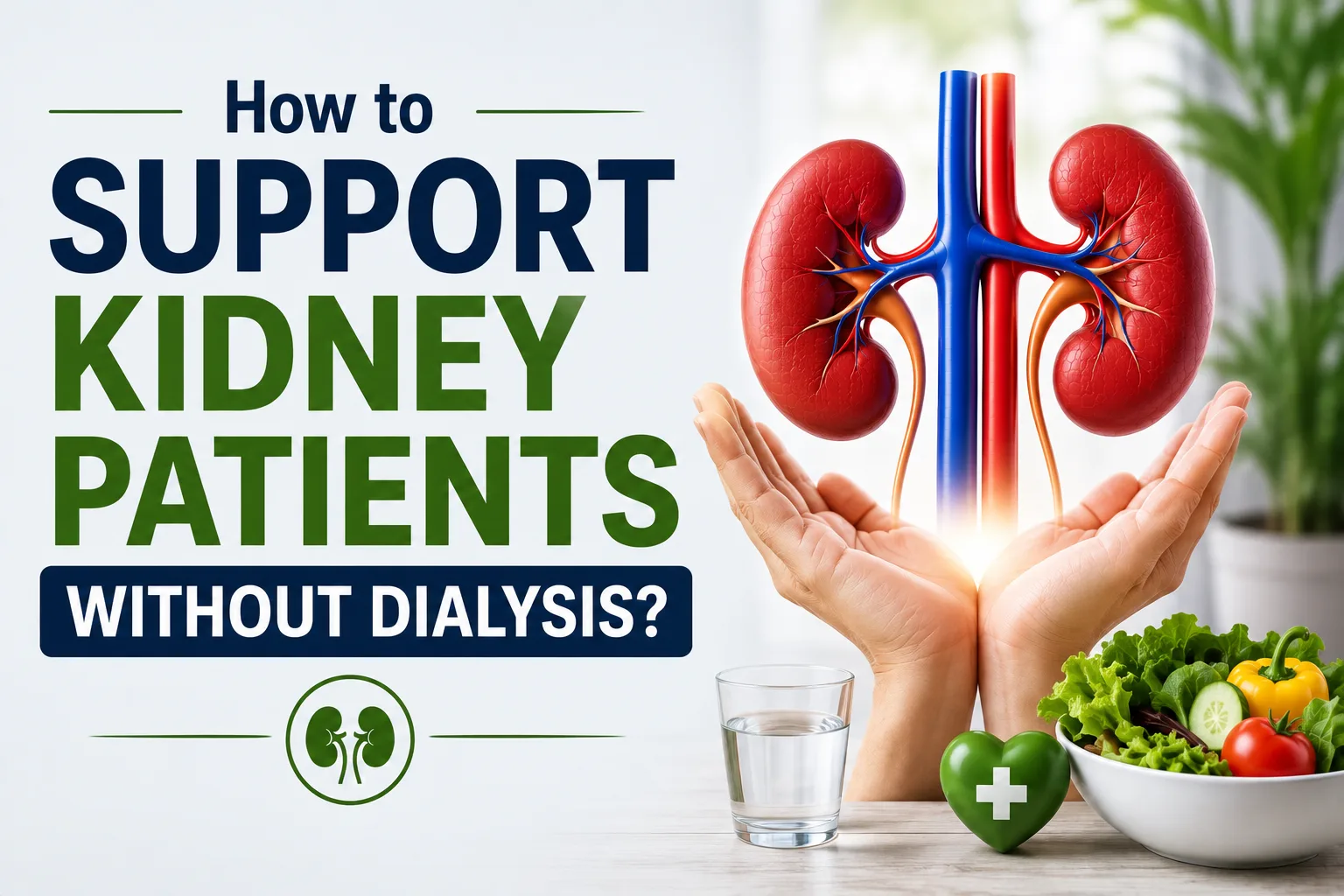
Can you actually help someone with kidney trouble without ever going near a dialysis machine? Yes. And honestly, once you get past the scary Google searches, it's a lot more doable than people think. Kidney failure treatment without dialysis is a real thing doctors recommend all the time, not some fringe idea you found on a wellness blog at 1 a.m.
Okay, deep breath. Before anyone starts stockpiling turmeric and lemon water like it's a survival kit, let's slow down a bit. Dialysis is genuinely great when someone needs it. But it's not the only option sitting on the shelf. For a good number of patients, especially older folks or people juggling a few other health issues, doctors and families sit down together and choose what's called conservative or supportive management instead. And no, that doesn't mean "giving up." It just means taking a different road to the same destination.
📞 Get a Kidney Health Consultation – Call Now!
Let's untangle this a bit, because the phrase gets thrown around loosely. When people say kidney failure treatment without dialysis, they're usually talking about one of these things:
Handling renal failure through medicines, diet, and daily habits instead of machines
Slowing the decline early, before things ever reach "dialysis or nothing" territory
Choosing supportive care without dialysis when the treatment itself might cause more strain than good; a genuine medical decision, not a last resort born out of despair
Think of it like calling a plumber every time a tap drips versus just learning where the shut-off valve is. Sometimes you still need the plumber. Sometimes you really don't.
If you're the one holding things together for someone dealing with kidney failure chronic in nature; the spouse, the kid who suddenly became the appointment-tracker, the neighbor who somehow ended up in charge of groceries- here's where your effort actually pays off:
Keep an eye on fluids and salt. Kidneys and excess salt do not get along at all.
Help stay on top of blood pressure. High BP and struggling kidneys feed off each other in the worst way.
Watch medications closely. Something as ordinary as a painkiller (looking at you, NSAIDs) can quietly do damage.
Don't skip appointments. Nephrologists notice, and consistency matters more than people realize.
Check in on the emotional side too. This isn't just a body thing; it's a heavy mental load, and nobody should be carrying it alone.
None of this is glamorous. It's mostly small, repetitive, slightly boring stuff. But that's what good kidney care actually looks like day to day; not a dramatic intervention, just showing up consistently.
A big chunk of natural treatment for kidney failure comes down to food, and no, it's not "eat kale and hope for the best." There's actual research behind this. The Modification of Diet in Renal Disease (MDRD) study, one of the more well-known ones in nephrology circles, found that managing protein intake carefully could help slow the decline in kidney function for certain patients. Basically, science backs up what grandmothers have been saying forever: eat in moderation, don't overdo any one thing.
Cutting back on sodium
Controlling protein, not eliminating it
Keeping an eye on potassium and phosphorus
Staying hydrated without going overboard
|
Factor |
Dialysis |
Conservative / Supportive Care |
|
Time commitment |
Multiple sessions a week, often hours long; feels like a second job |
Mostly managed at home, with regular check-ins |
|
Day-to-day feel |
Can leave people wiped out physically |
Gentler pace, comfort takes priority |
|
Usually chosen by |
Many CKD patients, especially younger ones with fewer other conditions |
Older adults or those with several other health issues, decided together with a doctor |
|
The vibe |
"Me and this machine are basically in a relationship now" |
"Slow and steady, thanks" |
📞 Get a Kidney Health Consultation – Call Now!
Let's put the jokes aside for a minute, because this part matters. A well-cited study by Carson and colleagues (Clinical Journal of the American Society of Nephrology, 2009) found that for older patients dealing with several other serious health conditions, conservative management held up surprisingly well against dialysis in terms of survival, minus the added burden of ongoing treatment. A related study by Brown and colleagues, published in the same journal in 2015, found that elderly patients managed without dialysis often reported a quality of life comparable to those on dialysis. And a 2021 systematic review in BMC Nephrology pointed out that conservative kidney management tends to score better on quality-of-life measures, even when survival numbers shift depending on age and overall health.
Which is really the whole point: kidney disease help isn't a one-size-fits-all answer. It's a conversation between the patient, the family, and the nephrologist; not something you settle after one late-night search.
Kidney failure treatment without dialysis is a real, medically backed option for the right patients
Diet, medication management, and blood pressure control do most of the heavy lifting
Emotional support matters just as much as the clinical side of things
Research shows conservative care can hold its own on quality of life, especially for older or higher-risk patients
This is a decision for a nephrologist to guide, not something to figure out solo online
📞 Get a Kidney Health Consultation – Call Now!
Yes, for certain patients, doctors genuinely do recommend conservative or supportive management over dialysis.
Not even close, it's still an active plan built around comfort, diet, and medication instead of machines.
Cutting back on sodium and keeping protein, potassium, and phosphorus in check is usually where it starts.
Often older adults or people with multiple health conditions, where dialysis might do more harm than good.
Definitely, most nephrologists want family in the room, not just the patient making the call alone.
This blog is meant for general information, not medical advice. Kidney disease and treatment decisions are personal and medical in nature, so please talk to a qualified nephrologist or doctor before deciding on dialysis or conservative care for yourself or someone you love.