Aug 07 , 2026
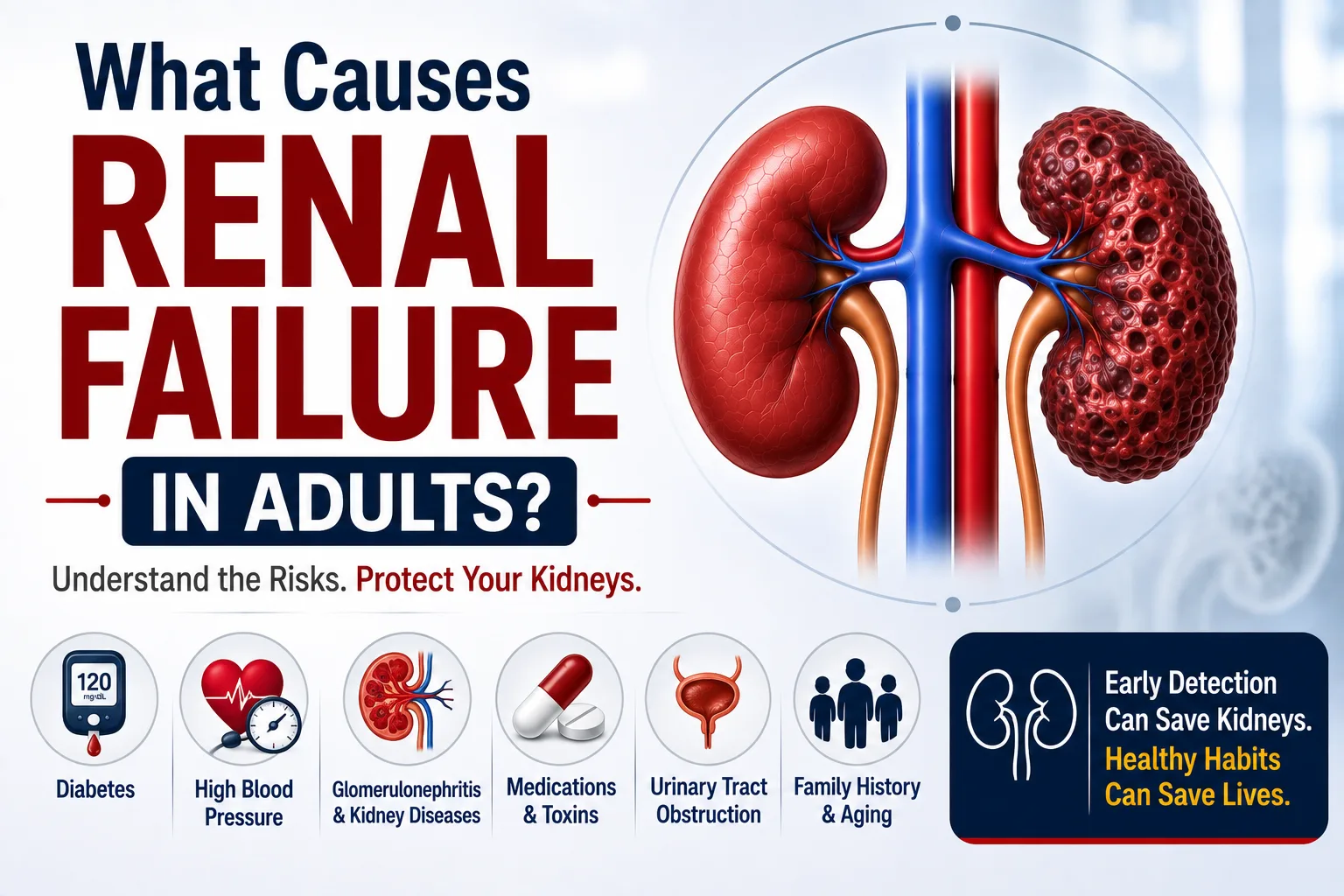
If you’ve ever wondered what suddenly causes your body’s built-in filtration system to go on strike, the short answer is that renal failure in adults is usually triggered by long-term damage from high blood pressure and diabetes, or a sudden shock to the system like severe dehydration or medication toxicity. Basically, your kidneys are two fiercely hardworking, fist-sized bean-shaped organs that filter your blood 24/7, and when they get pushed past their limit, they decide to quietly stage a walkout.
Let’s be honest: most of us don’t think about our kidneys until we are forced to. We obsess over heart health, count our macros, and try to get enough sleep, while our kidneys just sit back in our lower backs, doing the heavy lifting without asking for a thank you. But when things go south, understanding the causes of renal failure in adults becomes incredibly important.
📞 Get a Kidney Health Consultation – Call Now!
Kidney trouble generally splits into two different categories: a sudden, dramatic meltdown or a slow, quiet fade. A study published in The Lancet (2019) highlighted that global awareness of kidney health is dangerously low, mostly because the symptoms like to play hide-and-seek until the later stages.
Think of this as a sudden power outage. One day everything is fine, and the next, your kidneys hit the brakes. This type of kidney failure is usually reversible if you catch it quickly.
The Drought (Severe Dehydration): If you lose too much fluid from a nasty stomach bug or running a marathon without water, your blood pressure drops, and your kidneys starve of blood.
Medication Mischief: Overusing over-the-counter painkillers like ibuprofen can throw your kidneys into a tailspin.
This is the sneaky version. It creeps up over years, usually driven by two main culprits that wear down the kidneys' delicate filters.
Diabetes: High sugar levels act like sandpaper on the microscopic blood vessels in your kidneys over time.
High Blood Pressure: This forces blood through your filters with way too much pressure, eventually scarring them.
To help visualize how these two match up, here is a quick breakdown of how a kidney disease patient might experience the two types of issues:
|
Feature |
Acute Kidney Injury (The Sudden Meltdown) |
Chronic Kidney Disease (The Slow Fade) |
|
Speed |
Happens in hours or days. Fast and furious. |
Takes months or years. Very sneaky. |
|
Main Culprit |
Dehydration, heavy toxins, or massive infections. |
Years of unmanaged high blood pressure or diabetes. |
|
Reversibility |
Usually yes, if you treat the root cause quickly. |
Sadly no, but we can slow it down to a crawl. |
|
Vibe |
A sudden, angry office strike. |
A slow burnout from working too many weekend shifts. |
📞 Get a Kidney Health Consultation – Call Now!
Because the kidneys are so resilient, a person dealing with renal failure might just feel a bit tired or notice some swollen ankles at first. This is exactly why checking in with a kidney disease doctor (known in medical terms as a nephrologist) is vital if you have underlying conditions like diabetes.
According to a landmark clinical trial known as the CREDENCE Study (2019), early intervention and specific modern medications can drastically reduce the risk of someone progressing to full-blown kidney failure. Taking early action is the ultimate act of kidney care you can give your body. When you catch issues early, you prevent the filters from scarring permanently.
High blood pressure and diabetes are at the forefront of renal issues.
Routinely popping NSAIDs (like ibuprofen) can weaken your renal function over time.
Staying hydrated keeps blood flowing smoothly through your internal filters.
Early detection is king.
The leading cause of kidney failure in adults is unmanaged diabetes, followed very closely by high blood pressure.
Acute failure can often fully reverse once the main cause is treated, but chronic failure is generally permanent and managed to prevent further worsening.
True kidney pain is usually a dull, one-sided ache high up in your back, right under your ribcage, rather than lower back muscle pain.
This article is for informational, entertainment, and educational purposes only and should not be taken as medical advice. Kidney health is highly complex and individualized. Always consult with a qualified healthcare professional or a specialist regarding any medical conditions, diagnoses, or treatment plans.