Aug 03 , 2026
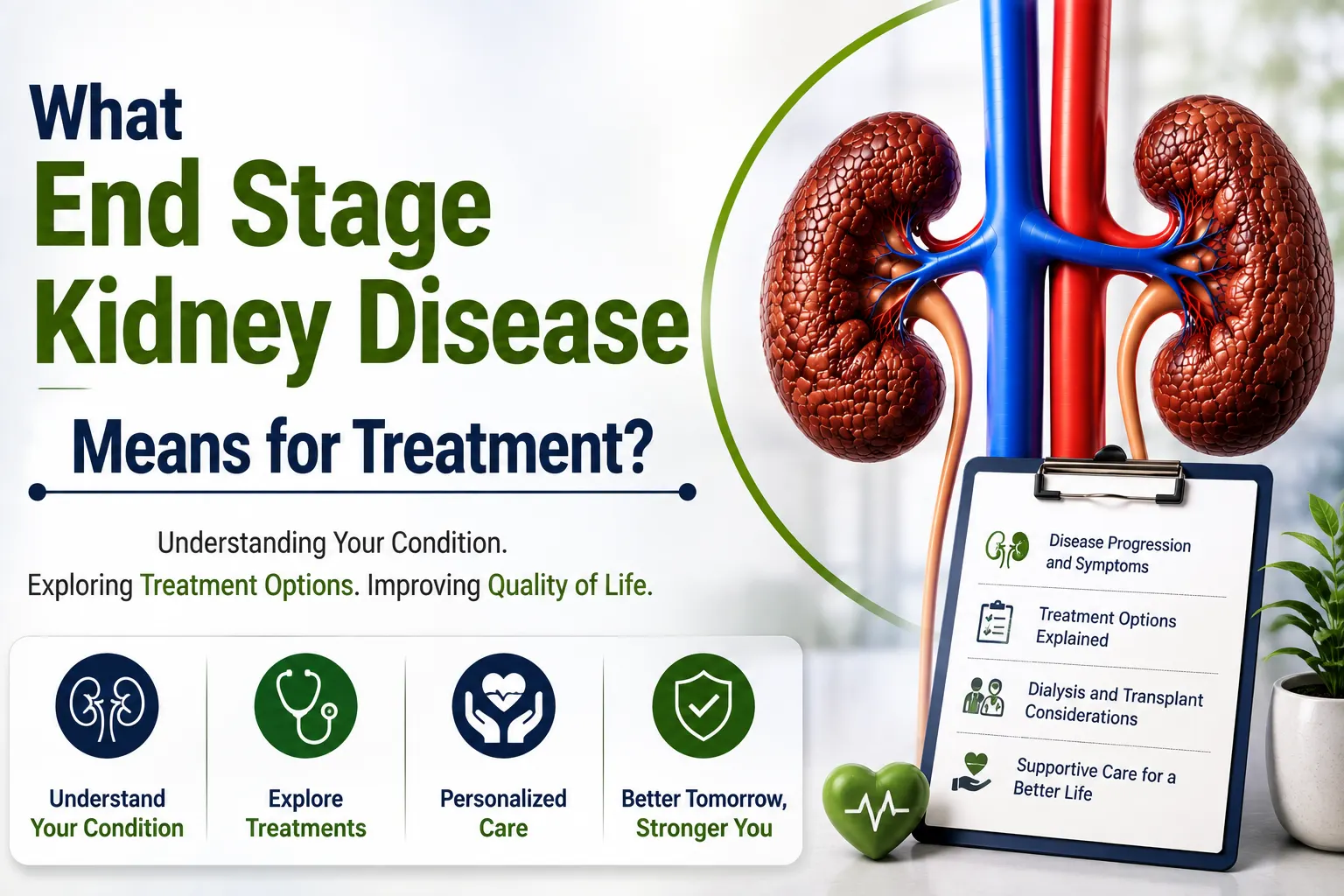
So, here's the short answer: end-stage kidney disease treatment means your kidneys have basically clocked out for the day (permanently), and you now need dialysis or a transplant to do the job they used to do for free. It's not a diet fix or a "drink more water" situation anymore; it's the big leagues.
I know, that's a heavy way to start a blog. But stick with me, because once you understand what's actually happening, the whole thing becomes a lot less scary and a lot more manageable.
📞 Get a Kidney Health Consultation – Call Now!
Your kidneys are basically the world's tiniest, least appreciated water treatment plant. They filter waste, balance your fluids, and quietly keep you alive without ever asking for a raise. Chronic kidney disease (CKD) is what happens when that plant slowly starts breaking down over years; usually thanks to diabetes, high blood pressure, or just genetics being rude.
CKD is measured in five stages, and by the time someone reaches CKD stage 5 treatment, their kidneys are working at less than 15% of normal capacity. At that point, doctors officially call it end-stage renal disease (or kidney failure; same thing, scarier-sounding twin).
This is the part people actually want to know, so let's get into it. There are really three doors you can walk through:
Hemodialysis – your blood gets filtered by a machine, usually three times a week at a clinic (or at home if you're feeling ambitious).
Peritoneal dialysis – filtering happens inside your own belly using a special fluid, done daily at home.
Kidney transplant – a new kidney, either from a living donor or a deceased one, takes over the job entirely.
None of these are "cures." Renal failure doesn't reverse itself. But all three can genuinely give people years, even decades, of good quality life; which is honestly more than most house plants can say for themselves.
|
Dialysis |
Transplant |
|
|
Time commitment |
Several hours, multiple times a week (basically a part-time job) |
One surgery, then daily pills forever |
|
Diet freedom |
Limited; say goodbye to bananas and cheese, briefly |
Much more relaxed |
|
Waiting list |
None; you start when you need it |
Can take years, depending on donor availability |
|
Vibe |
"I have an appointment" |
"I have a roommate now, and it's an organ" |
A large propensity-matched study out of Taiwan followed over 2,500 patients and found that people who received a kidney transplant had noticeably better 5- and 10-year survival rates compared to those who stayed on dialysis alone, even after accounting for how sick each group was to start with (published in a peer-reviewed nephrology journal analyzing Taiwan's National Health Insurance Research Database). That doesn't mean dialysis is a lesser option; plenty of people thrive on it for years; it just means transplant tends to win the long game when it's available.
📞 Get a Kidney Health Consultation – Call Now!
Here's the thing nobody tells you early enough: this isn't a "figure it out yourself" diagnosis. You need an actual kidney disease doctor (a nephrologist, if we're being fancy) guiding the decisions; which treatment, which access point, which diet tweaks actually matter versus which ones are internet myths.
Good kidney care isn't just about the machine or the transplant list. It includes managing blood pressure, anemia, bone health, and yes, your mental health too, because doing dialysis three times a week is genuinely exhausting and nobody talks about that enough.
Modern end stage renal disease care has come a long way. It's not just hospital visits anymore:
Home dialysis machines that let people treat themselves overnight while asleep
Dietitians who help you actually enjoy food again within your limits
Support groups (yes, they're surprisingly funny once you're in one)
Telehealth check-ins so you're not living at the clinic
Research published in the Clinical Journal of the American Society of Nephrology has repeatedly shown that patients who get early, coordinated nephrology care before reaching kidney failure tend to have smoother transitions into dialysis or transplant, with fewer emergency hospitalizations. Translation: seeing a specialist early is genuinely worth it, not just a box to tick.
📞 Get a Kidney Health Consultation – Call Now!
End-stage kidney disease treatment isn't a single decision made once; it's an ongoing relationship between you, your care team, and whichever option (dialysis or transplant) fits your life best. There's no universally "right" choice, only the right choice for you.
End-stage kidney disease means kidneys are functioning at under 15% capacity, requiring dialysis or transplant
Hemodialysis, peritoneal dialysis, and transplant are the three main treatment routes
Transplants often show better long-term survival, but aren't accessible or right for everyone
A nephrologist should guide treatment decisions, not internet forums (sorry, forums)
Coordinated care before reaching kidney failure leads to smoother, less stressful transitions
📞 Get a Kidney Health Consultation – Call Now!
Yes, kidney failure and end-stage renal disease are just two names for the same advanced condition.
Many people live well for years, even decades, on dialysis, especially with good medical follow-up.
Not exactly; transplants need lifelong medication and monitoring, but they let a new kidney do the work.
If your regular doctor mentions declining kidney function or a low GFR number, it's time for a nephrologist referral.
Absolutely; diet still plays a big role in managing potassium, sodium, and fluid levels even on dialysis.
Disclaimer: This blog is for general informational purposes only and isn't a substitute for professional medical advice. Kidney disease treatment decisions should always be made with a qualified nephrologist or healthcare provider who knows your specific health history.