Aug 04 , 2026
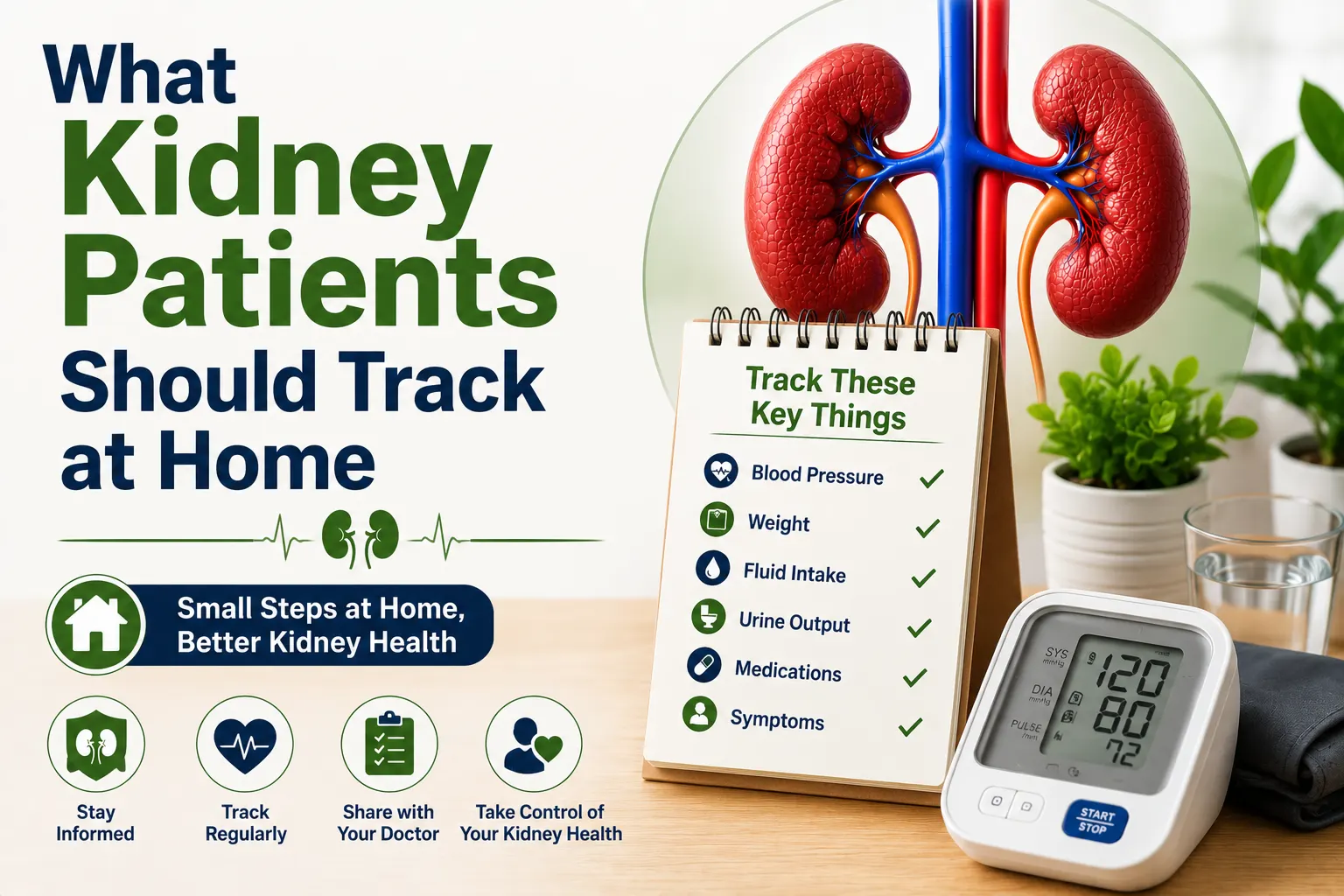
Every kidney disease patient should be keeping an eye on four things at home: blood pressure, fluid intake and output, weight, and any swelling or changes in urine. Sounds simple, right? It is; but it's also the difference between catching a problem early and ending up in an ER waiting room wondering where it all went wrong.
Here's the thing nobody tells you when you get a CKD diagnosis: your nephrologist sees you for maybe twenty minutes every few months. The other 99% of the time, you're the one on duty. And your kidneys, bless them, don't exactly send you a text alert when something's off. They just quietly do less and less until a lab report shows it. So, home tracking isn't some optional wellness-influencer habit; it's basically your early warning radar.
📞 Get a Kidney Health Consultation – Call Now!
Think of your kidneys like that one coworker who never complains until they suddenly quit without notice. By the time symptoms show up; fatigue, swelling, nausea; a fair amount of renal function may already be affected. Tracking a few simple numbers at home helps you and your doctor spot trends before they become emergencies.
A retrospective cohort study out of Kawaguchi Municipal Medical Center in Japan followed CKD patients doing regular home blood pressure monitoring and found that average home systolic BP was meaningfully linked to how fast kidney function declined; and that unstable, swingy BP readings made things worse. Translation: it's not just about one good reading; it's about consistency.
Separately, the CRIC Study (Chronic Renal Insufficiency Cohort), one of the largest CKD research efforts in the US, found hypertension is extremely common in kidney disease and often poorly controlled, which is exactly why home monitoring matters so much between clinic visits.
Blood pressure – Daily, same time, same arm, seated, feet on the floor (not crossed like you're at brunch). High or unstable BP is one of the biggest accelerants of kidney damage.
Weight – Same time each morning, same amount of clothing (or lack thereof, no judgment). Sudden weight gain of 2+ lbs overnight usually means fluid retention, not a sudden love of carbs.
Fluid intake and urine output – If your doctor has given you a fluid limit, actually track it instead of "eyeballing" it. Your eyeballs are unreliable narrators.
Swelling – Ankles, feet, around the eyes. Press a finger in; if it leaves a dent that stays, that's called pitting edema, and it's worth mentioning to your doctor.
Energy levels and appetite – Not glamorous, but a steady decline is a genuine data point, not just "getting older."
Medication and supplement log – Especially painkillers like NSAIDs, which are basically kryptonite for compromised kidneys.
📞 Get a Kidney Health Consultation – Call Now!
|
Category |
Home Tracking |
Lab Kidney Test |
|
Cost |
Free-ish (one BP cuff) |
Not free-ish |
|
Frequency |
Daily, judgment-free |
Every few months, judgment mildly implied |
|
Drama level |
Low (unless you forget your log) |
Medium (waiting room anxiety is real) |
|
What it catches |
Trends over time |
The actual numbers behind the trends |
|
Verdict |
Your daily bodyguard |
Your official report card |
Both matter. One without the other is like checking the weather app but never actually looking out the window.
📞 Get a Kidney Health Consultation – Call Now!
Kidney health tracking at home works best when it's boring and automatic; like brushing your teeth, not like training for a marathon. A cheap notebook, a spreadsheet, or a tracking app all work equally well; the tool matters far less than the consistency. Set a phone reminder, keep the BP cuff next to your coffee maker, whatever gets it done without turning it into a whole production.
At the end of the day, every kidney disease patient is basically running a small, unglamorous research lab out of their own bathroom cabinet, and that data is gold. Good kidney care isn't about perfection; it's about noticing patterns early enough to act on them, and giving your doctor real data instead of "I think I've been feeling kind of tired lately." A month of numbers beats a vague feeling every single time.
Track blood pressure, weight, fluid intake/output, and swelling daily
Consistency matters more than perfection; same time, same conditions
Sudden weight gain or unstable BP readings are red flags worth calling your doctor about
Bring your home logs to every nephrology appointment; they're more useful than memory
CKD monitoring at home complements, not replaces, regular lab testing
📞 Get a Kidney Health Consultation – Call Now!
Blood pressure, weight, fluid intake and output, and any swelling are the daily essentials.
Ideally once daily at the same time, since steady readings matter more than a single good number.
No; home tracking spots trends, but blood and urine tests are still needed to measure actual kidney function.
It's often a sign of fluid retention, which can point to worsening kidney function.
Yes, especially if your doctor has set a fluid limit, since changes in output can signal changes in kidney function.
Disclaimer: This article is for general informational purposes only and isn't a substitute for professional medical advice, diagnosis, or treatment. Always consult your nephrologist or healthcare provider about your specific condition, test results, and any changes in your symptoms before making decisions about your care.