Aug 07 , 2026
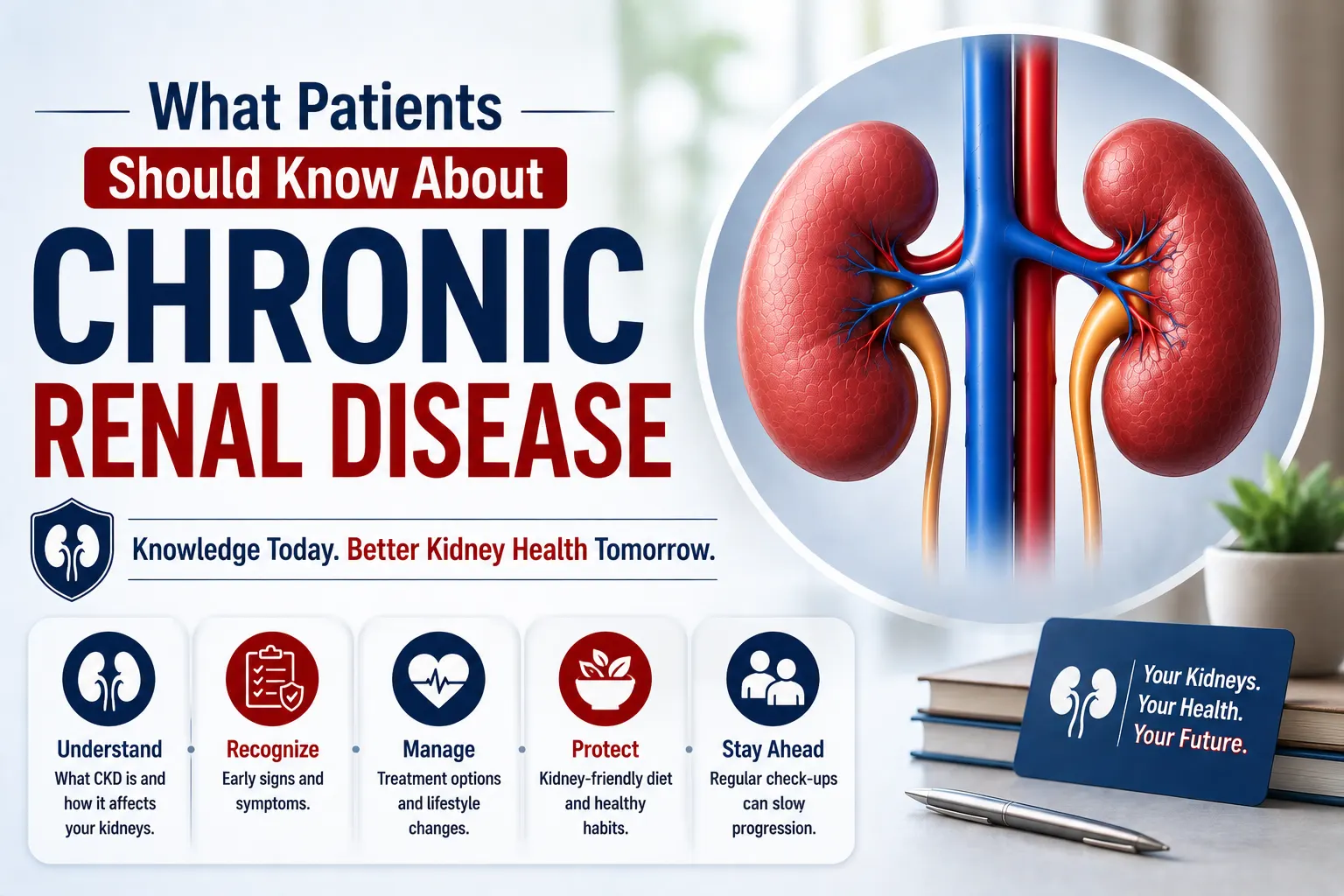
If you’ve recently been told you have chronic renal issues, it simply means your kidneys have decided to slow down and stop filtering your blood as efficiently as they used to. Think of your kidneys as your body’s internal Marie Kondo; they look at toxins in your bloodstream, decide they don’t "spark joy," and promptly flush them away.
When you develop chronic renal disease, that cleaning process gets a bit sluggish. But don’t panic! Finding out about it early gives you a massive head start in keeping those two bean-shaped heroes happy for a very long time.
📞 Get a Kidney Health Consultation – Call Now!
Here is the tricky thing about your kidneys: they are absolute stoics. They will quietly go about their business even if they are only working at 20% capacity, without uttering a single complaint. Because they are so quiet, millions of people walk around with chronic kidney disease without having a single clue.
Why do they slow down in the first place? Usually, it’s not because they’re lazy; it’s because they’ve been bullied by other health conditions. The two biggest culprits are high blood pressure and diabetes. Imagine your kidneys’ delicate filters as a fine silk mesh. High blood pressure acts like a power washer blasting through that silk, while high blood sugar acts like sticky syrup clogging it up.
A landmark paper published in The Lancet (the Global Burden of Disease Study) highlighted that diabetes and hypertension remain the leading drivers of kidney issues globally. Over time, if left unchecked, this wear and tear can progress toward advanced renal failure, which is exactly what we want to prevent.
When you first sit down with a kidney disease doctor, you might expect them to hand you a miserable list of things you can never eat or do again. While you will definitely need to make some adjustments, it’s more about curation than deprivation.
Your new strategy centers on smart, proactive kidney care. Let's break down exactly what that looks like in daily life:
The Salt Shake-Up: Sodium raises your blood pressure, which puts extra stress on your kidney filters. You don't have to eat cardboard, but swapping the salt shaker for garlic, lemon juice, or smoked paprika will give your food flavor without punishing your organs.
Hydration is a Goldilocks Game: You want your fluid intake to be just right. Chugging gallons of water won't "flush out" kidney damage, but staying dehydrated makes their job much harder. Aim for a steady, sensible sip throughout the day.
The Medication Audit: Over-the-counter painkillers like ibuprofen or naproxen (NSAIDs) can be surprisingly tough on sluggish kidneys. Always check with your care team before popping a pill for a headache.
To visualize how your daily habits stack up, here is a quick breakdown of what your kidneys love versus what makes them want to file for divorce:
|
What Your Kidneys Love |
What Makes Your Kidneys Cry |
|
Fresh herbs, citrus, and spices for flavor |
Eating a block of salty processed cheese at midnight |
|
Keeping your blood pressure in the "chill" zone |
Living a high-stress, high-sodium action movie lifestyle |
|
Brisk walks and moving your body |
Binging a 12-hour TV series without standing up once |
|
Reviewing every supplement with your doctor |
Taking "miracle detox pills" suggested by an internet influencer |
📞 Get a Kidney Health Consultation – Call Now!
Being a kidney disease patient doesn't mean you are stranded on a medical island. In fact, a study published in the Journal of the American Society of Nephrology found that patients who received early, coordinated care from a specialist team experienced significantly slower disease progression and better overall health outcomes.
Your medical team is there to help you protect the kidney function you have left. With the right mix of blood pressure medications (like ACE inhibitors or ARBs, which double as kidney shields), dietary tweaks, and routine blood checks, you can keep your chronic renal condition managed so it remains a background detail in your life rather than the main plot.
Kidneys filter waste, and when they slow down, early detection is your absolute best friend.
Managing blood pressure and blood sugar is the most effective way to stop further damage.
Work closely with a specialist to build a tailored plan for nutrition, medication, and monitoring.
Small, sustainable lifestyle adjustments add up to massive protection for your organs over time.
While existing scar tissue usually can't be undone, you can absolutely slow down or halt further progression with the right lifestyle and medical care.
A simple, routine blood and urine test ordered by your doctor is the only definitive way to see exactly how well your filters are working.
No, you just need to eat the right amount of high-quality protein so your body gets what it needs without overloading your filters with extra waste.
Your blood pressure is the most crucial number to manage, as keeping it steady directly protects your delicate filtering units from taking a beating.
📞 Get a Kidney Health Consultation – Call Now!
This blog is for informational and educational entertainment purposes only and does not substitute for professional medical advice, diagnosis, or treatment. Always consult with a qualified healthcare provider or nephrologist regarding any medical conditions, dietary changes, or specific treatment plans tailored to your unique health profile.