Aug 03 , 2026
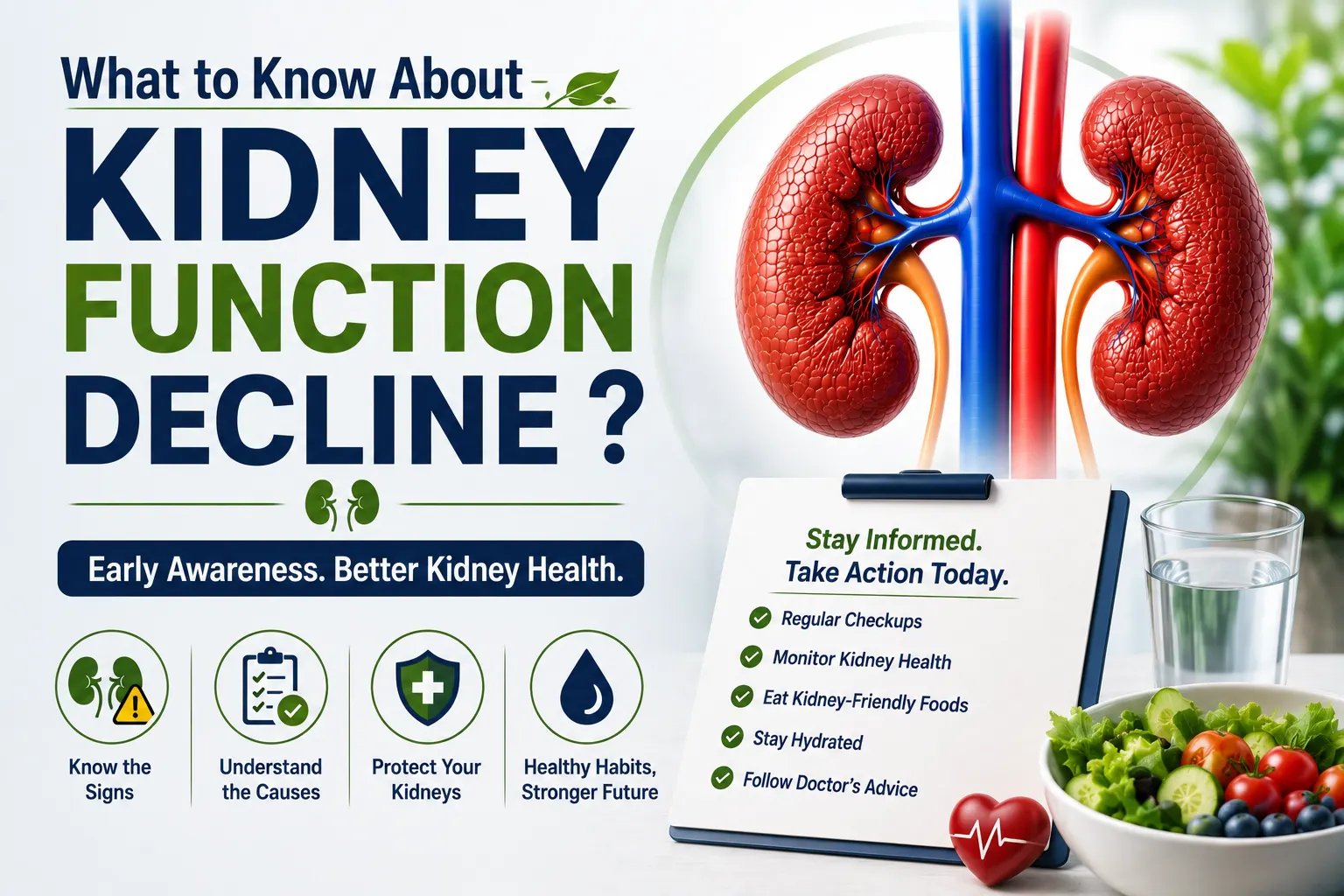
Okay, so here's the deal: your kidneys can lose a big chunk of their working ability, and you won't feel a single thing until much later. That's really the crux of kidney function decline, and yeah, it's a bit annoying that our bodies work this way. But once you actually understand what's going on, kidney function treatment stops feeling like some scary medical mystery and starts feeling like, well, a to-do list.
I like to think of kidneys as the coworkers who never show up in the group chat but somehow keep the whole office running. They filter close to 50 gallons of blood a day, keep your electrolytes in line, help manage blood pressure, and never once send a passive-aggressive email about it. So when they start slowing down, there's no big dramatic sign. No alarm bells. Just a quiet slide that you only notice once it's already a thing.
📞 Get a Kidney Health Consultation – Call Now!
Kidneys don't just clock out one day for no reason. It's usually a slow build-up, and honestly, the causes are things most of us have heard a hundred times but never really connect to our kidneys specifically:
Diabetes; years of high blood sugar wear down the tiny filters (nephrons) doing all the real work
High blood pressure; imagine running your garden hose at full pressure nonstop, forever
Extra weight and a not-so-great diet; especially one heavy on salt and light on potassium
Smoking, not moving much; your kidneys quietly clock your couch time too
Family history; sometimes, honestly, it's just genetics, and there's no lesson to learn here
There was a fairly big population study published in Nutrients back in 2023 that looked at exactly this. It found that low physical activity, too much sodium, not enough potassium, and higher protein intake were all tied to faster kidney decline over time; even after they adjusted for diabetes and blood pressure. So yes, apparently your salad habits (or lack of them) are doing more behind the scenes than you'd think.
📞 Get a Kidney Health Consultation – Call Now!
Here's the annoying twist: kidney function decline symptoms usually don't show up until you've already lost 60 to 70 percent of function. Which feels a little unfair, honestly. Some things worth paying attention to:
Feeling tired in a way that's different from "I didn't sleep enough"
Puffiness around the ankles or eyes, especially in the morning
Urine that looks foamy or just off-color
A weird metallic taste, or trouble focusing
Muscle cramps that show up at night for no clear reason
If a couple of these sound familiar, it's really worth just booking time with a kidney disease doctor instead of falling into a 1 am WebMD rabbit hole (we've all been there, no judgment).
Alright, dropping the jokes for a second because this part genuinely matters; yes, in a lot of cases you can slow this down or even stabilize it, especially if it's caught early enough. A 2023 study tracking a decade's worth of health checkups (published looking at kidney function decline in the general population) found that steady blood pressure control and moderate exercise were linked with a noticeably slower rate of decline over time.
So if you're trying to figure out how to improve kidney function, the answer isn't glamorous, but it does work:
Keep an eye on blood pressure and blood sugar
Go easy on processed and salty food
Drink enough water, but don't go overboard chasing some arbitrary number
Don't treat NSAIDs like candy
Get blood and urine tests done regularly if you're at higher risk
📞 Get a Kidney Health Consultation – Call Now!
There's a real difference between "maybe I should drink more water" and "I need actual kidney disease help." If you've got diabetes, high blood pressure, a family history, or you're just past 60, checking your renal function regularly isn't optional; think of it like getting your car's oil changed, except it's you.
|
Category |
Doing It Yourself at Home |
Medical Kidney Function Treatment |
|
Cost |
Free, minus the kale you'll probably waste |
Varies, but usually worth it |
|
Speed |
Slow and steady, if you're consistent |
Faster, and actually monitored |
|
Who's watching |
You, some blogs, and hope |
A real kidney disease doctor |
|
Best for |
Prevention, mild risk |
Diagnosed decline or CKD stages |
|
How fun is it |
Not very |
Also not very, but more reassuring |
Both matter, to be clear. Home habits are the foundation. But real kidney function treatment under a doctor's supervision is what actually moves the needle once decline has already started.
Good kidney care isn't a one-and-done fix; it's more like a long, kind of boring relationship you keep up for life. Regular check-ups, sensible eating, not popping painkillers for every little ache; that stuff will get you further than any trendy detox tea ever will.
📞 Get a Kidney Health Consultation – Call Now!
Kidney decline is usually silent until it's already fairly advanced
Diabetes, high blood pressure, and poor diet are the main culprits
Fatigue, swelling, and changes in urine are early warning signs worth noticing
Lifestyle changes genuinely help, especially if you start early
Once decline is confirmed, medical kidney function treatment becomes the priority
Regular testing is basically your kidney's check-engine light
Often yes, especially early on, with the right mix of lifestyle changes and proper medical care.
Unusual tiredness and mild swelling around the ankles or eyes tend to show up first.
Once a year is a decent baseline if you've got diabetes, high blood pressure, or a family history; more if your doctor says so.
Not really; staying hydrated matters, but chugging extra water isn't some magic fix; it's about balance.
The moment fatigue, swelling, or odd changes in urination stick around for more than a few days; don't wait it out.
Disclaimer: This blog is meant for general reading and isn't a stand-in for professional medical advice, diagnosis, or treatment. Everyone's kidney health looks a little different, so please talk to a qualified doctor before acting on anything you've read here.