Aug 04 , 2026
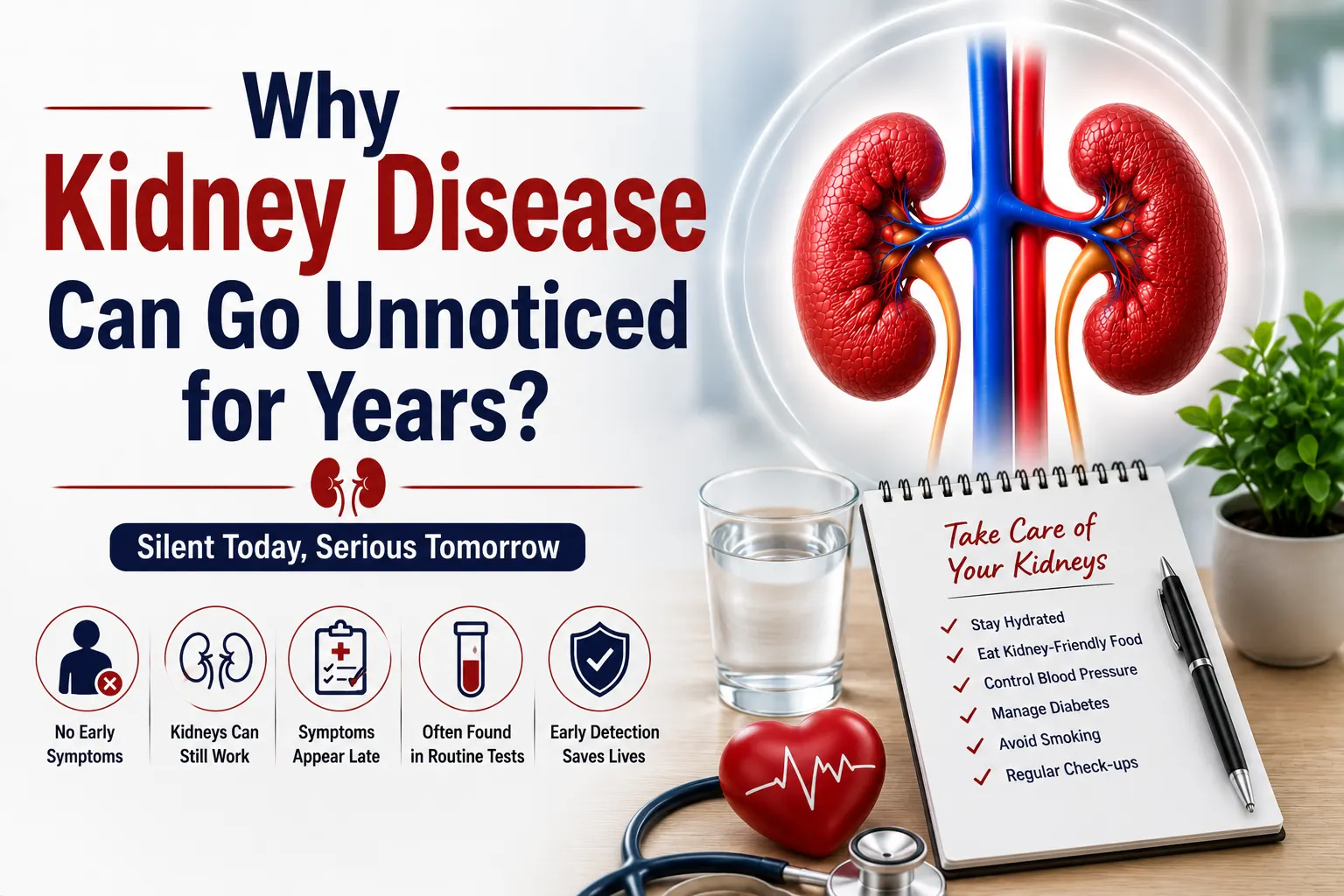
Kidney disease can go unnoticed for years because your kidneys are basically the strong, silent type of the body; they keep working overtime without complaining until nearly 90% of their function is gone. That's the blunt answer. Now let's talk about why your kidneys are apparently better at hiding problems than most people are at hiding surprise birthday parties.
Here's the thing about CKD illness (that's chronic kidney disease, for anyone who just met this acronym): it doesn't announce itself with a marching band. There's no dramatic chest-clutching moment like you see with a heart attack. Instead, it tiptoes in, quietly chipping away at your renal function, and by the time you actually feel something's wrong, your kidneys have usually already been struggling for a long, long time.
📞 Get a Kidney Health Consultation – Call Now!
Your kidneys are wildly redundant by design. You've got two of them, and each one is capable of doing the job practically solo. So even when one kidney is limping along at half capacity, the other one just picks up the slack and never tells you about it. It's like having a coworker who covers for you every single time you're slacking off; convenient until the day they finally quit, and everything falls apart at once.
This is exactly why silent kidney disease is such an apt nickname. Doctors and researchers have long noted that kidney function can decline gradually over years, sometimes decades, without producing symptoms that most people would associate with "something is wrong with my kidneys." Fatigue, mild swelling, slightly foamy urine; these get blamed on everything else first. Bad sleep. Stress. That extra slice of pizza. Nobody's first thought is "my kidneys are quietly filing for early retirement."
A few reasons this sneaky illness manages to stay under the radar for so long:
Massive functional reserve – as mentioned, one healthy-ish kidney can often compensate for a struggling one.
Vague early symptoms – tiredness and mild puffiness don't scream "kidney" to most people, or even to some doctors on a first visit.
No routine testing habit – unlike blood pressure, which gets checked at every doctor visit, kidney function tests (like eGFR and urine albumin) aren't always part of a standard annual physical unless you're already in a high-risk group.
Risk factors hiding in plain sight – diabetes and high blood pressure are the two biggest culprits behind kidney damage, and both of those can also go unmanaged quietly for years.
Research published by the National Kidney Foundation and data tracked by the CDC have repeatedly pointed out that more than 1 in 7 adults in the U.S. is estimated to have some form of chronic kidney disease, and a striking majority of them don't know it. That's not a typo; most people walking around with early-stage kidney trouble have absolutely no idea.
📞 Get a Kidney Health Consultation – Call Now!
If CKD illness had an origin story, it would mostly star two familiar villains: diabetes and hypertension. Studies, including long-term data from the UKPDS (UK Prospective Diabetes Study), have shown that poorly controlled blood sugar steadily damages the tiny blood vessels in the kidneys' filtering units. Add high blood pressure into the mix, and you've basically got a slow leak in your kidneys' plumbing system that nobody's checking on.
|
Symptom People Notice First |
What's Actually Happening |
Why It Gets Ignored |
|
"I'm just tired lately" |
Reduced waste filtration building up in the blood |
Blamed on Netflix binges and bad sleep |
|
Slightly puffy ankles |
Fluid retention from impaired kidney function |
Blamed on standing too long or salty snacks |
|
Foamy or frothy urine |
Protein leaking into urine (a real red flag) |
Mistaken for "just how the toilet water looked today" |
|
Loss of appetite |
Toxin buildup affecting digestion |
Blamed on stress or a random stomach bug |
Every single one of those symptoms has a much more boring, everyday explanation ready to swoop in and take the blame. That's precisely the problem.
For an actual kidney disease patient, this quiet progression usually means the diagnosis arrives later than anyone would like, often at a stage where treatment options have narrowed. That's why proactive kidney care; meaning regular screening if you have diabetes, high blood pressure, a family history, or are simply over 60; matters so much more than waiting for symptoms to show up and introduce themselves.
Simple blood and urine tests can catch ckd illness far earlier than symptoms ever will. Annual eGFR and urine albumin tests are inexpensive, quick, and can be the difference between catching a problem in stage 2 versus discovering it in stage 4.
Kidneys have huge reserve capacity, so damage often stays invisible until function is significantly reduced.
Diabetes and high blood pressure are the leading causes of chronic kidney disease.
Common early symptoms (fatigue, swelling, foamy urine) are easy to misattribute to other causes.
Regular screening, not waiting for symptoms, is the real key to early detection.
Studies from the CDC and National Kidney Foundation confirm most affected adults don't know they have it.
📞 Get a Kidney Health Consultation – Call Now!
Because kidneys have so much backup capacity that they can quietly cover for damaged tissue for years before anything feels off.
Mild fatigue, slightly puffy ankles, and foamy urine are the most commonly overlooked early clues.
Anyone with diabetes, high blood pressure, a family history of kidney problems, or age over 60 should get routine kidney function tests.
Early-stage kidney damage can often be slowed or stabilized with treatment, though advanced damage usually isn't fully reversible.
Once a year is generally recommended for at-risk adults, though your doctor may suggest more frequent checks depending on your health history.
Disclaimer: This blog is for general informational purposes only and isn't a substitute for professional medical advice, diagnosis, or treatment. If you have concerns about your kidney health, please consult a qualified healthcare provider who can look at your specific situation.