Jul 17 , 2026
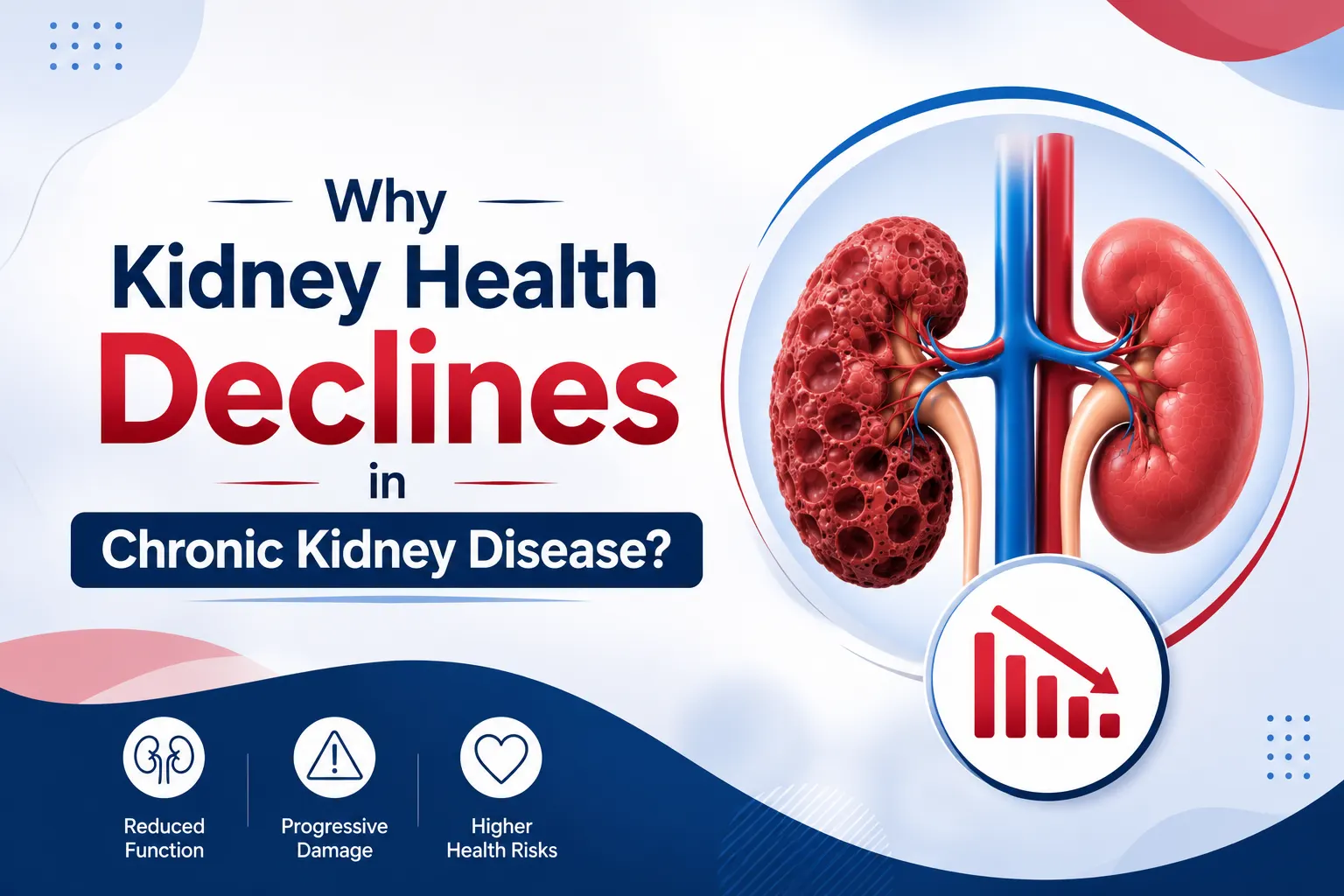
Your kidneys decline in chronic kidney disease because scar tissue quietly builds up faster than your body can repair it, so the amount of working kidney tissue keeps shrinking year after year. It's not one big dramatic crash; think of it more like a slow leak in a tyre than a blowout.
And honestly, that's what makes it so sneaky. Your kidneys are the strong, silent type. They'll keep filtering your blood, balancing your fluids, and quietly doing their job long after they've taken serious damage, because they're built with a ton of backup capacity. So, by the time you actually feel something's off, a fair bit of the damage is already done. Rude, honestly.
📞 Get a Kidney Health Consultation – Call Now!
Each kidney has about a million tiny filtering units called nephrons (yes, a million; your kidneys are basically overachievers). In chronic kidney disease, these nephrons get damaged over time, usually because of long-standing conditions like diabetes or high blood pressure. As nephrons die off, the remaining ones have to work overtime to pick up the slack.
Here's the ironic part: that overtime work is exactly what wears the remaining nephrons out faster. It's like when one coworker on the team quits and everyone else absorbs their workload; except in this case, "burnout" means actual scarring of kidney tissue, a process doctors call glomerulosclerosis.
Research published in the journal Kidney International has long pointed to this exact pattern: that once a critical mass of nephrons is lost, the surviving ones face increased pressure and filtration load, which accelerates further scarring. It's a bit of a vicious cycle, and it's a big reason why renal function tends to decline gradually rather than all at once.
A few things tend to show up again and again as the main troublemakers:
Diabetes – high blood sugar over time damages the tiny blood vessels inside the kidneys
High blood pressure – forces kidneys to filter blood under constant extra pressure
Chronic inflammation – ongoing infections or autoimmune conditions keep the kidneys in "repair mode" indefinitely
Genetics – conditions like polycystic kidney disease run in families
Overuse of certain painkillers – yes, even the everyday ones, if used excessively over years
A well-cited study from the National Kidney Foundation noted that diabetes and hypertension together account for the majority of new CKD cases worldwide; basically the reigning champions of a title nobody wants to hold.
This is where things get tricky. Chronic kidney disease symptoms and treatment options are often discussed together because the symptoms show up so late. Early on, you might just feel a bit more tired than usual, or notice some puffiness around your ankles. Easy to blame on a long day or salty dinner, right?
Persistent fatigue that sleep doesn't fix
Swelling in the legs, ankles, or around the eyes
Foamy or bubbly urine (not the fun kind of bubbles)
Changes in how often you need to pee
Trouble concentrating, sometimes called "brain fog"
|
Category |
Healthy Kidney |
CKD Kidney |
|
Work ethic |
Reliable 9-to-5, no drama |
Working three jobs and still behind |
|
Filtering waste |
Smooth like a good coffee filter |
Clogged like a filter nobody's cleaned in years |
|
Mood (if kidneys had one) |
Chill, unbothered |
Stressed, overworked, quietly panicking |
|
Communication style |
Silent because everything's fine |
Silent because it's hiding a mess |
📞 Get a Kidney Health Consultation – Call Now!
Here's the genuinely good news: catching things early changes the whole story. CKD management isn't about reversing damage that's already done; it's about protecting whatever kidney function you still have, for as long as possible.
Managing blood sugar and blood pressure tightly
Cutting back on excess salt and processed foods
Staying consistent with prescribed medications
Avoiding unnecessary painkillers or contrast dyes when possible
Regular check-ins with a kidney disease doctor to track progress
A study published in The Lancet found that early intervention with blood pressure control and specific medication classes (like ACE inhibitors) significantly slowed the rate of kidney function decline in at-risk patients. So yes, boring lifestyle stuff really does work; science backs it up.
When it comes to actual CKD treatment, options range from medications and dietary changes in early stages, all the way to dialysis or transplant in advanced stages. The earlier it's caught, the more options stay on the table, which is exactly why regular screening matters more than people realize.
Good kidney care really boils down to consistency; regular checkups, sticking to your medication routine, and not ignoring the small stuff, like that persistent puffy ankle you've been blaming on your shoes.
Chronic kidney disease progresses slowly, often silently, as nephrons get damaged and scarred over time
Diabetes and high blood pressure are the leading causes worldwide
Symptoms like fatigue, swelling, and foamy urine often show up only after significant damage
Early detection and consistent CKD management can meaningfully slow progression
Regular checkups with a kidney specialist matter more than waiting for symptoms to appear
📞 Get a Kidney Health Consultation – Call Now!
Not usually reversed, but its progression can often be slowed down significantly with the right care.
Fatigue and mild swelling around the ankles are usually among the earliest, easy-to-miss signs.
No, diabetes is a leading cause but high blood pressure, genetics, and chronic infections play a big role too.
Once a year is a reasonable rule of thumb if you have diabetes, high blood pressure, or a family history.
Staying hydrated helps kidneys function better day to day, but it can't undo existing structural damage.
This blog is for general informational purposes only and isn't a substitute for professional medical advice, diagnosis, or treatment. Always consult a qualified healthcare provider regarding your kidney health or any medical condition before making decisions based on this content.