Jul 30 , 2026
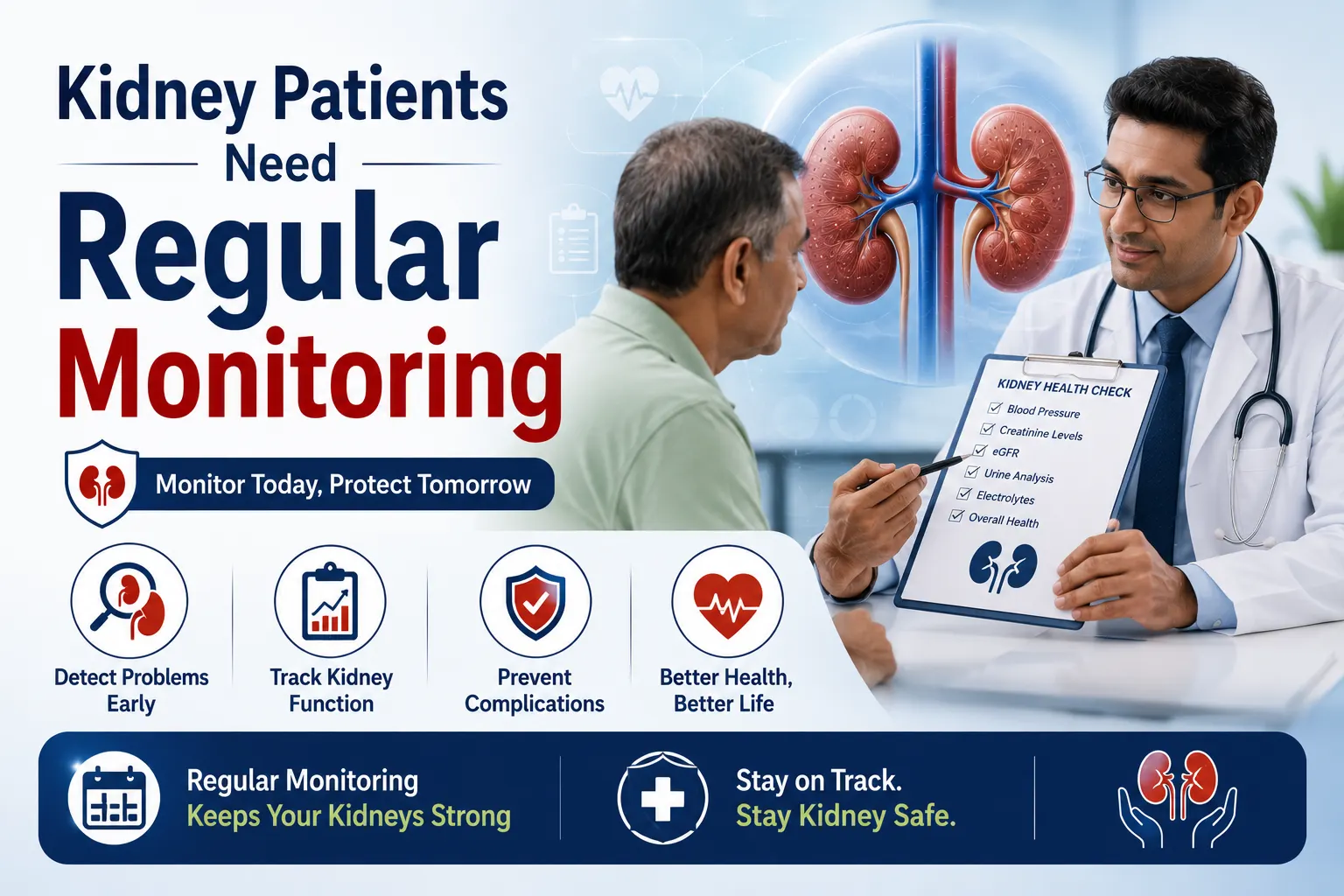
Think of your kidneys as your body’s personal, 24/7 water treatment plant. They filter waste, balance fluids, and even help manage your blood pressure. But here is the tricky part: kidneys are notoriously stoic. They don't complain, they don't throw tantrums, and they don't give you a mild headache to let you know they are having a rough day. That is exactly why kidney patients need regular monitoring; by the time you actually feel sick, those little bean-shaped filters have been working overtime under terrible conditions for a while.
📞 Get a Kidney Health Consultation – Call Now!
The landmark Global Burden of Disease Study highlighted that millions of people worldwide live with kidney impairment without even realizing it. Because early stages of kidney damage rarely show outward symptoms, relying on how you "feel" is a terrible strategy for chronic kidney disease management.
To keep tabs on what is actually happening under the hood, your kidney disease doctor relies on specific laboratory data rather than guesswork.
eGFR (Estimated Glomerular Filtration Rate): Think of this as your kidney efficiency score. It tells us how well your filters are cleaning your blood.
Creatinine levels: Creatinine is a waste product from normal muscle breakdown. If your kidneys are slacking, this builds up in your blood like uncollected trash.
Urine albumin-to-creatinine ratio (UACR): A fancy term for checking if your kidneys are leaking protein. Healthy kidneys keep protein in the body; damaged ones let it slip into the urine.
📞 Get a Kidney Health Consultation – Call Now!
To break down what your medical team is actually looking at during a routine kidney test, here is a quick, completely un-intimidating guide to how we measure your renal function.
|
What They Measure |
What It Secretly Means |
The Goal |
|
eGFR |
Your kidney's daily productivity percentage. |
Higher is better (above 60 is the sweet spot). |
|
Creatinine |
The "uncollected trash" metric in your bloodstream. |
Lower is better. |
|
Protein/Albumin |
Checking if your filters have structural holes. |
You want minimal to no leakage here. |
📞 Get a Kidney Health Consultation – Call Now!
Staying on top of your appointments isn't just about collecting data points to make your medical chart look busy. It directly dictates your daily quality of life and shapes your long-term CKD treatment plan. A clinical trial published in The Lancet demonstrated that tight, proactive tracking of kidney metrics reduces the risk of disease progression by up to 30%.
When you prioritize consistent kidney care, you and your doctor can make smart, real-time adjustments:
Medication Fine-Tuning: Many common blood pressure or diabetes medications are cleared by the kidneys. If your filtration rate changes, your medication doses need to change too, or they can accidentally become toxic.
Dietary Adjustments: Your kidneys balance minerals like potassium and phosphorus. Routine labs tell you if you need to cut back on avocados or if you're perfectly fine to keep enjoying them.
Blood Pressure Mastery: Kidneys regulate fluid volume. Regular check-ins ensure your blood pressure isn't quietly damaging the delicate blood vessels inside your filtration system.
Ultimately, successful chronic kidney disease management relies entirely on trending data over time. A single lab result is just a snapshot, but regular monitoring provides the full movie, allowing your healthcare team to spot a downward trend and pivot before complications arise. Proactive chronic kidney disease management keeps you firmly in the driver’s seat of your health journey.
• You cannot count solely on physical symptoms to judge your kidney health.
• Frequent blood and urine tests can detect tiny changes that you may not even notice immediately.
• When you get your kidney health checked from time to time, it allows for minor, stress-free lifestyle changes instead of sudden medical actions.
📞 Get a Kidney Health Consultation – Call Now!
It depends entirely on your stage of health, but typically ranges from every three months to once a year as directed by your physician.
While actual scarring can't be reversed, proper management can stabilize your numbers and protect your remaining kidney function beautifully.
This article is for informational and educational purposes only and should not be taken as professional medical advice. Always consult with a qualified healthcare provider or nephrologist regarding any questions you may have about a medical condition, diagnosis, or personalized treatment plan.