

Jun 25 , 2026
Can a 7-day meal plan "rejuvenate" your kidneys? Short answer: No, and anyone promising that is selling you something. Kidneys don't have a reset button. What a smart, simple kidney meal plan can do is take some of the workload off your kidneys, support the function you currently have, and build habits that, over months and years, genuinely matter. Think of it less like a magic detox and more like giving your kidneys a comfortable desk chair instead of a wobbly stool. Same job, way less strain.
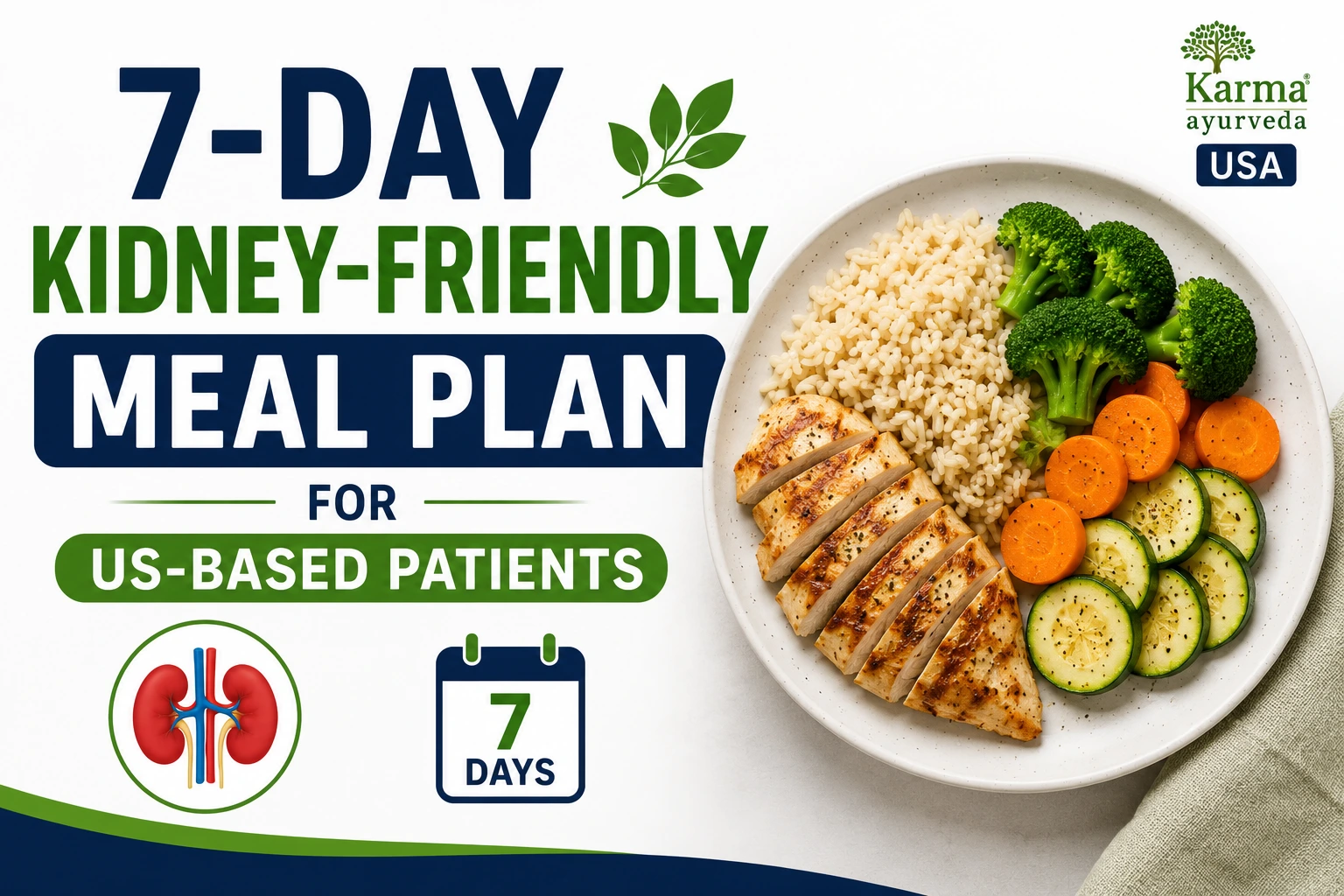
This guide provides a practical 7-Day Kidney-Friendly Meal Plan for US-Based Patients and is for general wellness purposes; it is not medical advice, and it is absolutely not a substitute for guidance from your nephrologist or a renal dietitian, especially if you have diagnosed kidney disease, are on dialysis, or take medications that affect potassium or phosphorus levels. Okay, disclaimer delivered. Let's get into it.
A 7-day kidney diet can support kidney health, but it cannot reverse or regenerate damaged kidney tissue.
The focus of a kidney-friendly meal plan is reducing sodium, moderating protein, and managing potassium and phosphorus when needed.
Research shows that long-term healthy eating patterns, such as DASH and Mediterranean-style diets, may help protect kidney function.
This 7-day kidney-friendly meal plan for CKD patients serves as a general guide and should be personalized with professional advice.
A low-sodium meal plan for kidney disease patients may help reduce fluid retention and blood pressure.
Anyone using a kidney diet meal plan for high creatinine levels or a weekly renal diet plan for stage 3 kidney disease should consult a nephrologist or renal dietitian for individualized recommendations.
Consistency, not quick fixes, is the key to long-term kidney wellness.
A kidney-friendly meal plan isn't about eating sad, flavorless food for a week and hoping for the best. It's about three things, mainly:
• Reducing sodium, since excess salt makes your kidneys work overtime to balance fluid
• Managing protein intake so your kidneys aren't filtering more waste than necessary
• Keeping potassium and phosphorus in a reasonable range, which matters more if your kidney function is already reduced
What it doesn't mean is reversing existing kidney damage. Once kidney tissue is damaged, diet supports what's left; it doesn't regenerate what's gone. That's not pessimism, that's just how kidney physiology works, and it's worth knowing upfront so you're not chasing an outcome that isn't realistic.
Here's where we put our nerd glasses on for a minute, because "trust me" isn't a great foundation for a health article.
• The DASH Diet Trial; Appel LJ et al., conducted in the mid-1990s, published in the New England Journal of Medicine in 1997. This trial wasn't designed specifically for kidney patients, but it showed that a diet rich in fruits, vegetables, and low-fat dairy, with reduced sodium, lowered blood pressure significantly. Since high blood pressure is one of the biggest drivers of kidney damage, this matters a lot.
• The MDRD Study (Modification of Diet in Renal Disease); Klahr S et al., NEJM, 1994. This looked at whether restricting protein intake slowed the progression of kidney disease. Results were mixed, and protein needs vary a lot by individual, which is exactly why a renal dietitian's input matters more than a generic blog (yes, even this one).
• Mediterranean Diet and Kidney Function; Khatri M et al., published in the Clinical Journal of the American Society of Nephrology, 2014, based on the Northern Manhattan Study cohort. Researchers found that people following a more Mediterranean-style eating pattern had better kidney function markers over time compared to those who didn't.
• Fruits, Vegetables, and Kidney Acid Load; Goraya N et al., published in Kidney International, around 2012. This research looked at patients with reduced kidney function and found that adding more fruits and vegetables to the diet helped reduce kidney injury markers, likely by lowering the acid load the kidneys had to process.
• Hydration and Kidney Disease Progression; Clark WF et al., published in the Clinical Journal of the American Society of Nephrology, 2011. This review examined whether higher water intake protects kidney function. The findings were promising but not definitive, suggesting adequate hydration matters, without supporting the idea that "drinking gallons of water flushes out your kidneys," which, despite what your gym buddy says, is not really how kidneys work.
None of these studies claims that a one-week diet reverses kidney damage. What they consistently show is that diet patterns, sustained over time, influence kidney health markers. That's the honest takeaway, and it's still a pretty good reason to eat better starting today.
A few pointers worth taking seriously before you dive into this 7-day kidney diet:
• This plan is written as a general, lower-sodium, moderate-protein template for people without diagnosed CKD who want to support kidney health
• If you have CKD at any stage, your potassium, phosphorus, fluid, and protein limits are individual; please get a plan from your renal dietitian instead of a generic one
• Sodium is capped low throughout, making it a practical low-sodium meal plan for kidney disease patients, generally aiming under 2,300 mg per day, in line with general American Heart Association and CDC guidance
• Portion sizes here are general guides, not prescriptions; adjust based on your own calorie needs
• "Kidney-friendly" foods can still be unfriendly in large amounts, so moderation actually means something here, not just a nice word on a label
Below is a simple kidney meal plan designed to support healthy eating habits and kidney wellness. Here's the week laid out simply, because nobody wants to flip between five tabs to figure out what's for dinner.
|
Day |
Breakfast |
Lunch |
Dinner |
Snack |
|---|---|---|---|---|
|
Day 1 |
Scrambled eggs with bell peppers and olive oil |
Grilled chicken salad with arugula, cucumber, lemon dressing |
Baked cod with sautéed cabbage and a small portion of rice |
Apple slices with a small handful of unsalted almonds |
|
Day 2 |
Overnight oats with blueberries and cinnamon |
Turkey lettuce wraps with shredded carrots |
Stir-fried tofu with bok choy and garlic, light soy alternative |
Rice cakes with a thin spread of unsalted peanut butter |
|
Day 3 |
Greek yogurt (low-sodium) with strawberries |
Quinoa bowl with roasted zucchini and chickpeas |
Grilled chicken breast with steamed green beans |
Cucumber slices with hummus, used sparingly |
|
Day 4 |
Veggie omelet with onions and spinach |
Baked salmon over mixed greens |
Vegetable stir-fry with brown rice, low-sodium seasoning |
Unsalted popcorn, small bowl |
|
Day 5 |
Smoothie with berries, unsweetened almond milk |
Lentil soup, low-sodium broth, side salad |
Roast chicken thigh with cauliflower mash |
Pear slices |
|
Day 6 |
Whole-grain toast with avocado |
Shrimp and cabbage slaw with lime |
Baked eggplant with a light marinara and side salad |
Plain rice crackers |
|
Day 7 |
Chia pudding with raspberries |
Grilled chicken Caesar-style salad, light dressing |
Baked white fish with roasted asparagus and quinoa |
A few unsalted walnuts |
This 7-day kidney-friendly meal plan for CKD patients can serve as a starting framework, although people with chronic kidney disease should always tailor their meals according to medical advice. It can also be adapted as a kidney diet meal plan for high creatinine levels when recommended by a healthcare professional. For individuals with moderate CKD, parts of this menu may resemble a weekly renal diet plan for stage 3 kidney disease, but specific nutrient restrictions should always be individualized.
A quick honesty note: this table is a starting template, not gospel. Swap proteins, vegetables, and grains based on your taste, your allergies, and what your doctor or dietitian has actually told you about your potassium and phosphorus levels.
A few pointers on what generally shows up favorably in kidney-focused nutrition research and can fit well into a kidney meal plan:
• Cauliflower, cabbage, and bell peppers are lower in potassium compared to many other vegetables
• Berries; lower potassium fruit option compared to bananas or oranges
• Olive oil supports the heart-healthy fat profile that benefits blood pressure
• Garlic and onions; flavor boosters that reduce the need for added salt
• Fishlike cod and salmon; lean protein with useful omega-3 content
And the other side of that coin:
• Processed and packaged foods; usually loaded with sodium even when they don't taste "salty"
• Deli meats and canned soups; frequent sodium offenders
• Bananas, oranges, potatoes, and tomatoes; higher potassium foods that may need limiting depending on your kidney function
• Dark colas and certain packaged baked goods often contain phosphorus additives that aren't even listed clearly on labels
• Excess protein from large meat portions; more protein means more waste for your kidneys to filter
Can diet reverse kidney damage? No. Diet can support remaining kidney function and reduce strain, but it cannot regenerate kidney tissue that's already been damaged.
Is a 7-day plan actually enough to "improve" kidney function? A week is really a starting point, not a destination. Most of the research connecting diet to kidney health markers looks at sustained patterns over months or years, not single weeks.
How much water should I drink for kidney health? There's no single number that fits everyone, and people with certain kidney conditions actually need to limit fluids. General hydration guidance applies to healthy adults; if you have CKD, ask your doctor what's right for you.
Do I need to avoid all protein? No, protein is essential, but the amount matters more as kidney function declines. This is exactly the kind of detail a renal dietitian tailors to your labs, not a blog post.
A 7-day kidney-friendly meal plan won't rejuvenate anything overnight, and honestly, you'd be right to be suspicious of anyone who tells you otherwise. What it can do is lower your sodium load, ease the pressure on your kidneys, and give you a realistic, tasty template to build from. The research, from the DASH trial to the Mediterranean diet studies to the work on fruits and vegetables and kidney acid load, points in the same general direction: consistent, sensible eating habits support kidney health over the long run.
Whether you're following a general wellness approach or using this kidney meal plan as inspiration for healthier eating, start with this week, see how you feel, and loop in your doctor or a renal dietitian for anything beyond general wellness. Your kidneys do a quiet, thankless job every single day; feeding them well is a pretty small ask in return.
A kidney meal plan focuses on balanced nutrition while limiting nutrients that may strain kidney function.
A 7-day kidney-friendly meal plan for CKD patients is a good starting point, but it should be customized by a healthcare professional.
A kidney diet meal plan for high creatinine levels may help support kidney health when combined with proper medical care.
A low-sodium meal plan for kidney disease patients typically includes fresh vegetables, fruits, lean proteins, and minimally processed foods.

Karma Ayurveda, established in 1937, is an Ayurvedic hospital with a rich legacy of over eight decades. Led by Dr Puneet Dhawan, the fifth generation... Read More About Us
100 Church Street, Suite 800, New York, NY 10007

US FDA Reg. No.: 14568299376

How may we help you?