May 20 , 2026
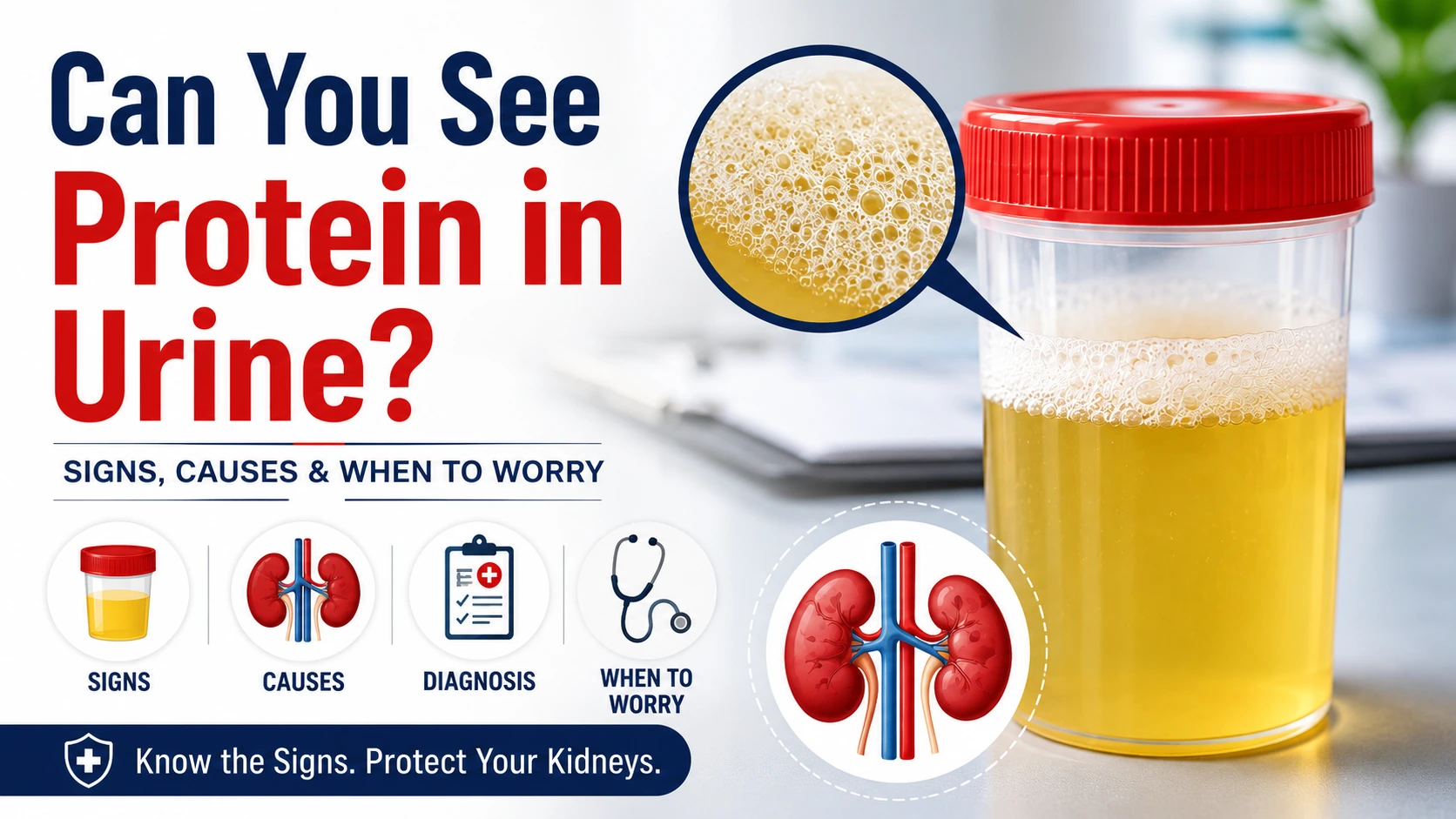
Most of us don’t spend much time admiring our handiwork in the toilet. You do your business, you flush, and you move on with your life. But now and then, you might glance down and notice that things look a little… festive. Specifically, if your urine looks like the top of a freshly poured root beer or a bubble bath gone wrong, you might be seeing protein.
In the medical world, this is called proteinuria. In the "you" world, it’s a sign that your kidneys might be having a bit of a midlife crisis. Today, we’re going to dive deep into the golden stream of knowledge to figure out what kidney disease protein in urine means, why it’s happening, and why your kidneys are usually the unsung heroes of your torso.
📞 Get a Kidney Health Consultation – Call Now!
To understand why protein in your pee is a big deal, you first have to appreciate what your kidneys actually do. Imagine your body is an exclusive nightclub. Your blood is the crowd of people trying to get in. Your kidneys are the bouncers standing at the velvet rope.
Most things, like waste, excess water, and that third shot of espresso, are "not on the list" and get kicked out (sent to the bladder). But protein? Protein is a VIP. It’s the celebrity guest that the bouncers are supposed to keep inside the club because your body needs it to build muscles, repair tissue, and fight off germs.
When protein starts showing up in your urine, it means the bouncers have fallen asleep at the door, or the velvet rope has been snapped. The VIPs are wandering out into the alleyway, and that’s not where they belong.
Some of the classic proteinuria symptoms are:
Swelling in feet, ankles, hands, or face
Frequent urination
Fatigue or weakness
Shortness of breath
Puffiness around the eyes
Nausea or poor appetite
Muscle cramps at night
If you notice these signs of protein in urine, visit a renowned medical facility like Karma Ayurveda USA.
📞 Get a Kidney Health Consultation – Call Now!
You can’t technically "see" a protein molecule with the naked eye unless you have radioactive spider powers. However, you can see the effect it has on your urine.
The Foam Factor: If your urine is consistently foamy, and we’re talking "latte art" levels of foam, that’s a classic sign. Protein changes the surface tension of the liquid, creating bubbles that don't pop immediately.
The Swell Factor: Because you’re losing protein (specifically albumin), your body struggles to keep fluid in your blood vessels. This fluid leaks into your tissues, leading to swelling in your hands, feet, or around your eyes. If you wake up looking like you went twelve rounds with a heavyweight champ, take note.
The "Meh" Factor: You might feel tired, lose your appetite, or experience muscle cramping.
If you find protein in your urine, don’t panic and start writing your will just yet. Sometimes, it’s just a temporary glitch in the Matrix. Some of the major high-protein in urine causes are:
Dehydration: If you haven't drunk water since the Bush administration, your urine becomes highly concentrated, which can lead to a false positive for protein.
Intense Exercise: If you just ran a marathon or tried to lift a literal car, your kidneys might leak a little protein temporarily. This is documented in the study Exercise-Induced Proteinuria: A Review.
Stress or Fever: Being sick or feeling incredibly stressed can temporarily strain your filtration system.
However, if the protein sticks around, we’re usually looking at two main culprits that are very common in the United States: Diabetes and High Blood Pressure.
High blood pressure acts like a power washer inside your kidneys. Over time, that intense pressure damages the delicate filters (called glomeruli). Diabetes, on the other hand, is like pouring syrup through a coffee filter; the high blood sugar eventually gums up the works and causes scarring.
📞 Get a Kidney Health Consultation – Call Now!
In the United States, kidney health is a major talking point because of our diet and lifestyle. According to the National Kidney Foundation’s Kidney Early Evaluation Program (KEEP) Annual Data Report, millions of Americans have early-stage kidney disease and don't even know it because they aren't looking at their urine.
When the kidneys are damaged, they lose their "negative charge." Usually, the filters and the protein are both negatively charged, so they repel each other like two "North" ends of a magnet. When the filter is damaged, that repulsion disappears, and the protein slips right through.
A landmark study that changed how we look at this is the Modification of Diet in Renal Disease (MDRD) Study. This research highlighted how controlling protein intake and managing blood pressure can slow down the "leak" and keep your kidneys happy for longer.
So, you think you have foamy pee. What now? You go to the doctor, and they ask you to pee in a cup. It’s the ultimate equalizer.
The Dipstick Test: This is a quick strip of paper that changes color. It’s great for a "yes/no" answer, but it’s not super precise.
The ACR (Albumin-to-Creatinine Ratio): This is the gold standard. It compares how much protein is in your pee versus a waste product called creatinine. It’s much more accurate.
The 24-Hour Collection: This is exactly what it sounds like, and it is exactly as fun as it sounds. You carry a jug around for a day and catch every drop. It’s the most thorough way to see what’s going on over a full cycle of living.
Scientific backing for these methods can be found in the KDOQI Clinical Practice Guidelines for Chronic Kidney Disease, which outlines exactly why these tests are the "detectives" of the renal world.
📞 Get a Kidney Health Consultation – Call Now!
The good news is that seeing protein in your urine isn't a life sentence; it’s an early warning system. Your body is essentially waving a yellow flag saying, "Hey! Over here! Check the engine!"
Manage the Pressure: If high blood pressure is the bully, ACE inhibitors or ARBs are the bodyguards. These medications specifically help relax the blood vessels in the kidneys.
Sugar Control: If you have diabetes, getting your A1C under control is like giving your kidneys a spa day.
Dietary Tweaks: Reducing salt intake is huge. Salt makes your body hold onto water, which increases the pressure in your "filtration pipes."
Weight Management: Carrying extra weight puts extra demand on your kidneys. Losing even a little bit can take the "overtime" shift off your renal system.
The Chronic Renal Insufficiency Cohort (CRIC) Study has provided mountains of evidence showing that managing these risk factors early on can prevent the need for more drastic measures like dialysis later in life.
📞 Get a Kidney Health Consultation – Call Now!
Your kidneys are incredible. They filter about 200 quarts of fluid every single day. They balance your electrolytes, control your blood pressure, and make sure you have enough red blood cells. The least you can do is check the bowl once in a while.
If you see bubbles in urine protein that look like they belong in a car wash, don't ignore them. It might be nothing; maybe you just used too much toilet cleaner, but it might be your VIP proteins making a break for it.
Schedule a visit with your doctor, pee in that cup with pride, and keep those bouncers at the door doing their jobs. Your body will thank you, and you’ll have a much better reason to appreciate your morning bathroom routine.
Stay hydrated, stay healthy, and keep an eye on the suds!
📞 Get a Kidney Health Consultation – Call Now!
Protein in urine is not usually visible, but it can sometimes make the urine look foamy or bubbly.
You may notice foamy urine, but a urine test is the best way to confirm protein in the urine.
Protein in urine often appears as persistent foam or frothy bubbles in the toilet.
Protein in urine usually doesn’t cause pain, but some people may notice swelling, fatigue, or changes in urination.