May 20 , 2026
Nobody really wants to talk about what happens after they’ve done their business. We usually do the "flush and dash," barely glancing back at the porcelain throne. But what if that layer of suds looking back at you isn't just because you used too much bleach in the toilet bowl cleaner? What if your urine is actually trying to send you a telegram?
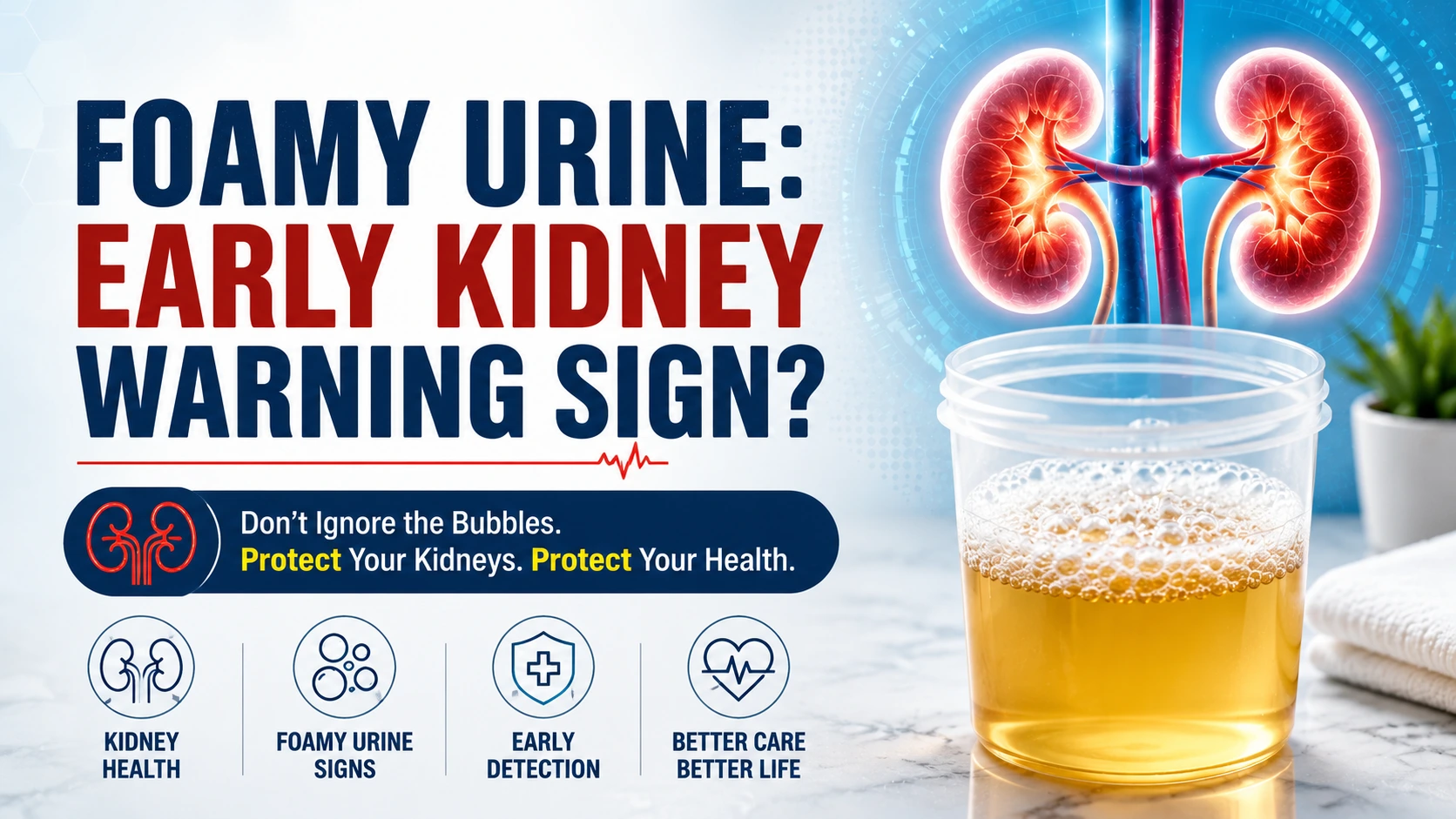
In the world of health, we tend to ignore the subtle signs until they start screaming. But today, we’re going to talk about the foamy urine kidney disease connection. Specifically, why your pee might look like a freshly poured Guinness and why that could be an early warning sign from your kidneys.
📞 Get a Kidney Health Consultation – Call Now!
Your kidneys are two bean-shaped organs tucked under your ribcage. In the U.S., chronic kidney disease (CKD) is a massive deal, affecting about 37 million adults. The scary part? Most of them don't even know they have it because kidneys are the "strong, silent type." They will work themselves to death without complaining until they are about 90% toasted.
Foamy urine is often one of the first "Hey, pay attention to me!" notes your kidneys send. According to the National Kidney Foundation’s Kidney Disease Outcomes Quality Initiative (KDOQI), early detection of protein in the urine is the single most important step in preventing the progression of kidney disease.
The protein we’re usually talking about is called albumin. In a healthy body, the microscopic filters in your kidneys, called glomeruli, are too small to let albumin through.
The Sieve Analogy: Think of your kidneys like a fine-mesh pasta strainer. You want the water to go through, but you want to keep the spaghetti. If the mesh gets holes in it, you start losing your dinner.
The Soap Effect: Protein molecules have a "surfactant" property. When they mix with water and air (thanks to your bladder's exit pressure), they lower the surface tension and create stable bubbles.
A study titled Urinary Albumin-to-Creatinine Ratio and Cardiovascular Ideation suggests that even small amounts of leaked protein (microalbuminuria) aren't just about the kidneys; they are a "window" into your entire vascular system.
📞 Get a Kidney Health Consultation – Call Now!
Before you panic and start drafting your will, let’s look at why your pee might be foaming. It’s not always a medical emergency, but it is always worth an investigation. Some of the major causes of foamy urine are:
Foamy Urine Dehydration: This is the most common American culprit. When you don't drink enough water, your urine becomes highly concentrated. Concentrated pee is "thicker" and more likely to foam. Drink a glass of water, wait an hour, and see if the bubbles go on vacation.
Diabetes: High blood sugar acts like sandpaper on those delicate kidney filters. Over time, it shreds the "mesh," leading to protein leakage. This is why the American Diabetes Association Standards of Care in Diabetes recommends annual urine tests for everyone with the condition.
High Blood Pressure: This is the second leading cause of kidney failure in the U.S. Imagine a garden hose with too much pressure; eventually, the nozzle is going to burst.
Intense Exercise: If you just ran a marathon or tried to out-squat a professional bodybuilder, you might see some foam. This is usually temporary and caused by your muscles breaking down protein faster than your kidneys can handle.
Certain Medications: Some over-the-counter pain relievers (looking at you, NSAIDs like ibuprofen) can be tough on the kidneys if taken like they’re Tic-Tacs.
📞 Get a Kidney Health Consultation – Call Now!
You don’t need a lab coat to start paying attention. Here are a few things to look for:
Does it linger? If the bubbles disappear in 30 seconds, you’re likely in the clear. If persistent foamy urine is present, then consult an expert like Dr. Puneet Dhawan.
Is it getting worse? If it happens once a week, it might be what you ate. If it’s every single time you go, it’s time to call the doc.
Are there other "clues"? Keep an eye out for swelling in your ankles or puffiness around your eyes in the morning. This is your body holding onto fluid because the kidneys aren't balancing things correctly.
📞 Get a Kidney Health Consultation – Call Now!
If you tell your doctor, "Hey, my pee looks like a bubble bath," they aren't going to laugh. They’re going to ask for a cup.
The first test is usually a Urinalysis Dipstick Test. It’s a literal piece of paper that changes color if it detects protein. If that comes back positive, they’ll likely order a more specific test called a Urine Albumin-to-Creatinine Ratio (UACR). This test is the gold standard for measuring exactly how much protein you’re losing over 24 hours.
Scientific research in the Journal of the American Society of Nephrology: Proteinuria as a Biomarker highlights that catching this early can allow for treatments, like ACE inhibitors or lifestyle changes, that can actually "seal the holes" in your kidney filters and stop the damage.
Let’s face it, the "Standard American Diet" (ironically abbreviated as SAD) isn't doing our kidneys any favors. We love our salt, and we love our processed sugars.
Salt: Too much sodium raises your blood pressure, which puts a "stress test" on your kidneys 24/7.
Sugar: We’ve already mentioned diabetes, but even "pre-diabetes" can start the foaming process.
Protein Shakes: While protein is great for muscles, an extreme excess of protein supplements can sometimes overload the system if your kidneys are already slightly compromised.
📞 Get a Kidney Health Consultation – Call Now!
Usually no. One-time foamy urine can happen due to dehydration, fast urination, or soap in the toilet, and is often harmless.
Yes, stress can sometimes cause temporary foamy urine by affecting hydration and body functions, but it is usually not serious if it happens only once.
Your body doesn't have a check-engine light that pops up on your forehead. Instead, it uses things like your urine to give you a status report. Foamy urine is a "yellow light." It’s telling you to slow down, take a look, and maybe get a professional opinion.
If you see foam:
Hydrate like it’s your job.
Watch your salt intake for a few days.
If the foam stays, book an appointment.
It’s much easier to fix a "leaky faucet" now than it is to replace the whole plumbing system later. Be kind to your kidneys; they’re the only ones you’ve got, and they really don't ask for much in return. Just some water, a little less salt, and for you to take a quick peek before you flush.
📞 Get a Kidney Health Consultation – Call Now!
If you ever feel embarrassed talking to your doctor about your pee, just remember: they’ve seen much weirder things by 9:00 AM on a Monday than some foamy bubbles. Your health is worth a two-minute awkward conversation!
Foamy urine can sometimes be a sign of kidney problems, especially if it happens often or comes with swelling and fatigue.
One of the earliest signs is changes in urination, such as foamy urine, frequent urination, or dark-colored urine.
Foamy urine is usually harmless if it happens occasionally after urinating fast or due to mild dehydration.
Common signs include fever, back pain, burning while peeing, cloudy urine, and frequent urination.