Jul 08 , 2026
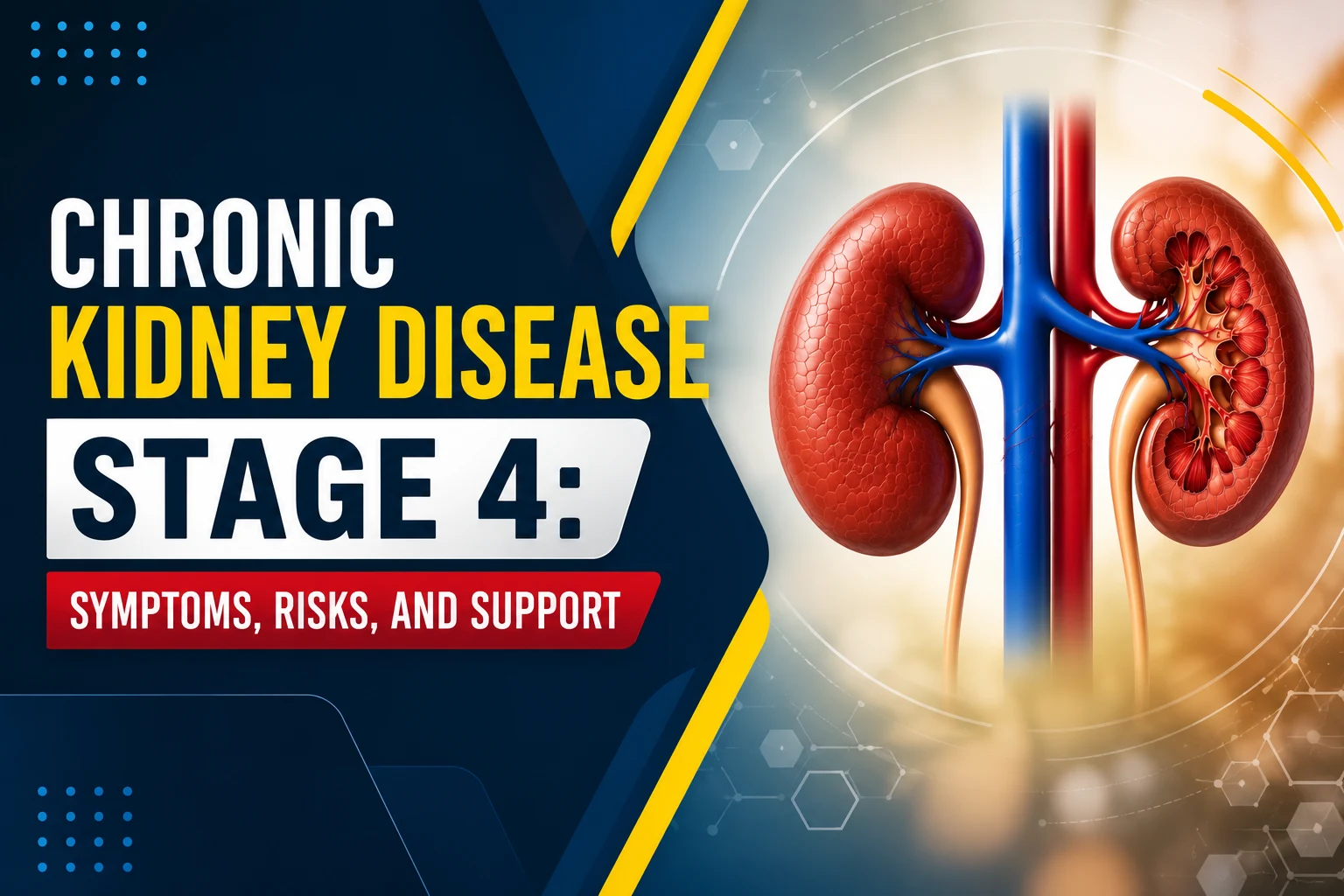
Yes, chronic kidney disease stage 4 means your kidneys are running at roughly 15-29% of their normal function, but no, it doesn't mean you're out of options or out of time. It's a serious wake-up call, not a death sentence, and there's a lot you can still do about it.
I know, I know; "serious wake-up call" isn't exactly the reassuring opener you were hoping for. But stick with me. Kidneys are weird little organs. They're basically the unpaid janitors of your body, quietly filtering out waste 24/7 without so much as a thank-you note. And like most underappreciated employees, they don't complain loudly when things go wrong. They just... quietly do less. Which is exactly why stage 4 often catches people off guard; you don't feel your kidneys struggling the way you'd feel, say, a stubbed toe.
📞 Get a Kidney Health Consultation – Call Now!
Doctors stage kidney disease using something called the GFR (glomerular filtration rate); basically, a fancy way of measuring how well your kidneys filter blood. Stage 4 sits in the 15-29 range, which is the last stop before stage 5, also known as kidney failure. This is why nephrologists tend to get noticeably more attentive once someone crosses into this territory.
A large cohort study published in Nephrology Dialysis Transplantation tracked patients moving from stage 3 to stage 4 and found the shift came with a meaningfully higher risk of hospitalization, acute kidney injury, and death compared to earlier stages; which is basically the medical version of "things just got real."
📞 Get a Kidney Health Consultation – Call Now!
Here's the annoying part: many people with chronic kidney disease stage 4 don't feel dramatically different at first. The symptoms tend to creep in like an uninvited houseguest; slowly, then all at once.
Fatigue that regular sleep doesn't fix
Swelling in the ankles, feet, or hands
Changes in urination (more, less, foamy; your kidneys are basically leaving you cryptic voicemails)
Nausea or loss of appetite
Muscle cramps, especially at night
Trouble concentrating (often called "brain fog")
Persistent itching
If several of these sound familiar, it's worth getting bloodwork done rather than Googling your symptoms at 2 a.m. (We've all been there. It never ends well.)
Left unmanaged, kidney failure chronic to stage 4 CKD can progress toward stage 5, where dialysis or a transplant becomes necessary. A long-term Veterans Affairs study following over 26,000 patients entering stage 4 found that the pattern of kidney decline; not just the starting point; strongly predicted who would eventually need dialysis or face higher mortality risk. Translation: catching and managing the trend early genuinely changes outcomes.
This is also where being a proactive kidney disease patient pays off. Regular monitoring, blood pressure control, and diet adjustments aren't just doctor 's-office nagging; they're evidence-backed ways to slow things down.
📞 Get a Kidney Health Consultation – Call Now!
Let's talk stage 4 CKD treatment, because this is the part people actually want answers to.
Blood pressure management; often the single biggest lever for slowing progression
Dietary changes; lower sodium, controlled protein and potassium intake
Medications; including drugs that protect kidney function and manage related issues like anemia or bone health
Managing diabetes tightly, if it's part of the picture
Planning for possible dialysis or transplant, even if it's not immediately needed
When people ask about chronic kidney disease stage 4 treatment options, the honest answer is: it's rarely just one thing. It's a combination approach, tailored by a nephrologist based on your specific labs, comorbidities, and lifestyle.
📞 Get a Kidney Health Consultation – Call Now!
|
Stage |
GFR Range |
Vibe Check |
|
Stage 1-2 |
60-120+ |
Kidneys: "We got this." |
|
Stage 3 |
30-59 |
Kidneys: "We're a little tired, ngl." |
|
Stage 4 |
15-29 |
Kidneys: "Please help us help you." |
|
Stage 5 |
Below 15 |
Kidneys: "We need backup (dialysis/transplant)." |
It's easy to hear "renal failure" and mentally check out with worry. But stage 4 is a stage, not a sentence. Plenty of patients live for years with careful kidney care, catching complications early and slowing decline meaningfully; a point echoed in longitudinal CKD research out of Taiwan's integrated kidney care programs, which found that not everyone progresses to end-stage kidney disease, and that tracking decline rate helps target intensive care to those who need it most.
Chronic kidney disease stage 4 means GFR between 15-29, one stage before kidney failure
Symptoms are sneaky; fatigue, swelling, and appetite changes are easy to dismiss
Studies show early, consistent management can meaningfully slow progression
Treatment is a combination of blood pressure control, diet, medication, and monitoring
Staying engaged as a patient; not panicked, just proactive; makes a real difference
📞 Get a Kidney Health Consultation – Call Now!
Not usually reversed, but its progression can often be slowed down significantly with the right care plan.
It varies a lot by individual, but many people live for years with consistent monitoring and treatment.
No; not always, since some people stabilize with good management and never progress to stage 5.
Generally, high-sodium, high-potassium, and high-phosphorus foods are limited, based on your specific labs.
It's usually not painful by itself, though related symptoms like cramping or swelling can be uncomfortable.
This blog is for general information only and isn't medical advice. Every kidney (and every human attached to one) is different, so please talk to a qualified nephrologist or healthcare provider before making any decisions about your diagnosis or treatment plan.