Jul 20 , 2026
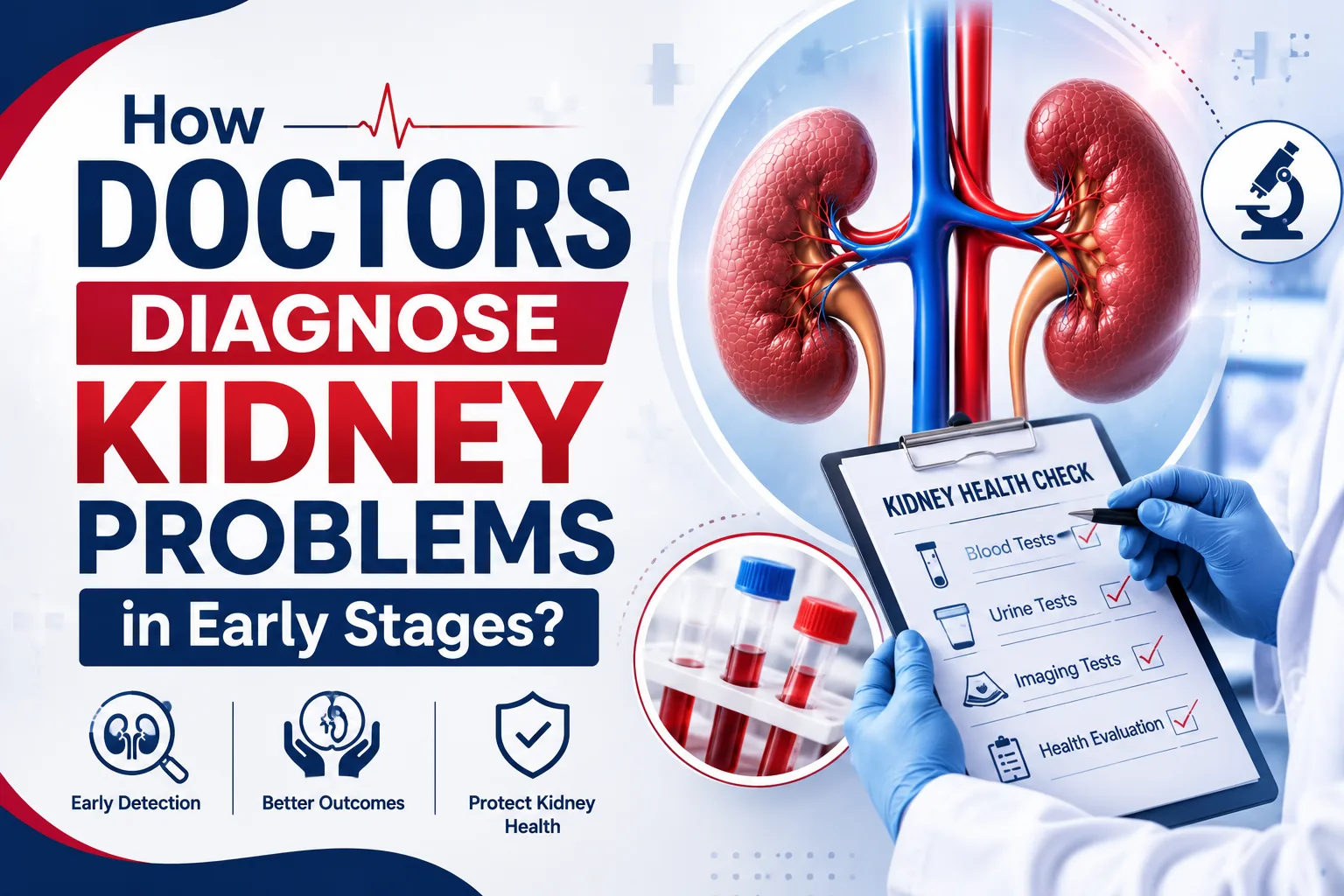
Short answer: mostly through blood and urine tests, not some dramatic hospital-drama moment where a doctor squints at an X-ray and gasps. A kidney disease doctor is really just reading small changes in your numbers, way before you'd ever feel anything wrong. And honestly, that's kind of the whole problem with kidneys; they don't make noise until it's late.
I've had a few relatives go through kidney scares, and the thing that surprised me every single time was how normal everyone felt right up until the test results said otherwise. No stomach pain, no fainting spells, nothing you'd see in a movie. Just a lab report quietly saying "hey, something's off here."
📞 Get a Kidney Health Consultation – Call Now!
That's the annoying part. Your kidneys can lose more than half their function and you'd still go about your day like nothing happened. No cramping, no obvious symptom, nothing to Google at 2 AM. By the time fatigue or swelling shows up, a good chunk of the damage is usually already done.
There's a 2021 paper in The Lancet that put a number on this; nearly 850 million people worldwide are living with some form of chronic kidney disease, and a large portion of them had no clue. Not because they were careless, just because the disease genuinely doesn't announce itself.
Which is exactly why doctors don't wait for symptoms. They go looking before there's anything to see.
It's a lot less scary than people assume. Usually, it starts with a plain old kidney test during a regular checkup; nothing fancy, no needles the size of your arm.
Blood test (Creatinine & eGFR): basically, your kidney's report card. Lower numbers mean the filtering isn't happening the way it should.
Urine test (ACR): checks if protein is leaking into your urine, which it normally shouldn't. This one's often the earliest whisper that something's wrong.
Blood pressure check: high BP and kidney trouble tend to show up together, like that one friend who always brings drama along wherever they go.
Ultrasound imaging lets the doctor actually see the kidneys, size, shape, and any blockages or cysts hiding in there.
Doctors also track renal function over months or years instead of trusting one single test, because one number can lie, a trend usually doesn't.
Research published in the American Journal of Kidney Diseases backed this up too; combining eGFR with urine albumin testing catches early kidney issues far more reliably than either test alone. Two tests, better odds. Simple as that.
📞 Get a Kidney Health Consultation – Call Now!
If something looks off in those first tests, your regular doctor will probably send you to a kidney specialist. Don't panic if that happens; it doesn't automatically mean bad news. Think of it more like a mechanic wanting to check the whole engine after hearing one weird sound, rather than assuming the car's about to explode.
A kidney consultation usually just means a longer chat about your history, maybe a couple of extra tests, and a plan going forward. And if you've been the person typing "why am I tired all the time" into a search bar at midnight, this is the actual kidney disease help worth getting, instead of another spiral through search results that mostly just scare you.
|
Routine Test |
Specialist Visit |
|
|
Who does it |
Your regular doctor |
A nephrologist |
|
What's involved |
Blood + urine test |
Deeper history, imaging, extra tests |
|
When it happens |
Yearly checkup |
When something looks unusual |
|
General vibe |
"Just routine, relax" |
"Let's actually look closer" |
|
What happens if you skip it |
You miss the early warning |
You miss it, and it gets louder later |
This is basically how doctors diagnose kidney disease early; nothing dramatic, just repeatable tests tracked over time, plus a close eye on risk factors like diabetes and high blood pressure. No crystal ball, no guesswork. A kidney disease doctor isn't hunting for some big reveal moment; they're watching small shifts most of us would never notice on our own.
So yeah, if you've been skipping your yearly checkup because "I feel totally fine"; your kidneys might have a very different opinion about that.
📞 Get a Kidney Health Consultation – Call Now!
Kidneys can lose a lot of function silently, long before symptoms show up.
Blood tests (creatinine, eGFR) and urine tests (ACR) are the main early-detection tools.
Diabetes and high blood pressure are the two biggest risk factors to keep an eye on.
A specialist referral isn't a scary verdict, just a closer look.
Regular checkups genuinely beat catching things late.
📞 Get a Kidney Health Consultation – Call Now!
Protein or blood showing up in a urine test, often long before you'd feel anything physically.
Yes, creatinine and eGFR levels from a routine blood test can flag early kidney trouble pretty reliably.
Once a year works for most people, more often if you've got diabetes, high BP, or a family history.
Very much so, the two tend to worsen each other over time if left unmanaged.
As soon as your test results look unusual or your doctor suggests it, that's your cue.
Disclaimer: This blog is meant for general awareness only and isn't a substitute for professional medical advice, diagnosis, or treatment. Please talk to a qualified doctor or kidney specialist about your specific health situation before making any decisions.