Aug 13 , 2026
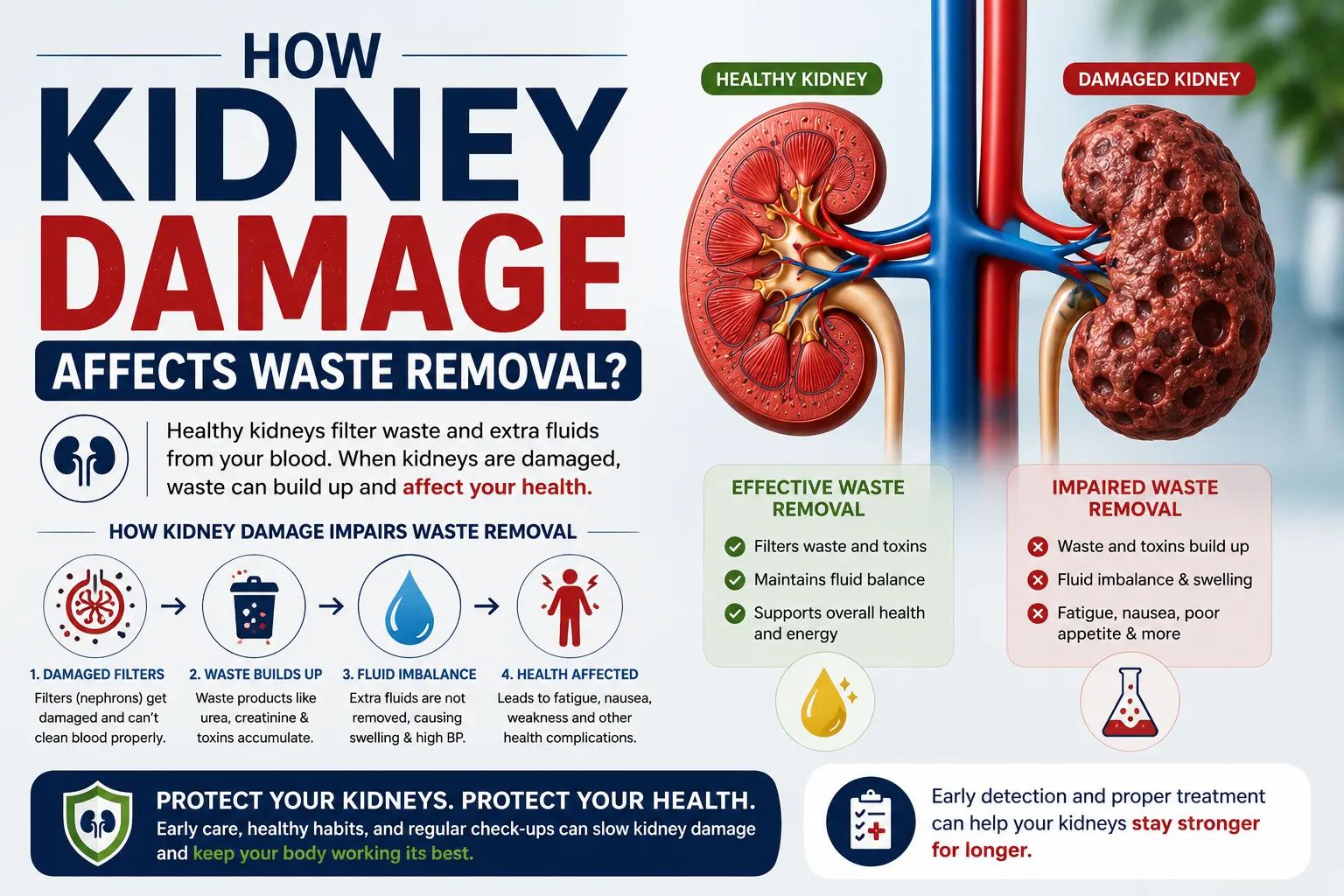
Short answer, right up front: when your kidney isn't functioning properly, the waste your body is supposed to flush out through urine just... stays. It hangs around in your bloodstream like a party guest who missed every hint that it's time to go home. That's the whole deal in one sentence. Everything below is basically me unpacking why that happens, why it matters more than people think, and what you can actually do about it.
I'll be honest, I never thought about my kidneys until a friend of mine got diagnosed with early-stage kidney disease last year and casually mentioned her "GFR number" over coffee like it was her Wordle score. I had no clue what that meant. Turns out most of us are walking around with zero appreciation for these two little organs quietly doing one of the most important jobs in our body. So let's fix that.
📩 Ask a Kidney Expert (Free 10-Min Consultation)
Picture your kidneys as the world's most patient, least appreciated coffee filter. All day, every day, they're straining your blood- around 150 quarts of it- and pulling out the stuff you don't need, then sending it out as urine (usually a quart or two). No lunch breaks, no weekends off.
Filter out waste products like urea and creatinine
Keep your fluid and electrolyte levels from going haywire
Help regulate blood pressure
Produce hormones your bones and red blood cells depend on
Handle waste removal by kidneys so your blood doesn't turn into a toxic soup
When it's all running smoothly, you genuinely don't notice any of it. Kind of like how you don't think about your Wi-Fi until Netflix starts buffering mid-episode. It's invisible right up until it isn't.
Back to that coffee filter idea. A clean one lets the good stuff through and keeps the grounds out. Now imagine that filter slowly clogging up over months, sometimes years, without you noticing a thing. That's more or less what happens with chronic kidney disease. The waste that should be leaving your body starts building up in your blood instead, which doctors call uremia (a word I definitely had to look up).
The National Kidney Foundation points out that once kidney function dips below a certain level; measured by something called GFR, or glomerular filtration rate; you start seeing symptoms like fatigue, swelling, brain fog, and just generally feeling "off." There's also a well-known study out of the Journal of the American Society of Nephrology that found even mild dips in kidney function line up with a higher risk of heart problems. Which honestly tracks, because your heart and kidneys are basically roommates splitting the same electricity bill.
If nothing's done about it, this slow slide can eventually turn into renal failure, where the kidneys can barely do their job anymore. When it happens fast and hard instead of slowly, doctors call it kidney failure, and that's usually when dialysis or a transplant enters the chat.
📞 Get a Kidney Health Consultation – Call Now!
|
Healthy Kidneys |
Kidneys Having a Rough Time |
|
Filter waste like a strict bouncer at the door |
Let toxins slip right past the velvet rope |
|
Urine looks pretty unremarkable |
Urine gets foamy, dark, or just plain weird |
|
You forget kidneys are even a body part |
You're Googling "kidney symptoms" at 2 a.m. |
|
Blood pressure behaves itself |
Blood pressure throws an occasional tantrum |
|
You feel normal, maybe smug about it |
Fatigue and puffiness show up uninvited |
Here's the part people underestimate. When your kidney not functioning well drags on, it's not just a "pee looks different" situation. Extra potassium can throw off your heart's rhythm. Extra fluid can pool in your legs, ankles, even your lungs. And a slow buildup of toxins can leave you tired, itchy, foggy-headed, or nauseous in ways that are easy to write off as "I'm just stressed"; until one day it's clearly more than that.
This is exactly why catching it early with a kidney disease doctor makes such a big difference. Nephrologists can spot warning signs through basic blood and urine tests long before you'd feel anything at all. A 2021 study published in The Lancet found that catching chronic kidney disease early and managing it well noticeably slows how fast it progresses and cuts down on complications. So yes, that annual checkup you keep pushing off? Actually worth it.
The genuinely good news is that kidneys are pretty forgiving if you treat them decently. A few habits that fall under solid kidney care:
Drink enough water (sorry, coffee doesn't count the same way)
Keep an eye on blood pressure and blood sugar
Go easy on salty, processed food
Don't pop painkillers like candy, especially NSAIDs
Get checked regularly, especially if diabetes or high blood pressure runs in your family
None of this is glamorous. It's the boring, unsexy stuff. But so is flossing, and we all know how that turned out for people who skipped it for years.
Kidneys quietly filter waste, balance fluids, and help manage blood pressure every day
When kidney not functioning properly, waste piles up in the blood instead of leaving the body
Left unchecked, this can progress toward renal failure or kidney failure
Small daily habits and regular checkups genuinely protect kidney health long-term
A kidney disease doctor can catch trouble early, often before you feel a single symptom
📩 Ask a Kidney Expert (Free 10-Min Consultation)
It means the kidneys have stopped filtering waste and extra fluid properly, so toxins start building up in the blood.
Early damage can often be slowed or managed, but full-blown kidney failure usually isn't something you can undo.
Watch for fatigue, swelling in the legs or face, changes in urine, and blood pressure that suddenly won't behave.
Mostly through blood tests like creatinine and GFR, along with a basic urine test.
If you have diabetes, high blood pressure, a family history of kidney issues, or ongoing swelling and fatigue, it's time to book that appointment.
Disclaimer: This post is written for general awareness and isn't medical advice. Kidney issues look different from person to person, so please don't self-diagnose off a blog. If something feels off with your health, talk to a real doctor or nephrologist who can actually look at your numbers.