Jul 23 , 2026
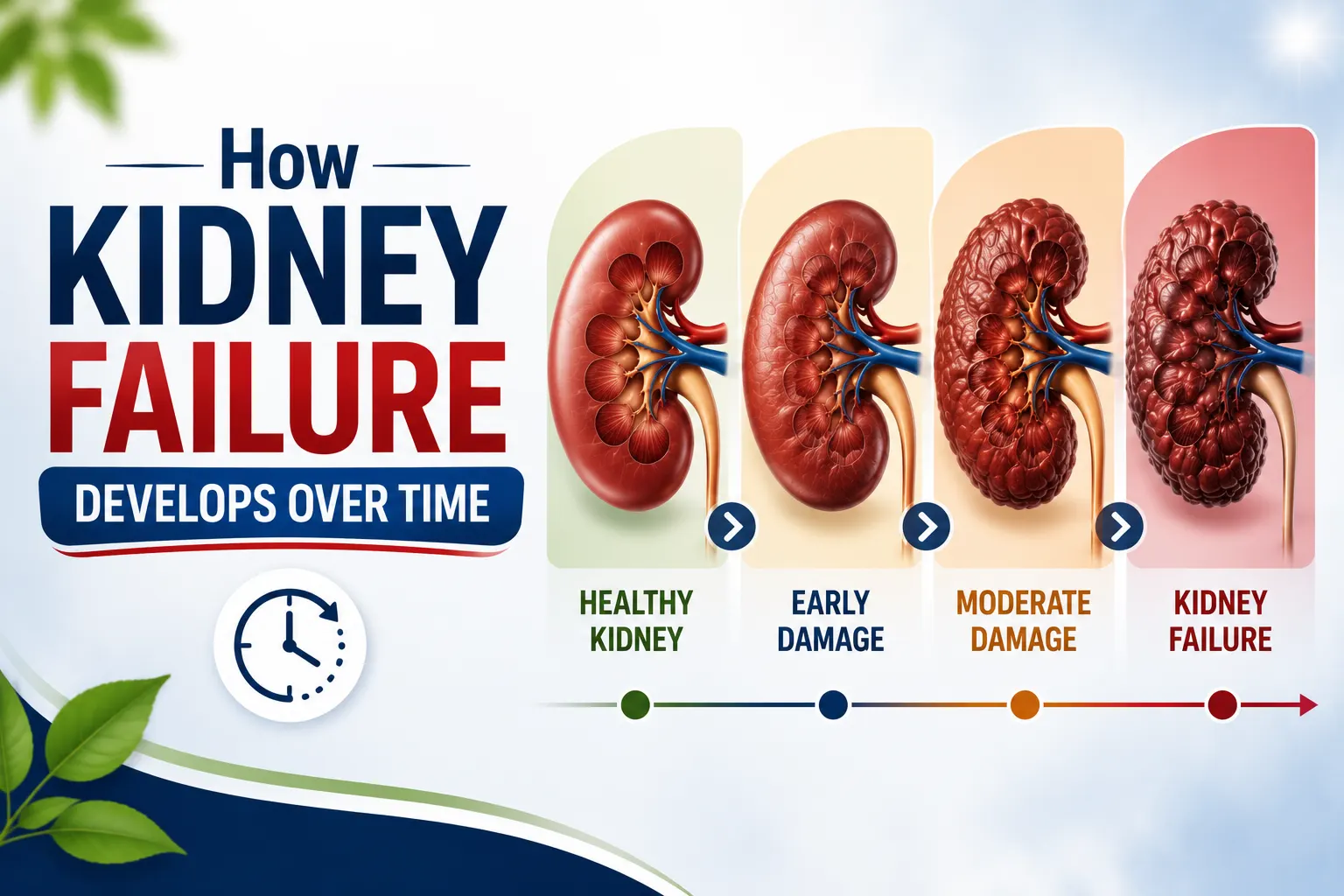
Short answer: your kidneys don't just clock out one day. Kidney failure usually creeps in over years, quietly stealing filtering power long before you feel a thing. By the time symptoms show up, the damage has often been brewing since your college years, which is honestly rude, but that's biology for you.
Let's back up. Your kidneys are two fist-sized, bean-shaped overachievers tucked under your ribcage, and their entire job is to filter your blood; about 50 gallons of it a day- kicking out waste, balancing fluids, and keeping your blood pressure from going rogue. When they're healthy, you never think about them. When they're struggling, you think about nothing else.
📞 Get a Kidney Health Consultation – Call Now!
Here's the thing nobody tells you at your annual checkup: kidney disease doesn't arrive with fireworks. It sneaks in through five stages, and stages 1 and 2 are basically your kidneys whispering "I'm fine" while secretly Googling their symptoms.
Stage 1–2: Mild damage, GFR (a fancy way of measuring how well your kidneys filter) is still decent. Most people feel completely normal here. Zero drama.
Stage 3: Filtering drops noticeably. Fatigue, swelling, and the occasional "why do I need to pee at 3 AM" moment show up.
Stage 4: Function is seriously reduced. This is usually when a kidney disease doctor enters the chat and starts talking about dialysis prep.
Stage 5: Also called end-stage, or renal failure; the kidneys are running on fumes and can't keep you alive without dialysis or a transplant.
According to research published in Nephrology Dialysis Transplantation, chronic kidney disease affects roughly 9% of people worldwide, and most of them don't know it; awareness in early stages is famously low, sitting under 5% in several population studies. So no, you're not being dramatic for wanting to get your levels checked.
📞 Get a Kidney Health Consultation – Call Now!
The two biggest culprits, over and over again, are diabetes and high blood pressure. A widely cited review in StatPearls notes that diabetic kidney disease tends to progress fast, with filtering ability dropping around 10 mL/min every year if left unmanaged; compared to a normal, boring decline of less than 1 mL/min per year that just comes with aging gracefully (or not so gracefully).
Chronic high blood pressure (basically firehosing your kidneys' delicate filters daily)
Recurring kidney infections or stones
Autoimmune conditions like lupus
Long-term use of certain painkillers
Genetics; thanks, family tree
A 2024 real-world cohort study out of Thailand, published in a peer-reviewed nephrology journal, found that high systolic blood pressure, low hemoglobin (anemia), diabetes, and protein in the urine were all independently linked to faster kidney not functioning properly over time. The silver lining: keeping blood pressure under control was one of the few things that actually slowed the slide.
|
Stage |
What's Happening |
How You Feel |
What To Do |
|
1–2 |
Minor damage, kidneys still showing up to work |
Totally fine, suspiciously fine |
Annual checkups, don't skip them |
|
3 |
Filtering takes a real hit |
Tired, puffy ankles, weird sleep |
See a doctor, adjust diet |
|
4 |
Function seriously low |
Nausea, appetite loss, brain fog |
Specialist care, dialysis planning |
|
5 |
Kidneys basically retired |
Can't function without treatment |
Dialysis or transplant, no more waiting |
Here's the honest bit: how kidney failure develops over time isn't a mystery science can't explain; it's a slow, measurable process, and that's actually good news. It means there's a long window where catching it early can change everything. Good kidney care- managing blood sugar, blood pressure, hydration, and cutting back on processed food and painkiller overuse- can genuinely buy years, sometimes decades, before things get serious.
If you've had blood work come back with a weird creatinine number, or a doctor mentioned your GFR without much explanation, that's your cue to ask more questions, not panic-Google at midnight (we've all been there).
Kidney failure develops in stages over years, often silently, before symptoms appear.
Diabetes and high blood pressure are the top two causes of gradual decline.
Regular blood and urine tests catch problems long before you'd feel them.
Early kidney disease helps; lifestyle changes plus medical monitoring can slow or even halt progression.
Stage 5, or renal failure, is serious but not sudden; it's the endpoint of a long, trackable process.
📞 Get a Kidney Health Consultation – Call Now!
It usually takes years, sometimes decades, moving through five slow stages before reaching full failure.
Early-stage damage can often be slowed or stabilized, but advanced kidney failure generally can't be fully reversed.
Fatigue, swelling in the ankles, changes in urination, and unusual blood pressure readings are usually the earliest clues.
Yes, consistently high blood pressure is one of the two leading causes of long-term kidney damage, right alongside diabetes.
As soon as blood or urine tests show abnormal kidney markers, or if you have diabetes or hypertension, since early monitoring matters most.
Disclaimer: This blog is for general information only and isn't a substitute for professional medical advice, diagnosis, or treatment. Kidney health is personal and complex; please talk to a qualified doctor about your specific situation before making any health decisions.