Aug 07 , 2026
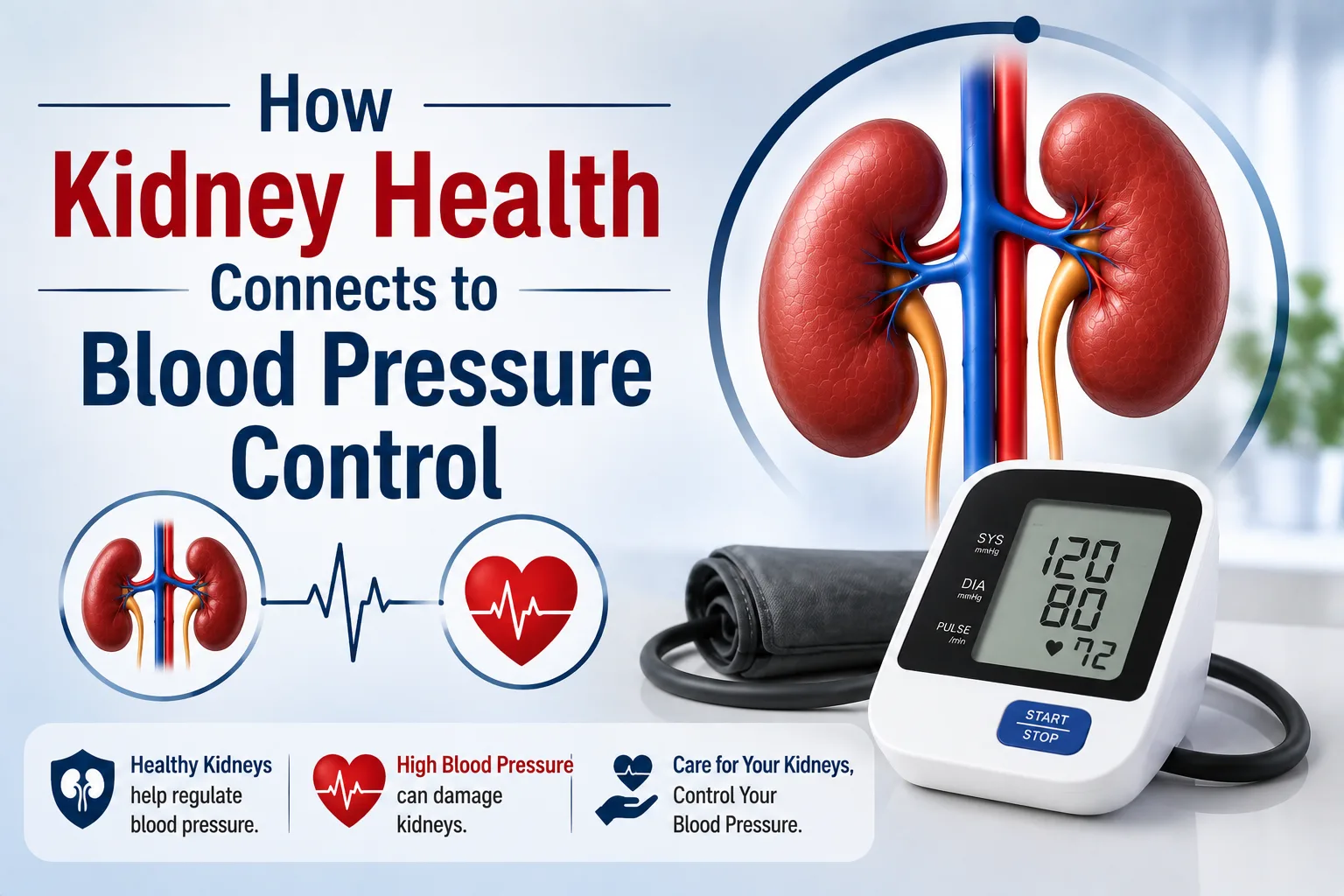
Your kidneys and your blood pressure are basically in a long-term relationship, and like most long relationships, when one partner is stressed, the other one feels it too. Mess with one, and the other starts acting up within weeks.
If you've ever wondered why your doctor checks your blood pressure at literally every single appointment (even the one for your sprained ankle), this is why. Your kidneys filter about 150 quarts of blood every single day, and they can only do that properly if the pressure pushing blood through them is in a healthy range. Too high, and the delicate filtering units, called nephrons, start to wear out like an overworked office intern. Too low, and your kidneys can't filter enough to keep your blood clean. It's a two-way street, and honestly, neither side is very forgiving.
📞 Get a Kidney Health Consultation – Call Now!
Here's the part that surprises most people: high blood pressure is one of the leading causes of chronic kidney disease, and at the same time, chronic kidney disease makes blood pressure harder to control. It's a bit like a car that overheats because the radiator is broken, but the radiator breaks because the car keeps overheating. You can't really blame just one part.
When your kidneys aren't filtering well, they retain more sodium and fluid than they should. More fluid means more volume in your blood vessels, which means, you guessed it, higher pressure. Your kidneys also release a hormone called renin that helps regulate blood pressure, so when kidney function dips, this whole system can go a little haywire.
A well-known study, the SPRINT trial (Systolic Blood Pressure Intervention Trial), found that people who kept their systolic blood pressure below 120 mmHg had significantly better health outcomes, including slower decline in kidney function, compared to those who aimed for the standard 140 mmHg target. Basically: tighter control, happier kidneys.
The tricky bit? Early kidney trouble is sneaky quiet. No dramatic symptoms, no flashing warning lights. That's why regular blood tests (checking renal function through things like creatinine and eGFR) and blood pressure checks matter so much, even when you feel totally fine.
Puffiness around the eyes or swelling in the ankles
Feeling unusually tired, even after decent sleep
Foamy or frothy urine (yes, we're talking about pee, no shame here)
Blood pressure readings that are creeping up, even slightly
Needing to pee more often at night
If a couple of these sound familiar, it's worth a chat with a kidney disease doctor rather than a Google spiral at 2 a.m.
📞 Get a Kidney Health Consultation – Call Now!
The good news is that this relationship is very fixable. Managing blood pressure well is one of the single best things you can do to protect your kidneys, and vice versa.
|
Habit |
Why Your Kidneys Say Thank You |
|
Cutting back on salt |
Less sodium means less fluid retention, less pressure buildup |
|
Regular movement (walking counts!) |
Helps blood vessels stay flexible instead of stiff and grumpy |
|
Staying hydrated (but not overdoing it) |
Helps kidneys flush out waste without overworking |
|
Limiting processed foods |
Less hidden sodium, less phosphorus overload |
|
Taking prescribed meds consistently |
ACE inhibitors and ARBs protect kidneys AND lower pressure; a rare win-win |
A 2021 study published in the Journal of the American Society of Nephrology found that consistent blood pressure control slowed the progression of kidney damage significantly more than blood pressure control alone without kidney-specific monitoring. Translation: it's not just about lowering the number; it's about lowering it the right way.
If you've already been told you have some level of chronic kidney disease, this is where a good kidney disease doctor (a nephrologist) becomes your new best friend. CKD treatment today isn't just "take this pill and hope for the best"; it usually involves a mix of blood pressure medication, dietary tweaks, and monitoring that's tailored to exactly how your kidneys are doing. The earlier this starts, the more options you have, and the less dramatic things need to get later.
Good kidney care really isn't complicated once you know what to look for; it's mostly just consistency, a bit of patience, and not skipping your check-ups because you're "feeling fine."
Kidneys and blood pressure influence each other directly; trouble in one usually shows up in the other
Chronic kidney disease often develops silently, so regular screening matters more than symptoms
Keeping blood pressure closer to 120 mmHg (rather than 140) has been linked to better kidney outcomes
Simple habits like reducing salt and staying active genuinely make a measurable difference
A nephrologist can build a CKD treatment plan tailored to your specific kidney function
📞 Get a Kidney Health Consultation – Call Now!
Not always, but it's one of the biggest risk factors, so it's worth getting checked rather than assuming you're fine.
Sometimes it stabilizes with the right treatment, though advanced damage usually can't be fully reversed.
Most doctors recommend at least once a year, more often if numbers are already borderline.
Yes, it's one of the simplest and most effective changes you can make, and your kidneys notice pretty quickly.
Not immediately, but if it stays high despite lifestyle changes, a kidney specialist can help before things progress further.
Disclaimer: This blog is for general informational purposes only and isn't medical advice. Always consult a qualified healthcare professional or nephrologist for diagnosis, treatment, or concerns about your kidney health or blood pressure