Jul 31 , 2026
Short answer: chronic kidney failure is, in most cases, the slow-burn result of two everyday conditions- diabetes and high blood pressure- quietly wrecking your kidneys' filters over years, long before you feel a thing. There's no single dramatic moment. It's more like death by a thousand cuts, except the cuts are sugar and pressure, and they've been at it since your kidneys weren't paying attention.
I get it, you were maybe hoping for something juicier. A rogue toxin. A mystery virus. Some kidney-munching parasite straight out of a late-night documentary. Nope. The actual culprits are the same tired old conditions your uncle, your neighbor, and probably half your office already have. Kidneys, it turns out, are mostly just innocent bystanders caught between your genes, your habits, and a bit of bad luck.
📞 Get a Kidney Health Consultation – Call Now!
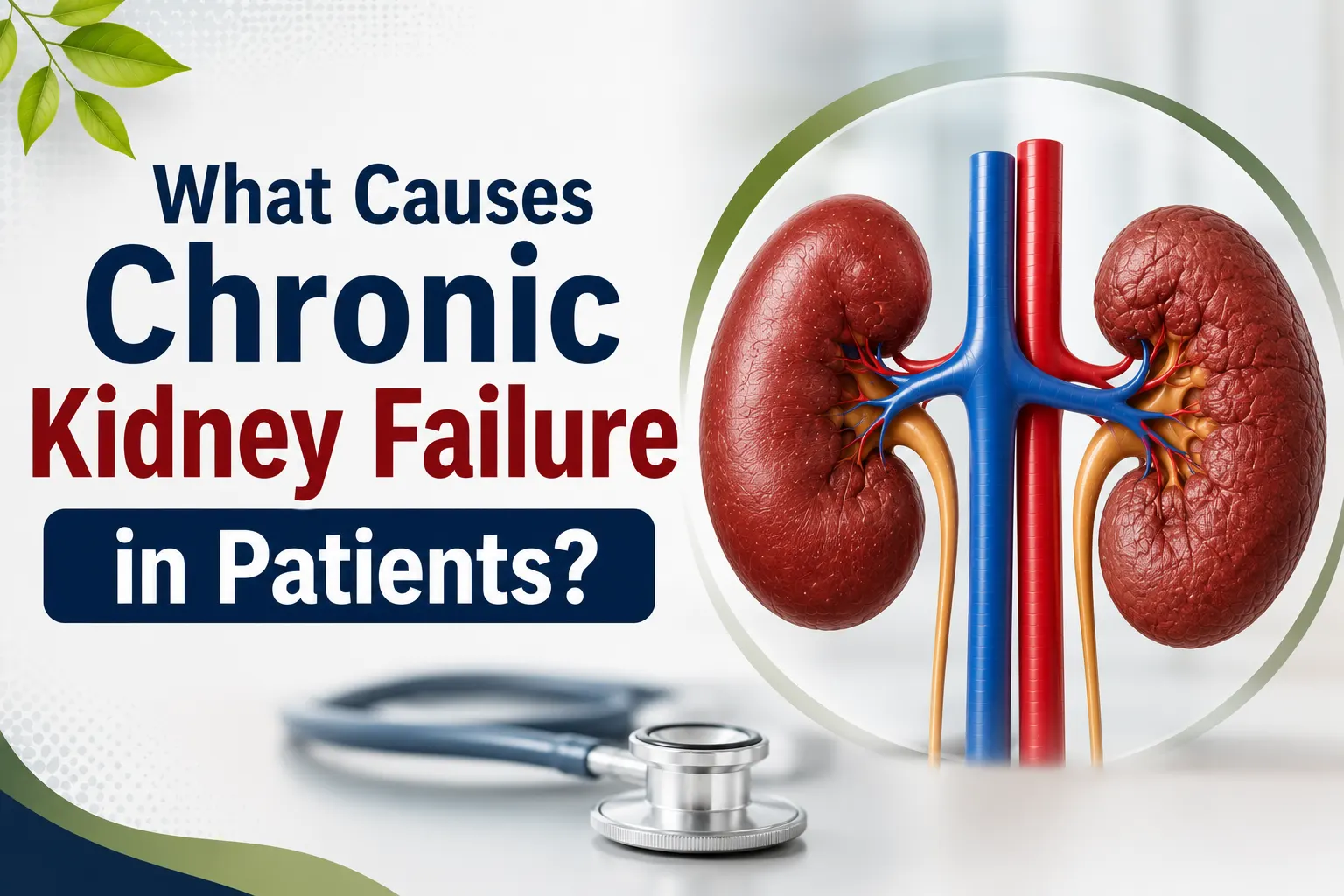
Your kidneys are two bean-shaped, blood-filtering machines that quietly process something like 50 gallons of blood a day without asking for a raise. Keep pounding them with the wrong stuff for long enough, and eventually they clock out; that's usually when a doctor starts saying "chronic" instead of "acute," and things get a lot more serious.
So here's what's actually driving the causes of chronic kidney failure, based on research (and, honestly, plain old common sense):
Diabetes (Type 1 and Type 2); High blood sugar, over years, slowly wrecks the tiny blood vessels doing the filtering work. One hospital-based study out of Malaysia pinned diabetic nephropathy as the cause behind nearly 45% of chronic kidney disease cases they looked at. Not a close race.
High blood pressure: Think of it like leaving a garden hose on full blast, aimed at the same spot, for twenty years. A 2020 cohort study in The Journal of Clinical Hypertension found that diabetes and hypertension together were behind the bulk of new kidney disease cases tracked over seven years.
Glomerulonephritis: inflammation in the kidney's filtering units, sometimes kicked off by infections or the body's own immune system going rogue.
Polycystic kidney disease: a genetic curveball where fluid-filled cysts slowly crowd out healthy kidney tissue.
Popping too many painkillers for too long; certain NSAIDs, taken regularly for years, chip away at kidney function without much warning.
Repeated kidney infections or kidney stones; recurring blockages can leave scar tissue behind.
Obesity and high cholesterol; extra baggage that makes kidneys work harder than they should have to.
Honestly, whatever's bad for your heart tends to be bad for your kidneys too. They're basically roommates who split all the same problems.
📞 Get a Kidney Health Consultation – Call Now!
Since these two cause most of the damage, here's how they stack up against each other; think of it as a slightly ridiculous scoreboard for two conditions nobody should be rooting for:
|
Category |
Diabetes |
Hypertension |
|
How it damages kidneys |
Sugar-coats tiny blood vessels until they clog |
Blasts vessels with constant pressure until they wear thin |
|
Speed of damage |
Slow and sneaky, often silent for years |
Slow but occasionally dramatic (hello, sudden spikes) |
|
Global share of CKD cases |
Around 50% globally, per research estimates |
Around 23–28% globally, per the same estimates |
|
Best early warning sign |
Protein in urine (microalbuminuria) |
Consistently high BP readings |
|
Nickname it deserves |
"The Slow Sugar Sabotage" |
"The Silent Pressure Cooker" |
This is the bit that catches people off guard: kidney failure, chronic in nature, doesn't come with an alarm bell. It sneaks in. Most people feel completely fine until 60-70% of their kidney function is already gone, because the leftover healthy tissue just quietly covers for the rest, like an overachieving coworker doing everyone else's work without complaining. Which, in this case, is exactly the problem; because by the time you notice, it's already gone a long way.
That's why regular checkups actually matter, and not in a "your dentist keeps saying that" kind of way. A kidney disease doctor can spot declining function through a basic blood and urine test, well before you'd ever feel unwell. It's genuinely one of those rare situations where a boring routine test beats waiting for symptoms.
And this silent behaviour is exactly why the global numbers keep catching researchers off guard. Chronic kidney disease has quietly climbed up the list of leading causes of death worldwide over the past couple of decades, mostly riding on the back of rising diabetes and obesity rates. Not a flashy killer, just a persistent one.
📞 Get a Kidney Health Consultation – Call Now!
If you're a kidney disease patient, or looking out for one, here's the reassuring bit: most causes are manageable, even if they're not always fully reversible. Good kidney care isn't glamorous; it's the unsexy basics. Keep your blood sugar in check. Watch your blood pressure. Go easy on the salt and the processed stuff. Drink water like it's your job. And maybe stop treating painkillers like breath mints.
Also worth knowing: renal failure doesn't automatically mean dialysis is waiting around the corner. Catch chronic kidney disease early, and there's a real chance you can slow it down significantly, sometimes even stop it in its tracks, with the right lifestyle changes and medical care. The earlier it's caught, the more say you get in how the story goes.
Chronic kidney failure is mainly driven by long-term diabetes and high blood pressure, not sudden dramatic events.
Diabetes alone accounts for roughly half of global chronic kidney disease cases, per multiple population studies.
Other contributors include genetic conditions, chronic inflammation, recurring infections, and long-term overuse of certain painkillers.
Symptoms often show up late, so routine screening is your best early-warning system.
Managing blood sugar, blood pressure, and weight can meaningfully slow disease progression.
Diabetes is generally considered the single biggest cause worldwide, closely followed by high blood pressure.
Advanced kidney failure usually can't be reversed, but early-stage damage can often be slowed or stabilized with proper treatment.
If you have diabetes, high blood pressure, or a family history of kidney disease, ask your doctor for a simple blood and urine test to check your kidney function.
Staying hydrated helps overall kidney health, but it can't undo damage caused by diabetes, hypertension, or genetic conditions.
Most people notice symptoms only in the later stages, since kidneys can compensate quietly until a large portion of function is already lost.
Disclaimer: This blog is for general informational purposes only and isn't a substitute for professional medical advice, diagnosis, or treatment. Always consult a qualified doctor or nephrologist regarding any kidney-related concerns, symptoms, or treatment decisions specific to your health situation.