Aug 12 , 2026
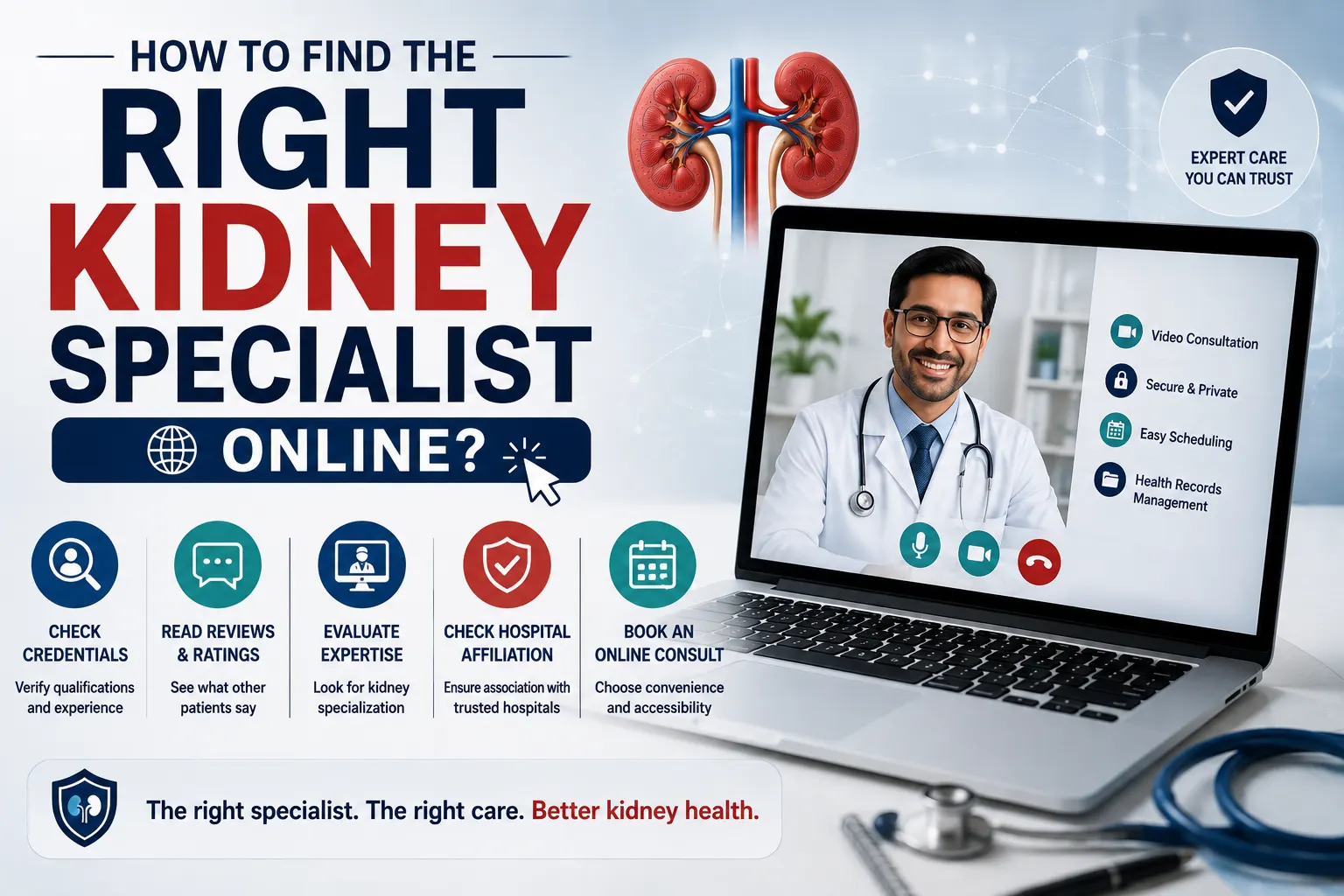
You find the right kidney specialist online by checking their credentials, reading real patient reviews, and booking a consultation before committing to anything long-term. Sounds simple, right? Except when you actually sit down to Google "best kidney expert near me," you get 47 tabs open, three sketchy listicles, and a mild headache (ironically, not the kidney's problem, but close enough).
Here's the thing nobody tells you: searching for a doctor online is a completely different skill from searching for, say, a good biryani place. You can't just go by star ratings and a nice thumbnail photo. Kidneys are quiet organs. They don't complain until things get serious, which means the person managing your kidney health needs to be sharp, current, and genuinely good at listening. So let's actually break down how to find someone who fits that bill, without losing your mind in the process.
📞 Get a Kidney Health Consultation – Call Now!
Kidney issues are sneaky. A 2021 study published in The Lancet noted that chronic kidney disease affects close to 850 million people worldwide, and a huge chunk of them don't even know it yet. That's not a scare tactic; that's just biology being unnecessarily mysterious. So when you do get a hint that something's off, whoever you pick to look into it matters. A generalist might miss subtle patterns; a proper kidney disease doctor is trained to catch what others gloss over.
Think of this like vetting a roommate, except this roommate has access to your bloodwork.
Check the qualifications first. A nephrologist has specialised training specifically in kidney function, dialysis, and transplant care. Not every "kidney doctor" listed online is actually one.
Look at experience with your specific concern. Stones, chronic disease, and transplant follow-ups are different worlds.
Read reviews, but read them like a detective. One bad review out of 200 good ones? Ignore it. Ten reviews all mentioning the same rushed appointment? Note it.
See if they offer a proper first meeting. A good kidney consultation should feel like a conversation, not a 5-minute assembly line.
Check if virtual visits are available. An online kidney specialist can be genuinely useful for follow-ups, second opinions, or when you just can't take a half-day off work to sit in a waiting room reading two-year-old magazines.
A 2020 research review in Kidney International Reports found that early nephrology involvement significantly slowed disease progression compared to delayed referrals. Translation: seeing the right person sooner isn't just "nice to have"; it actually changes outcomes. This is why picking a genuine kidney expert early, rather than bouncing between random clinics, tends to save people a lot of stress (and money) down the line.
|
Factor |
Online Search & Consult |
Old-School Walk-In |
|
Waiting room magazines from 2016 |
Thankfully absent |
Very much present |
|
Second opinions |
Easy, just a click away |
Requires courage and another appointment |
|
Judging doctor by reviews |
Yes, and slightly addictive |
You find out live, no refunds |
|
Convenience for follow-ups |
High, pajamas allowed |
Low, pants mandatory |
|
Building long-term trust |
Takes a bit more effort |
Happens naturally over visits |
Basically, online search wins on convenience; offline visits win on that "I've known my doctor for years" comfort. Ideally, you use both.
📞 Get a Kidney Health Consultation – Call Now!
Vague or missing credentials on their profile
No mention of specialisation, just "general physician who also handles kidneys"
Reviews that all sound suspiciously similar (possibly copy-pasted, possibly not real)
Zero information about consultation process or fees
If you spot two or more of these, keep scrolling. Your kidneys deserve better than a mystery box.
📞 Get a Kidney Health Consultation – Call Now!
Good kidney care doesn't start in a hospital; it starts with the small decision of picking the right person to trust with your health. And honestly, that decision is a lot easier now than it was even five years ago. You've got reviews, virtual consultations, and enough public information to make an informed choice, instead of just picking whoever's clinic happened to be closest to your house.
Verify credentials before anything else; titles like "kidney doctor" can be misleading
A trained nephrologist is trained specifically for kidney-related concerns
Read reviews critically; patterns matter more than single comments
Virtual consultations are a genuinely useful option for follow-ups and second opinions
Early specialist involvement tends to improve long-term outcomes, according to published research
📞 Get a Kidney Health Consultation – Call Now!
Yes, as long as the platform verifies credentials and the consultation actually involves a real conversation, not just a form.
If bloodwork, blood pressure, or urine tests show anything kidney-related, it's usually time to see a nephrologist directly.
Not entirely; they're great for follow-ups and second opinions, but certain tests and procedures still need an in-person visit.
Ask about the suspected cause, next steps, and what lifestyle changes might actually make a difference.
Most doctors recommend every three to six months, but it really depends on your specific condition and history.
Disclaimer: This blog is for general informational purposes only and isn't a substitute for professional medical advice, diagnosis, or treatment. Always consult a qualified healthcare provider regarding any kidney-related concerns or before making health decisions based on this content.