Aug 20 , 2026
Yes, you absolutely can manage kidney problems early on, and no, it doesn't require turning your life into a science experiment. The short answer is: catch it early, tweak a few daily habits, listen to your doctor, and your kidneys will (mostly) forgive you. That's the whole secret behind effective stage one kidney disease treatment, and the rest of this blog is just me explaining the "how" without putting you to sleep.
Here's the thing about kidneys: they're the quiet, hardworking employees of your body. They never complain, never ask for a raise, and just filter your blood 24/7 without so much as a coffee break. So when something goes wrong, they don't throw a tantrum. They just... quietly struggle. Which is exactly why stage one kidney disease sneaks up on so many people. No dramatic symptoms, no flashing warning sign; just a slightly odd number on a blood test that your doctor frowns at.
But here's the good news, and I promise this isn't just optimistic fluff: stage one is the best possible time to catch a kidney issue. Your kidneys are still doing most of their job. Think of it like noticing a tiny crack in your phone screen before it turns into a full spiderweb. Fix it now, save yourself the headache later.
📞 Get a Kidney Health Consultation – Call Now!
Research consistently backs this up. A well-known study published in the American Journal of Kidney Diseases found that early lifestyle intervention in the initial stages of chronic kidney disease significantly slowed disease progression compared to no intervention at all. Similarly, the National Kidney Foundation has repeatedly emphasized that catching kidney decline early, through basic screenings like eGFR and creatinine tests, gives people a real shot at preserving kidney function for decades.
In short: your kidneys are resilient. But resilience needs a little backup from you.
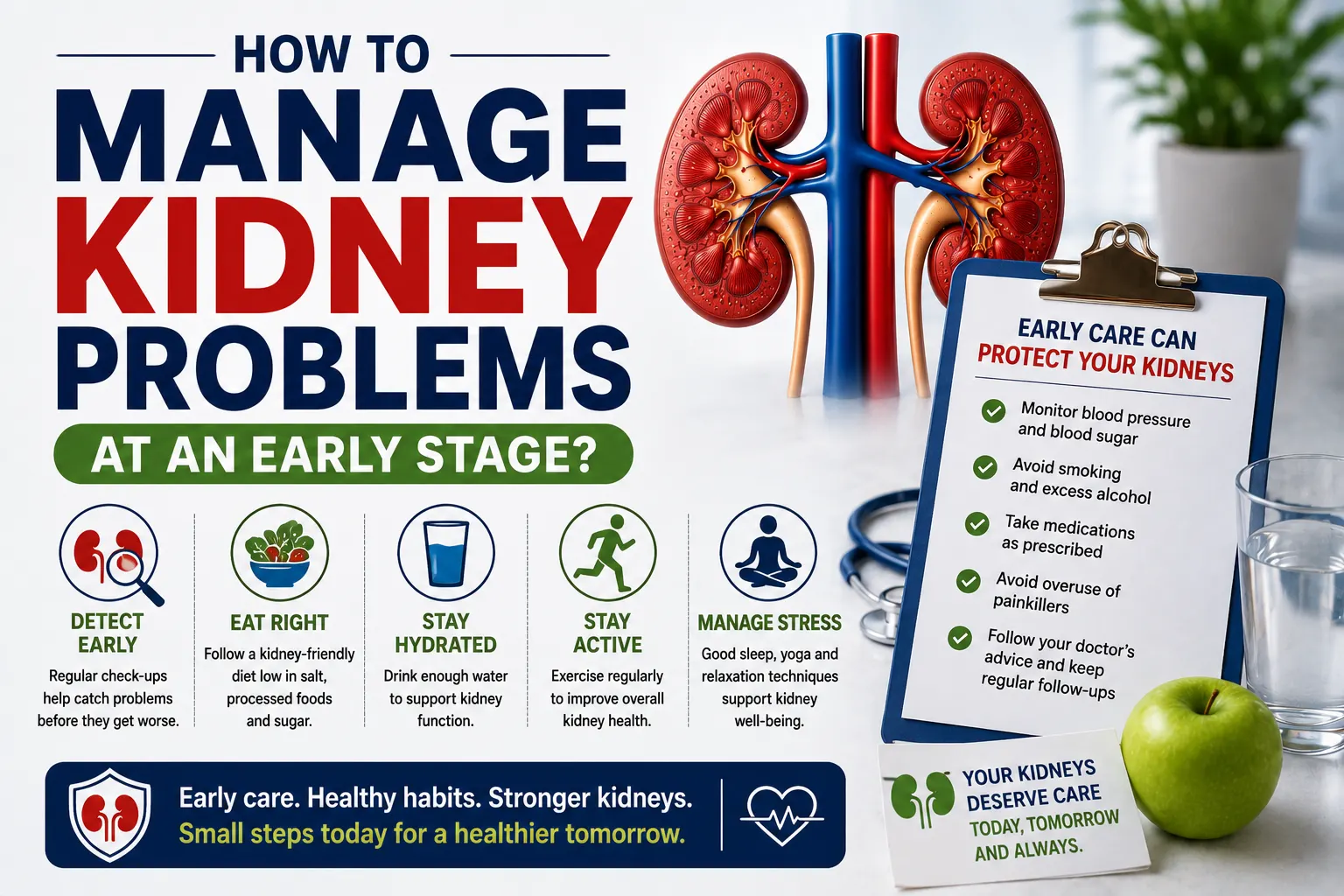
Let's break down the practical, non-scary stuff that genuinely supports kidney care at this stage:
Cut back on excess salt. Your kidneys are not fans of sodium overload; it makes them work overtime.
Stay hydrated (but don't overdo it). Balance is key; both dehydration and excessive water intake can stress the kidneys.
Watch your blood pressure and blood sugar. These two are the biggest troublemakers behind kidney decline, according to research published by the CDC and Johns Hopkins Medicine.
Go easy on painkillers. Frequent NSAID use (ibuprofen, for example) isn't kidney-friendly.
Move your body. Regular, moderate exercise has been shown to help improve kidney function by supporting healthy blood flow and blood pressure.
Get regular check-ups. Simple blood and urine tests can track your renal function long before symptoms show up.
None of this requires a dramatic life overhaul. It's more "small consistent habits" than "throw out your entire pantry."
📩 Ask a Kidney Expert (Free 10-Min Consultation)
Because who doesn't love a table that makes medical stuff less terrifying:
|
Habit |
Kidney-Friendly Version |
Kidney's Reaction |
|
Salt intake |
Light hand on the shaker |
"Thank you, finally" |
|
Water |
Steady sips all day |
"Ah, perfect hydration" |
|
Painkillers |
Only when truly needed |
"Appreciate the break" |
|
Exercise |
30 mins, most days |
"I feel so supported" |
|
Ignoring symptoms |
Please don't |
"...we need to talk" |
While lifestyle tweaks are powerful, they work best alongside proper medical guidance. This is where early-stage kidney management really shines; a doctor can personalize your plan based on your actual numbers, not internet averages. A 2021 review in the Clinical Journal of the American Society of Nephrology highlighted that individualized care plans in early CKD stages led to meaningfully better long-term outcomes than generic advice alone.
If you're newly diagnosed and feeling overwhelmed, seeking kidney disease help from a nephrologist early on isn't overreacting; it's exactly the smart, proactive move your future self will thank you for. And if your doctor mentions stage one kidney disease treatment as a combination of diet, monitoring, and medication (if needed), that's completely normal and honestly a very manageable path.
📞 Get a Kidney Health Consultation – Call Now!
Stage one kidney disease is often silent; regular testing catches it early.
Small daily habits (salt, hydration, exercise) go a long way.
Managing blood pressure and blood sugar is non-negotiable.
Avoid overusing painkillers that strain the kidneys.
Professional, personalized guidance beats generic advice every time.
With the right lifestyle changes and medical guidance, function can often stabilize or even improve.
Highly processed, salty foods are the main ones to cut back on.
Not always; many people manage stage one with lifestyle changes alone, based on doctor guidance.
Typically, once a year, or more often if your doctor recommends closer monitoring.
Disclaimer: This blog is for general informational purposes only and isn't a substitute for professional medical advice. Kidney health varies from person to person, so please consult a qualified doctor or nephrologist before making any changes to your diet, medication, or lifestyle routine.