Sep 02 , 2026
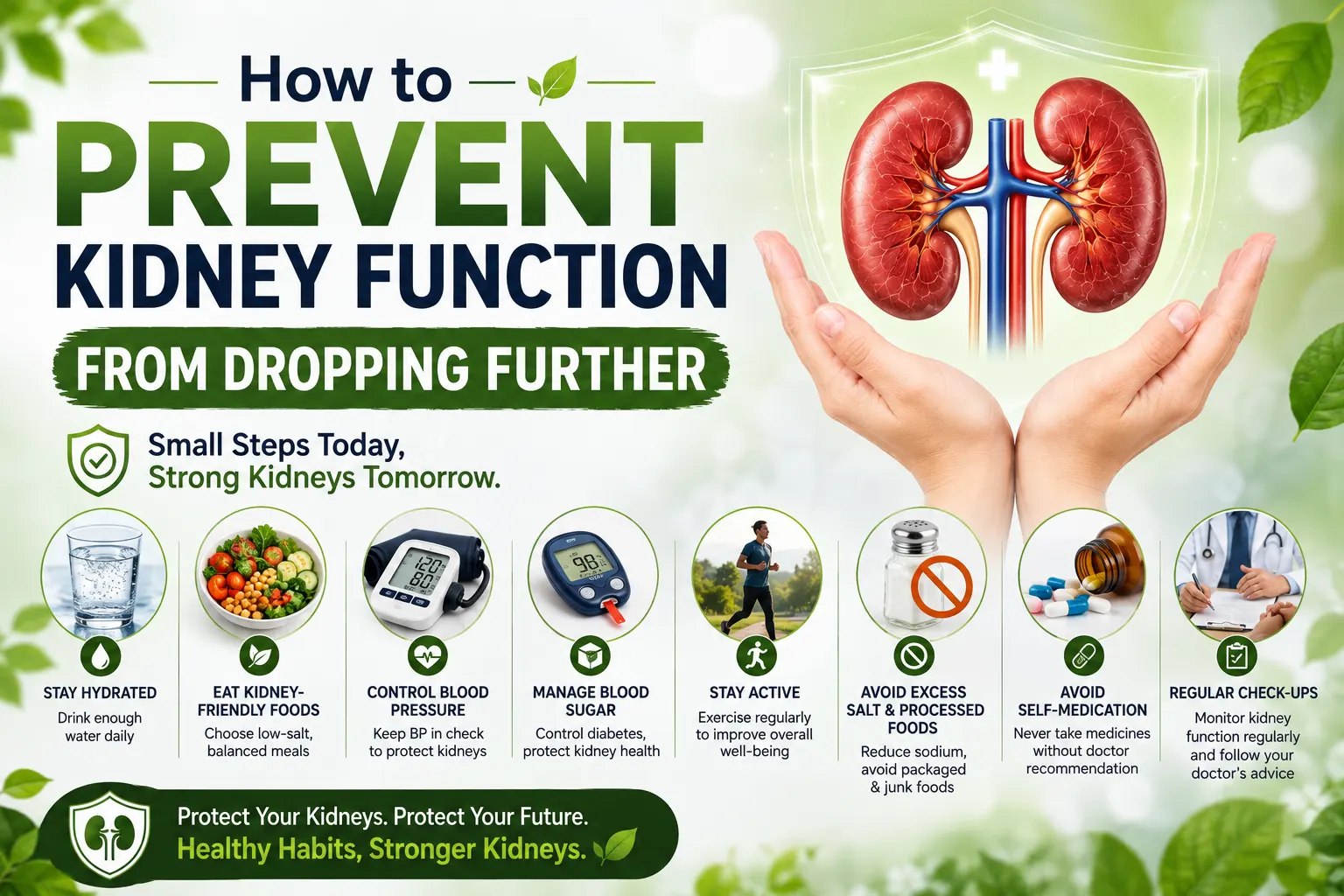
You slow down further kidney decline by controlling blood pressure and blood sugar, cutting back on salt and painkillers, staying properly (not obsessively) hydrated, and actually showing up for your follow-up blood tests. Do these consistently, and you're not just stopping the slide; you can genuinely improve kidney function over time, or at least keep it from sliding any further down the slope. For many people, these foundational habits are also an important part of a natural approach to kidney treatment, alongside appropriate medical care.
Now, if you just got a lab report with a slightly alarming eGFR number and Googled your way here at 11 pm, first: breathe. Your kidneys are dramatic organs. They rarely complain until things are already 60-70% down the drain, which is honestly rude of them, but also means small, boring, consistent habits can make a real difference before things get worse.
📩 Ask a Kidney Expert (Free 10-Min Consultation)
Your kidneys filter about 50 gallons of blood a day and never once ask for credit. They just quietly do their job- until they don't. Chronic kidney disease usually progresses slowly, which is both good news (you have time to act) and bad news (it's easy to ignore).
The good news: most of the things that speed up kidney decline are lifestyle-driven and reversible-ish. The bad news: "reversible-ish" means you actually have to do them, not just bookmark this article.
High blood pressure and kidney damage have a toxic relationship; each one makes the other worse, like two coworkers who bring out the worst in each other. The landmark MDRD study, led by Klahr and colleagues back in 1994, found that patients who kept their blood pressure in a lower target range showed meaningfully slower kidney function decline, especially those with higher protein in their urine. Translation: your blood pressure cuff might be doing more for your kidneys than your green juice.
This is where a lot of "kidney function treatment" advice gets oversimplified into "no meat ever." Not quite. Research, including a meta-analysis published in PLoS ONE (2015), found that moderately restricting protein intake slowed CKD progression in non-diabetic patients, though the effect was less clear-cut for people with type 2 diabetes. The takeaway isn't "starve yourself of protein," it's "stop treating steak like a food group."
Diabetes is the single biggest cause of kidney disease worldwide. Keeping blood sugar in range isn't just about avoiding a diabetic complication checklist; it directly protects the tiny filtering units in your kidneys called nephrons. This is one of the most well-established truths in renal function research, and it doesn't get any less true just because you're tired of hearing it.
NSAIDs (ibuprofen, that trusty bottle in your bag) are kidney-unfriendly when used often or in high doses. Occasional use for a headache is fine. Popping them like candy for chronic pain, without medical guidance, is one of the sneakiest ways people accelerate kidney damage without realizing it.
Contrary to the "gallon of water a day" trend, there's no strong evidence that chugging excessive water helps healthy kidneys work better. For people with advanced CKD, overdoing fluids can actually cause problems. Drink when thirsty, keep your urine a pale straw color, and move on with your life.
Excess sodium raises blood pressure and makes your kidneys retain fluid they don't need. You don't have to eat bland food forever; herbs, spices, citrus, and garlic exist precisely so salt doesn't have to do all the work. If you're exploring Ayurvedic treatment for kidneys, herbs and spices may also be discussed as part of a broader diet and lifestyle approach, but they should not replace prescribed kidney care.
📞 Get a Kidney Health Consultation – Call Now!
|
Habit |
Kidney's Reaction |
|
Skipping BP meds "because you feel fine" |
Kidneys quietly filing a complaint |
|
Chugging ibuprofen for every ache |
Kidneys side-eyeing you |
|
Actually checking blood sugar |
Kidneys sending a thank-you card |
|
Salt on everything, always |
Kidneys asking for a raise |
|
Regular check-ups |
Kidneys finally relaxing |
Real kidney care is boring in the best way; it's a routine, not a rescue mission. Regular blood and urine tests catch changes early, long before symptoms show up. If you already have some decline, working with a nephrologist on a personalized plan is the most reliable form of kidney disease help available, far more useful than any random supplement promising miracles.
For those interested in traditional approaches, the best Ayurvedic herbs for kidneys should always be selected based on the individual's health condition, medications, kidney function, and doctor's guidance rather than used blindly.
📩 Ask a Kidney Expert (Free 10-Min Consultation)
Blood pressure and blood sugar control are the two biggest levers to improve kidney function
Moderate (not extreme) protein intake supports slower CKD progression
Regular use of NSAIDs can quietly speed up kidney damage
Hydrate based on thirst, not arbitrary water-a-gallon rules
Routine check-ups are the simplest way to prevent further kidney decline
Small, consistent habits beat dramatic short-term fixes every time
Nobody wakes up excited to think about their kidneys. But the habits that protect them; steady blood pressure, sensible eating, fewer unnecessary pills, regular check-ups are the same habits that make you feel better in basically every other way too. Your kidneys aren't asking for a total life overhaul. They're asking for consistency, which, let's be honest, is a lot less dramatic than it sounds.
Yes, in many cases you can slow, stop, or partially improve kidney function with the right lifestyle and medical changes, especially if caught early.
Only up to a point; drink based on thirst, since excessive water doesn't boost kidney performance and can even backfire in advanced cases.
Consistently high protein intake can strain kidneys over time, so moderation matters more than complete avoidance.
Most doctors recommend blood and urine tests every three to six months, depending on how advanced the decline is.
Occasional use is fine, but frequent or high-dose NSAID use is one of the most common preventable causes of kidney strain.
Disclaimer: This article is for general informational purposes only and isn't a substitute for professional medical advice, diagnosis, or treatment. Kidney health varies a lot from person to person, so please consult a qualified doctor or nephrologist before making any changes to your diet, medication, or health routine.