May 12 , 2026
In the United States, millions of people live with CKD, and diet plays a huge role in slowing kidney damage and helping people feel better. A study called “Sugar-Sweetened Beverages and Chronic Disease Risk in CKD,” published in the Clinical Journal of the American Society of Nephrology, found that excessive sugar intake may contribute to worsening kidney problems, obesity, diabetes, and inflammation.
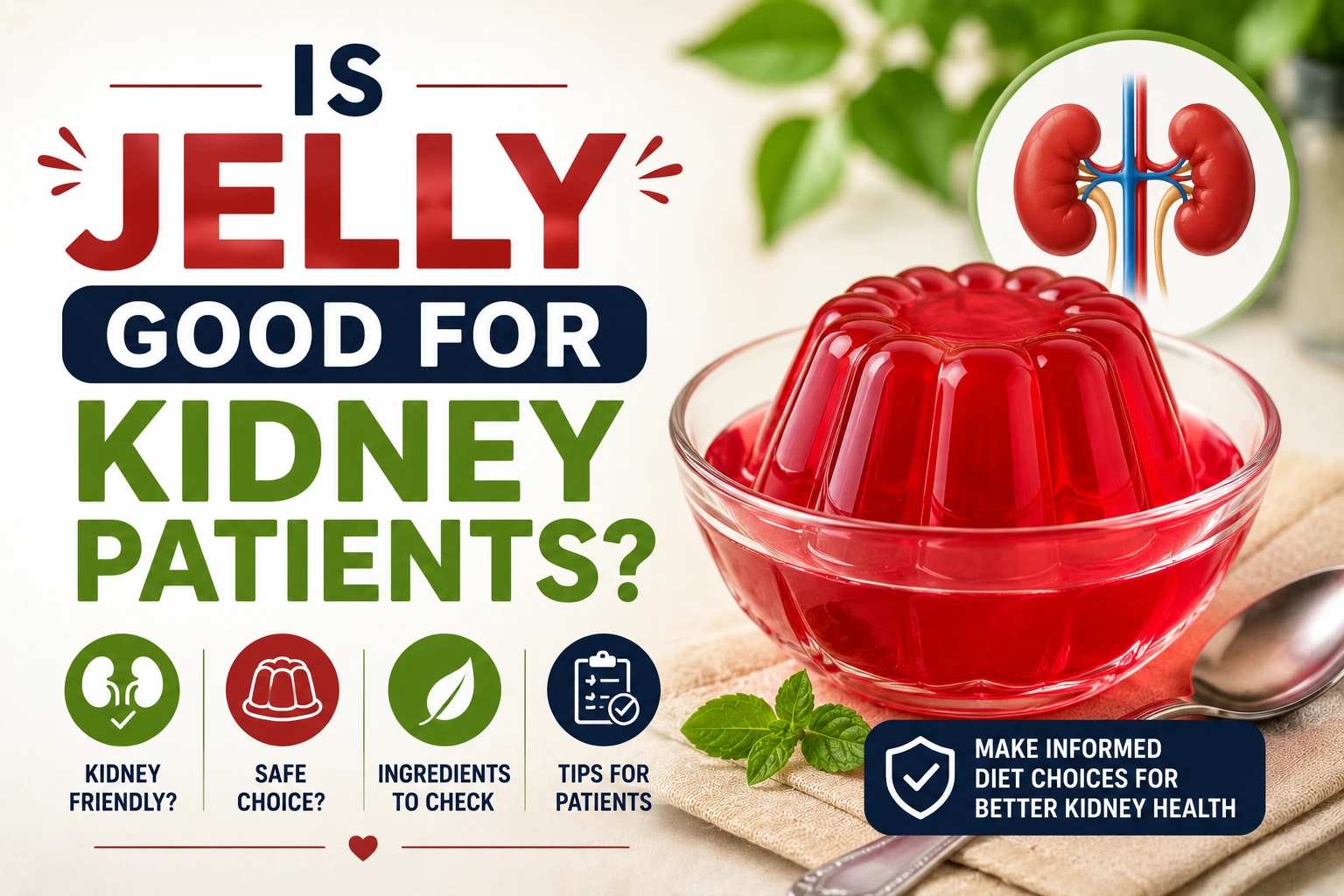
So, let’s break this down in plain English: Is jelly good for kidney patients? Is sugar-free jelly safer? And how can you make the jelly kidney health bond sweeter for kidney patients?
📞 Get a Kidney Health Consultation – Call Now!
When it comes to jelly kidney health, moderation is the magic word. Not the most exciting word, sure, but kidneys love moderation the way dogs love treats.
Traditional jelly is usually made from:
Fruit juice
Sugar
Pectin
Preservatives
The good part? Jelly is generally low in:
Protein
Sodium
Potassium
Phosphorus
That makes it easier to fit into many kidney diets compared to chocolate cakes, packaged pastries, or ultra-processed desserts loaded with phosphorus additives and sodium.
But here is the catch: many jellies contain a lot of added sugar. And too much sugar can create problems for kidney patients, especially those with diabetes or high blood pressure.
The study “Sugar Intake and Chronic Kidney Disease,” published in Nutrients, explained that excessive sugar consumption may increase inflammation, uric acid levels, obesity, and insulin resistance, all of which may worsen CKD progression.
📞 Get a Kidney Health Consultation – Call Now!
Now for the big question: Is Jelly Good for Kidney Patients?
The honest answer is: sometimes yes, sometimes no. Very helpful, right? But stick with me. Jelly can work for kidney patients if:
It is eaten in small portions
Blood sugar levels are controlled
The jelly is low in sodium and phosphorus additives
It fits within the patient’s renal diet plan
For many Americans with early-stage CKD, a small amount of jelly may be completely acceptable. Kidney diets are not about removing every fun food from life. Otherwise, everybody would quit by Tuesday afternoon. However, people with:
Diabetes
Advanced CKD
Obesity
High triglycerides
…need to be extra careful with sugary foods.
The NHANES dietary study on CKD patients, published in BMC Nephrology, found that higher intake of sugary beverages and processed sugary foods was associated with worse kidney-related health outcomes and higher mortality risk in people with chronic kidney disease.
That does not mean jelly is “bad.” It just means portion control matters.
A smart serving might look like:
1 tablespoon of jelly on whole-grain toast
A thin spread on a kidney-friendly sandwich
A small amount mixed into plain yogurt
A not-so-smart serving:
“I accidentally ate six peanut butter and jelly sandwiches because I was stressed.”
Your kidneys did not sign up for that emotional roller coaster.
📞 Get a Kidney Health Consultation – Call Now!
The good news is that there are plenty of kidney-friendly desserts beyond plain jelly.
Many kidney patients in the United States successfully enjoy desserts while staying within renal diet guidelines. Some better dessert ideas include:
Sugar-free jelly in moderation
Apple slices with cinnamon
Rice pudding with controlled phosphorus ingredients
Frozen grapes
Angel food cake
Homemade fruit popsicles
Low-sugar cranberry desserts
Vanilla wafers in small portions
The trick is avoiding desserts overloaded with:
Processed sugars
Excess phosphorus
High sodium
Artificial additives
A research paper titled “Ultra-Processed Foods and Kidney Disease Risk,” presented by the National Kidney Foundation, reported that diets high in ultra-processed foods may increase the risk of CKD progression and cardiovascular complications.
Translation? Your kidneys generally prefer simple homemade treats over neon-colored packaged desserts that look like they were invented in a science lab at 2 a.m.
The connection between sugar intake and kidney disease is very important, especially in the United States, where sugary foods and drinks are everywhere. Honestly, sugar in America sometimes feels like an unpaid actor appearing in every food product.
Too much added sugar can:
Raise blood sugar
Increase blood pressure
Promote weight gain
Increase inflammation
Stress the kidney filtration systems
The study “Dietary Sugar Consumption and Health Outcomes in CKD,” published in Nutrients, showed that excess added sugar may contribute to CKD risk through diabetes, hypertension, and metabolic disease pathways.
Another important study called “Sugar-Sweetened Beverage Intake and Mortality in CKD” found that regular intake of sugary drinks was linked with higher mortality risk among CKD patients.
That does not mean kidney patients must completely avoid sweetness forever. If that were true, birthday parties would become deeply depressing.
Instead:
Limit added sugars
Choose smaller portions
Read labels carefully
Avoid sugary sodas and processed drinks
Focus on balanced eating
Even “healthy” fruit spreads can contain massive sugar amounts, so always check nutrition labels.
CKD Diet in the United States
A proper CKD diet in the United States usually focuses on balancing:
Sodium
Potassium
Phosphorus
Protein
Sugar intake
The exact diet depends on:
CKD stage
Blood test results
Diabetes status
Blood pressure
Dialysis needs
This is why one kidney patient may eat jelly without issues while another needs stricter sugar control.
American kidney diets often emphasize:
Fresh fruits and vegetables
Reduced processed foods
Lower sodium meals
Controlled sugar intake
Better hydration
The study “Dietary Patterns and Risk of Chronic Kidney Disease Progression,” published in the American Journal of Kidney Diseases, found that diets rich in whole foods and lower in processed foods may support better kidney outcomes.
Meanwhile, the study “Ultra-Processed Food Intake and CKD Risk” in the Journal of Nephrology linked heavily processed foods with increased kidney stress and declining kidney function.
So yes, your kidneys would probably rather see you eating a homemade snack than drinking a 64-ounce gas station soda named something terrifying like “Mega Thunder Blast.”
📞 Get a Kidney Health Consultation – Call Now!
Finding kidney-friendly snacks in the USA can feel difficult because many American snacks are loaded with sodium, sugar, or phosphorus additives.
Some better snack options include:
Unsalted popcorn
Rice cakes with jelly
Applesauce
Crackers with cream cheese
Fresh berries
Unsalted pretzels
Homemade smoothies
Graham crackers
Low-sugar jelly toast
A little jelly can actually help make bland, kidney-friendly foods taste more enjoyable. Because let us be honest, eating plain rice cakes every day can feel emotionally challenging.
The key is balance.
Can Kidney Patients Eat Jelly
So, to answer it clearly: can kidney patients eat jelly?
Yes, many kidney patients can enjoy jelly in moderation.
But remember:
Portion size matters
Sugar content matters
Overall diet matters
Diabetes control matters
Think of jelly as a small “sometimes food,” not a main food group.
If you have advanced CKD, diabetes, or are on dialysis, it is always smart to ask your renal dietitian about the best options for your personal meal plan.
📞 Get a Kidney Health Consultation – Call Now!
Now for another popular question: Is sugar-free jelly safe for kidney disease?
In many cases, sugar-free jelly may be a better option because it contains less added sugar and fewer calories.
However, some sugar-free products contain:
Artificial sweeteners
Preservatives
Additives
The review study “Artificial Sweeteners and Kidney Health,” published in Nutrients, explained that researchers are still studying the long-term impact of artificial sweeteners on CKD patients and metabolic health.
For most kidney patients, small amounts of sugar-free jelly are likely okay, especially when compared to large amounts of sugary desserts.
Still, reading labels is important because some “sugar-free” products are basically chemistry experiments wearing fruit costumes.
Look for options with:
Lower sodium
Minimal additives
No phosphorus additives
Moderate serving sizes
Living with kidney disease does not mean dessert has to disappear forever. Thankfully, the kidneys are not completely anti-fun.
Jelly can fit into a kidney-friendly diet when eaten in moderation and paired with healthy eating habits. The biggest concern is usually the added sugar, especially for people with diabetes or advanced CKD.
Scientific research like “Sugar Intake and Chronic Kidney Disease,” “Ultra-Processed Foods and Kidney Disease Risk,” and “Dietary Patterns and Risk of CKD Progression” continues to show that balanced eating habits and lower processed sugar intake may support better kidney health.
The smartest approach is simple:
Watch portion sizes
Limit added sugars
Choose less processed foods
Read nutrition labels carefully
Work with your healthcare team
And yes, visiting a reputed hospital like Karma Ayurveda USA is a safer option if you have severe renal symptoms.
At the end of the day, kidney health is not about perfection. It is about making better choices most of the time while still enjoying food. Because honestly, life is already stressful enough without turning every spoonful of jelly into a dramatic courtroom trial.
📞 Get a Kidney Health Consultation – Call Now!
Low-sugar and low-potassium jelly options are usually better for people with kidney problems.
Yes, kidney patients can eat jam in small amounts, but they should watch the sugar and potassium content.
High blood pressure, diabetes, dehydration, smoking, and too much use of painkillers can seriously damage the kidneys.
Yes, plain jelly can usually be eaten in moderation on a kidney-friendly diet.