Feb 14 , 2026
Magnesium can work as an effective supplement for kidneys when it is consumed in the right quantity. It can help in maintaining blood pressure, as well as the functioning of muscles and nerves, and can even prevent the formation of kidney stones. But patients with Chronic Kidney Disease (CKD) should consult a doctor before consuming magnesium supplements because high levels of magnesium can be harmful to kidneys.
Magnesium doesn’t usually get the spotlight when we talk about kidney health. People are busy discussing water intake, salt, blood pressure, and sugar levels. Poor magnesium just sits quietly in the background like, “Hey… I help too.”
So, let’s answer this properly; is magnesium good for kidneys?
The honest answer is: yes, it can be. But like most things in health, it depends on your kidney condition. Don’t worry, we’ll keep this simple and human.
📞 Get a Kidney Health Consultation – Call Now!
Magnesium is an essential mineral. Your body uses it for more than 300 chemical reactions. It helps your muscles relax, keeps your heart rhythm steady, supports nerve function, and helps control blood sugar and blood pressure.
In short, magnesium is like that responsible employee who does most of the work without asking for appreciation.
And that's how the kidneys come into play.
Magnesium levels throughout the body are managed by the kidneys. They determine how much magnesium is to be removed from the body via urine and how much is to be retained in the body. That is why magnesium and the kidneys are interconnected; they are continually communicating with one another.
If your kidneys are healthy, magnesium can actually be helpful in several ways.
Some kidney stones are made of calcium oxalate crystals. Magnesium can bind to oxalate in the gut and reduce how much reaches the kidneys. Less oxalate means fewer chances of forming those painful stones.
People who frequently develop kidney stones sometimes have lower magnesium levels. That doesn’t mean magnesium is a miracle cure, but it can be part of prevention.
High blood pressure is one of the biggest causes of kidney damage. Magnesium helps relax blood vessels, which can support normal blood pressure levels.
Healthy blood pressure = less stress on kidneys.
Simple math. Your kidneys appreciate it.
If someone has diabetes, their kidneys are already under pressure. Magnesium improves insulin sensitivity and helps regulate blood sugar levels.
Better sugar control reduces long-term kidney damage. Again, magnesium is quietly doing its job without drama.
So, can magnesium help kidney function? Yes, but life is not so hunky dory, is it???
📞 Get a Kidney Health Consultation – Call Now!
Now let’s talk about the other side.
People who suffer from chronic kidney disease (CKD) could experience problems with excess magnesium elimination in the later stages of their disease. If excess magnesium is not eliminated properly, it could lead to an increase in blood levels of magnesium. High blood levels of magnesium (hypermagnesemia) may result in:
- nausea
- weakness
- low blood sugar
- irregular heartbeats
Although people with CKD are likely to experience these symptoms, severe cases could create very serious issues. While magnesium may provide health benefits for healthy kidneys, when people with CKD take magnesium (e.g., as a supplement) without the supervision of a physician, the risk of developing serious complications increases substantially.
See? Context matters.
Don’t miss this read: Is Matcha Good for Kidneys?
📞 Get a Kidney Health Consultation – Call Now!
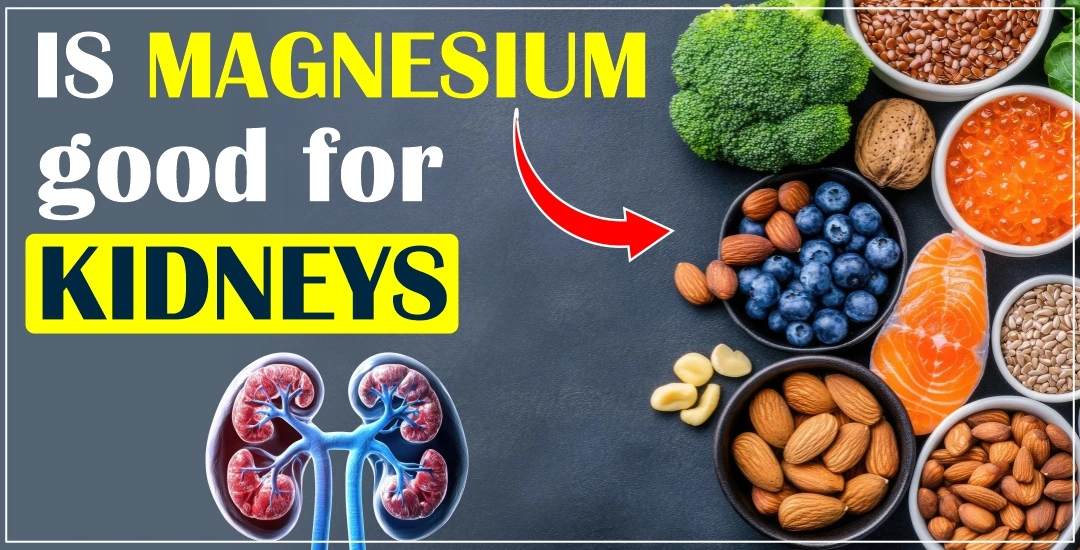
This is an important distinction. Magnesium from natural foods is generally safe for people with healthy kidneys. Good sources include:
Spinach
Almonds
Pumpkin seeds
Whole grains
Legumes
However, if someone has kidney disease, they also need to monitor potassium and phosphorus, and many magnesium-rich foods contain these minerals too. That’s why kidney diets are so specific. Magnesium supplements are different. They contain concentrated amounts. For people with CKD, taking supplements without checking blood levels is not a good idea.
Also, some antacids and laxatives contain magnesium. Many people don’t realize this. If kidneys are weak, even these common products can raise magnesium levels.
Sneaky, right?
Have a kidney concern? Fill the form and speak with our doctor to get the right guidance for kidney care.
📞 Get a Kidney Health Consultation – Call Now!
Let’s clear up a common myth. Magnesium does not detox your kidneys.
Your kidneys detoxify your body. That’s their job. Magnesium supports certain body processes, but it is not a magical kidney cleanser. If it were, doctors would prescribe magnesium juice for everything. Kidney health is about balance, not miracle minerals.
Interestingly, many people don’t get enough magnesium due to processed foods, stress, or poor diet. Low magnesium levels have been linked to higher blood pressure, insulin resistance, and metabolic problems.
Some research suggests that people with early-stage CKD who have low magnesium levels may have worse outcomes. In such cases, doctors may monitor and correct magnesium carefully.
Notice the word carefully.
Not “take three supplements and hope for the best.
For most healthy adults:
Recommended daily intake:
Men: 400–420 mg/day
Women: 310–320 mg/day
Upper safe limit from supplements: 350 mg/day (not including magnesium from food).
Kidney patients must consult their doctor before adding magnesium supplements to their diet.
Have a kidney concern? Fill the form and speak with our doctor to get the right guidance for kidney care.
📞 Get a Kidney Health Consultation – Call Now!
No, it can be risky in chronic kidney disease (CKD) because damaged kidneys cannot remove excess magnesium effectively. Always consult a nephrologist before using magnesium in CKD.
TL; DR
If you have healthy kidneys, magnesium can support renal health if obtained via a regular diet.
If you have early kidney issues, magnesium levels should be monitored.
If you have advanced kidney disease, supplements should only be taken under medical supervision.
Magnesium is helpful, but only when balanced.
It’s like salt or protein. Necessary, but too much can cause problems.
Have a kidney concern? Fill the form and speak with our doctor to get the right guidance for kidney care.
📞 Get a Kidney Health Consultation – Call Now!
Kidney health is determined by more than just one nutrient; it is a combination of your overall lifestyle, including hydration levels, controlling blood pressure and blood sugar levels, eating a balanced diet, and having regular check-ups with your doctor.
Magnesium is key to one element of the kidney's overall health picture, namely blood pressure, but it can also lower the chances of kidney stones and support the body's metabolic system. But it’s not a superhero working alone.
Your kidneys work 24 hours a day without taking a holiday. The least we can do is give them balanced nutrition and avoid self-prescribing supplements just because we read about them online.
If you’re thinking about magnesium for kidney health, the smartest step is simple: check your levels and talk to your doctor.
📞 Get a Kidney Health Consultation – Call Now!
Yes, in normal amounts, it supports kidney and heart health. Too much from supplements can be harmful.
It may help reduce some types of stones, but it’s not a main treatment.
In early CKD, small amounts are fine. In advanced CKD, supplements should be avoided unless a doctor advises.