May 01 , 2026
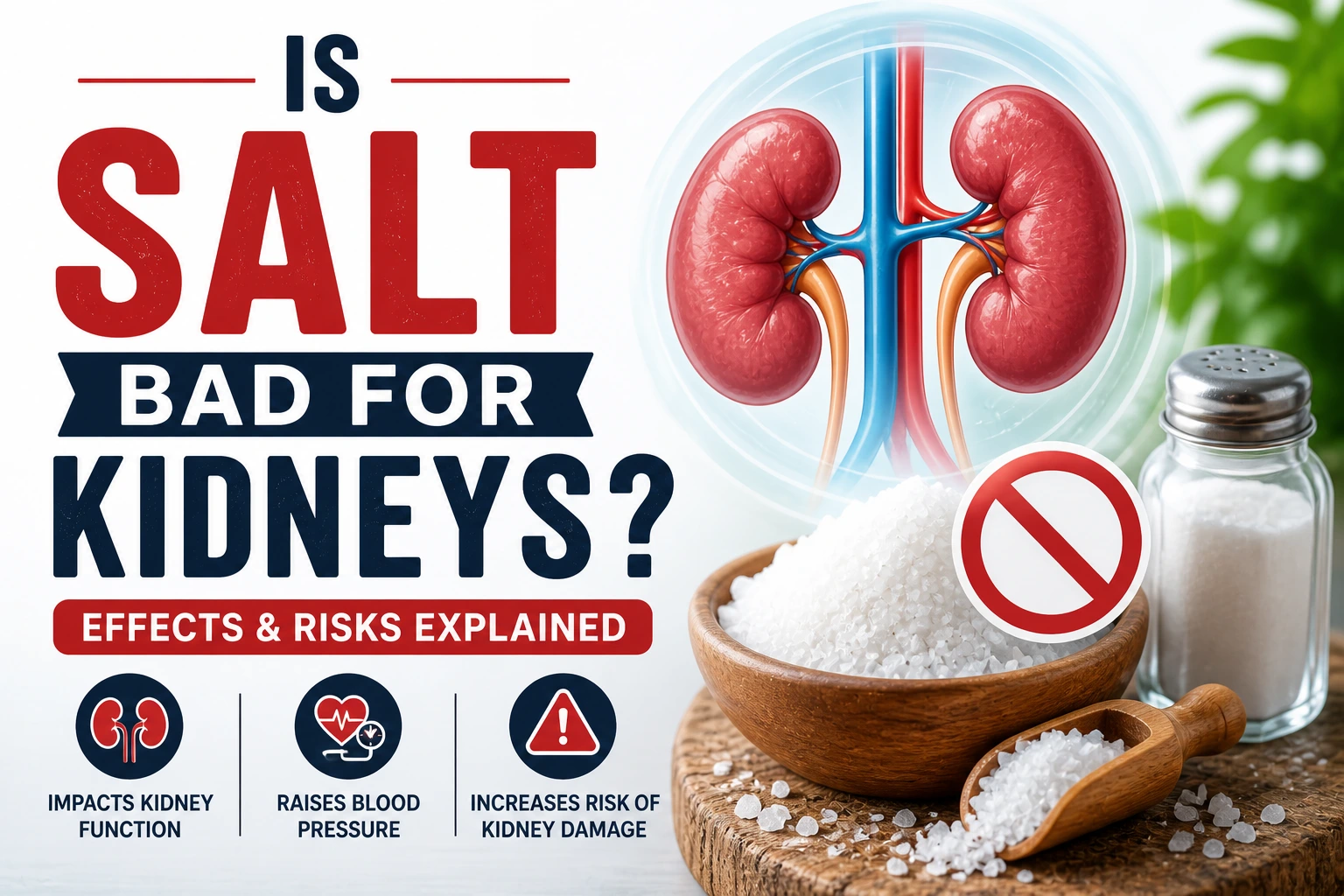
Welcome to the internal drama you never knew was happening. Right now, somewhere deep in your torso, your kidneys are working harder than a barista on a Monday morning during a coffee machine breakdown. They are the unsung heroes, the silent filters, and the ultimate janitors of your bloodstream. But there is one thing that turns their shift into a nightmare: salt. We’re going to dive into the grainy truth about salt kidney damage in this blog.
📞 Get a Kidney Health Consultation – Call Now!
When we talk about kidney health, we’re talking about longevity. You want these organs to last you eighty or ninety years. Feeding them a high-sodium diet is like redlining your car engine every single day. Eventually, something is going to blow.
Fluid Retention: Ever wake up with "puffy eyes" or fingers that feel like sausages? That’s salt holding your water hostage.
Kidney Stones: High sodium increases the amount of calcium in your urine. When calcium meets other waste products, they crystallize into "fun" little rocks that feel like passing a jagged diamond through a straw.
Decreased Efficiency: The more salt you eat, the less efficient your kidneys become at balancing other minerals like potassium and phosphorus.
📞 Get a Kidney Health Consultation – Call Now!
The short answer is a resounding yes. Salt doesn't just "bother" the kidneys; it dictates how they function. When sodium levels are high, the kidneys have to trigger a hormonal response to try to manage the pressure. This affects how much blood is filtered every minute.
If your kidney function is already slightly impaired, salt becomes a literal toxin. It causes your body to hold onto waste products that should be flushed out. This leads to fatigue, brain fog, and a general feeling of being "run down" because your blood is essentially becoming "dirtier" due to poor filtration. By reducing salt, you are giving your kidneys a much-needed vacation, allowing them to catch up on their chores.
To be fair, salt isn’t a mustache-twirling villain in every scenario. Your body actually needs a little bit of it to keep your muscles moving and your nerves firing. However, the problem isn’t the salt itself; it’s the sheer, mountain-sized quantity we consume. When you eat too much salt, your kidneys have to work overtime to get rid of the excess.
Think of your kidneys like a high-tech water filtration system. If you pour clean water through it, it’s happy. If you start dumping buckets of salty slushie into it, the filters start to groan. Too much salt increases the amount of protein in your urine, which is basically your kidneys’ way of waving a white flag and saying, I can’t keep up with this mess.
If this cycle continues for years, it leads to Chronic Kidney Disease (CKD). This isn’t a "take an aspirin and call me in the morning" kind of situation. CKD is a slow, quiet process where the kidneys gradually lose their ability to function.
The scary part? Your kidneys are incredibly polite. They won't complain or cause pain until they are significantly damaged. By the time you feel like something is wrong, they might be operating at half-capacity. Chronic sodium overload is one of the fastest tracks to this condition because it keeps the kidneys in a state of perpetual stress.
📞 Get a Kidney Health Consultation – Call Now!
In the United States, we have turned salt consumption into a competitive sport. The average American consumes about 3,400 milligrams of sodium per day. To put that in perspective, health experts generally recommend staying under 2,300 milligrams, and if you already have health issues, that number drops to 1,500 milligrams.
We aren't just getting this from the salt shaker on the table, either. Most of the sodium in the American diet comes from:
Processed deli meats (the "ham" that lasts for three months).
Canned soups that contain enough salt to preserve a mummy.
Fast food (where even the salad dressing is suspicious).
Frozen dinners designed for convenience but loaded with "shelf-life" chemicals.
📞 Get a Kidney Health Consultation – Call Now!
So, where is the "danger zone"? As mentioned, the magic number for most healthy adults is a maximum of 2,300 milligrams per day. That sounds like a lot, but it’s actually only about one teaspoon of salt. One. Teaspoon. For the whole day.
If you already have high blood pressure or early-stage kidney issues, doctors usually want you to cap it at 1,500 milligrams. If you eat one medium-sized fast-food meal, you’ve likely hit your entire day's limit in fifteen minutes. Anything beyond these limits starts the "overwork" process for your kidneys, forcing them to struggle to maintain a healthy chemical balance in your blood.
Navigating the American grocery store with kidney health in mind feels like walking through a minefield. However, it is possible to eat a low-sodium diet without your taste buds going into a deep depression. The "Kidney Diet" in the USA focuses on fresh, whole foods rather than anything that comes in a box with a three-year expiration date.
Fresh Produce: Fruits and veggies are naturally low in sodium and high in the stuff kidneys love.
The Spice Rack: Instead of reaching for the salt, try garlic, lemon juice, smoked paprika, or cumin. You’ll find that food has a flavor beyond "salty."
Reading Labels: If the sodium content on a label looks like a high score in a video game, put it back. Look for "No Salt Added" or "Low Sodium" versions of your favorites.
📞 Get a Kidney Health Consultation – Call Now!
Your kidneys are fantastic little machines, but they aren't invincible. They don’t ask for much; just some water, a balanced diet, and for you to stop treating every meal like a salt-crusted pretzel. By cutting back on the sodium, you aren't just avoiding a "bad" ingredient; you are actively protecting your blood pressure, your heart, and your long-term health.
Disclaimer: Please refer to an expert like Dr. Puneet Dhawan if you have severe renal issues. This article is just for educational purposes only.
Yes, too much salt can increase blood pressure and put extra strain on your kidneys.
Drink enough water and reduce salty foods; your kidneys will naturally balance it out.
Fresh fruits, veggies, whole grains, and herbs.
High blood pressure, diabetes, excess salt, alcohol, and long-term use of certain medicines.
Regularly taking more than about 5 grams (1 teaspoon) per day.
