Apr 29 , 2026
Let’s talk about protein; the gym bro’s best friend and your kidney’s “it’s complicated” relationship. If you’ve ever Googled kidney diet tips, you’ve probably seen mixed advice: “Eat more protein!” vs “Avoid protein!”; and now you’re sitting there confused with a boiled egg in one hand and panic in the other.
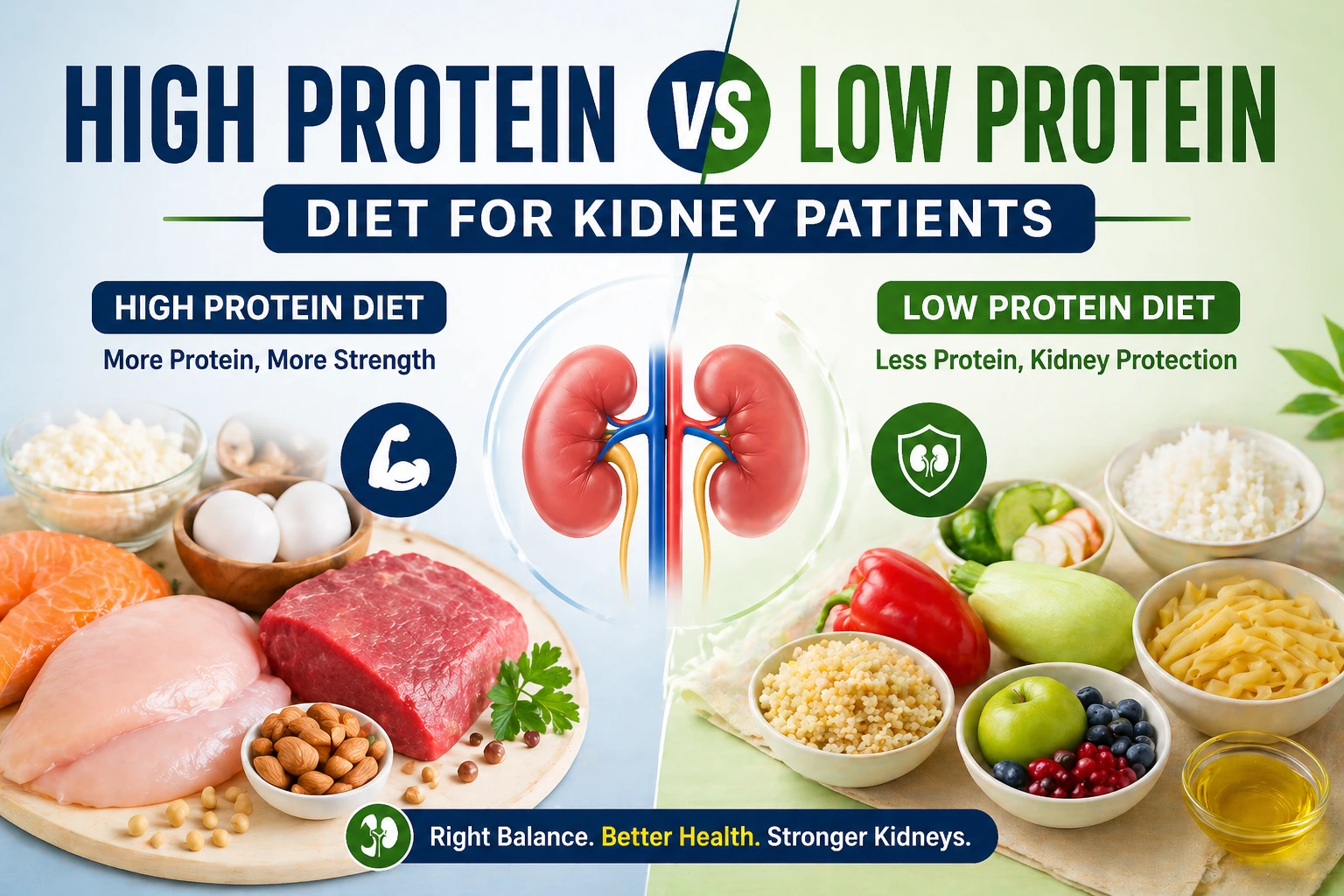
Let’s clear the confusion between high protein vs low protein diet for kidney patients for one and all.
📞 Get a Kidney Health Consultation – Call Now!
Okay, imagine your kidneys are tiny employees working 24/7. Protein is their workload.
High protein diet = extra overtime, no chai break
Low protein diet = manageable work, happy kidneys
For healthy people, high-protein diets are usually fine. But for kidney patients? It’s like giving a tired worker double shifts; not a great idea.
Here’s the simple breakdown:
High protein diet
Produces more waste (urea, creatinine)
Kidneys have to work harder to filter it
Can speed up kidney damage in CKD
Low protein diet
Reduces pressure on the kidneys
Slows down disease progression
Helps control symptoms like fatigue and nausea
So, if you have kidney disease, your goal is not to become a “protein monster” but a “protein manager.”
📞 Get a Kidney Health Consultation – Call Now!
Now comes the big question: how much protein is okay?
Protein is still essential. Your body needs it for muscles, immunity, and repair. But when the kidneys are weak, they struggle to remove protein waste.
That’s why doctors often recommend:
Moderate to low protein intake
High-quality protein (not junk protein from fried chicken every day)
Think of it like this:
You don’t stop eating protein; you just stop overfeeding your kidneys.
Increased urea
Swelling
Fatigue
Your kidneys will basically say, “Boss, I quit.”
📞 Get a Kidney Health Consultation – Call Now!
Short answer: for kidney patients, yes, it can be.
Long answer (still simple):
A high-protein diet:
Increases kidney workload
Raises waste levels in the blood
Can speed up kidney damage
But here’s an important twist:
For healthy kidneys → high protein is usually fine
For damaged kidneys → high protein = extra stress
It’s like:
A healthy person carrying 10 kg = okay
A tired person carrying 10 kg = “Why are you doing this to me?”
So don’t blindly follow fitness influencers who eat 10 eggs a day. Your kidneys are not on Instagram.
📞 Get a Kidney Health Consultation – Call Now!
Let’s simplify it into easy pointers:
Stage 1–2 CKD:
0.8–1.0 g/kg (normal but controlled)
Stage 3–4 CKD:
0.6–0.8 g/kg (reduced)
Stage 5 (no dialysis):
Around 0.6 g/kg (low protein)
Dialysis patients:
1.0–1.2 g/kg (higher due to loss)
Golden rules:
Don’t guess; follow the doctor's advice
Don’t go extreme
Balance protein with carbs and healthy fats
Stay hydrated (unless fluid restriction is advised)
Also, spreading protein throughout the day is better than eating it all in one meal. Your kidneys prefer “small tasks” instead of “last-minute overload.”
📞 Get a Kidney Health Consultation – Call Now!
Here’s where things get practical (and slightly less scary). General protein guidelines for kidney patients:
Early CKD (Stages 1–2):
Normal protein, but avoid excess
Moderate CKD (Stages 3–4):
Reduced protein intake
Advanced CKD (Stage 5, not on dialysis):
A low-protein diet is recommended
On dialysis:
Slightly higher protein needed (because dialysis removes protein)
Simple protein sources to focus on:
Egg whites (gold standard, honestly)
Paneer (in controlled amounts)
Lentils (dal, but not in huge bowls)
Chicken (lean and limited)
Fish
Foods to limit:
Red meat overload
Protein supplements (gym powders = kidney nightmare in CKD)
Processed meats
Moral of the story: quality over quantity.
📞 Get a Kidney Health Consultation – Call Now!
If you’re following a kidney diet in the US (or anywhere, really), the principles remain the same, but portion control becomes super important.
A simple day could look like:
Breakfast:
Oats + a few nuts
Egg white omelette
Lunch:
Rice + lentils (small portion)
Cooked vegetables
Snack:
Fruit (apple, berries)
Dinner:
Light veggie mix
Small portion of protein (chicken or cheese)
And yes, you can still enjoy food. This is not a punishment diet. It’s just a “be nice to your kidneys” plan.
📞 Get a Kidney Health Consultation – Call Now!
Let’s put numbers to it (because we all love a little math when it’s not in school).
Typical recommendation:
0.6 to 0.8 grams of protein per kg body weight per day (for CKD patients not on dialysis)
Example:
If you weigh 70 kg, you need about 42–56 grams of protein daily
Not 120 grams. Not 150 grams. You’re not preparing for a bodybuilding competition.
For dialysis patients:
Around 1.0–1.2 grams/kg (because protein loss happens during dialysis)
This is why one-size-fits-all diets don’t work. Your kidneys have their own personality now.
📞 Get a Kidney Health Consultation – Call Now!
So, high-protein vs. low-protein for kidney patients? It’s not a battle; it’s a balancing act.
Too much protein = stressed kidneys
Too little protein = weak body
The sweet spot lies in controlled, high-quality, and personalized intake. Think of protein as a spice, not the entire dish.
If you have kidney disease, your goal is simple:
Reduce kidney workload
Maintain body strength
Slow disease progression
And remember, your diet is one of the most powerful tools you have. No fancy treatment can replace smart daily choices.
So next time you’re about to add an extra scoop of protein powder, just ask yourself:
“Am I helping my muscles… or giving my kidneys a headache?”
Disclaimer: This article is informational and should not influence any dietary decisions. If you have kidney issues, you should visit Karma Ayurveda USA for a detailed diagnosis and completely natural treatment.
📞 Get a Kidney Health Consultation – Call Now!
Usually, no, high protein can strain the kidneys, so intake should be limited as per doctor's advice.
Processed foods, salty snacks, red meat, cola drinks, and high-potassium foods like bananas.
Fruits, most vegetables, white rice, bread, and pasta are generally low in protein.
Apples, berries, cabbage, cucumber, rice, pasta, white bread, and refined cereals are common low-protein options.