Apr 27 , 2026
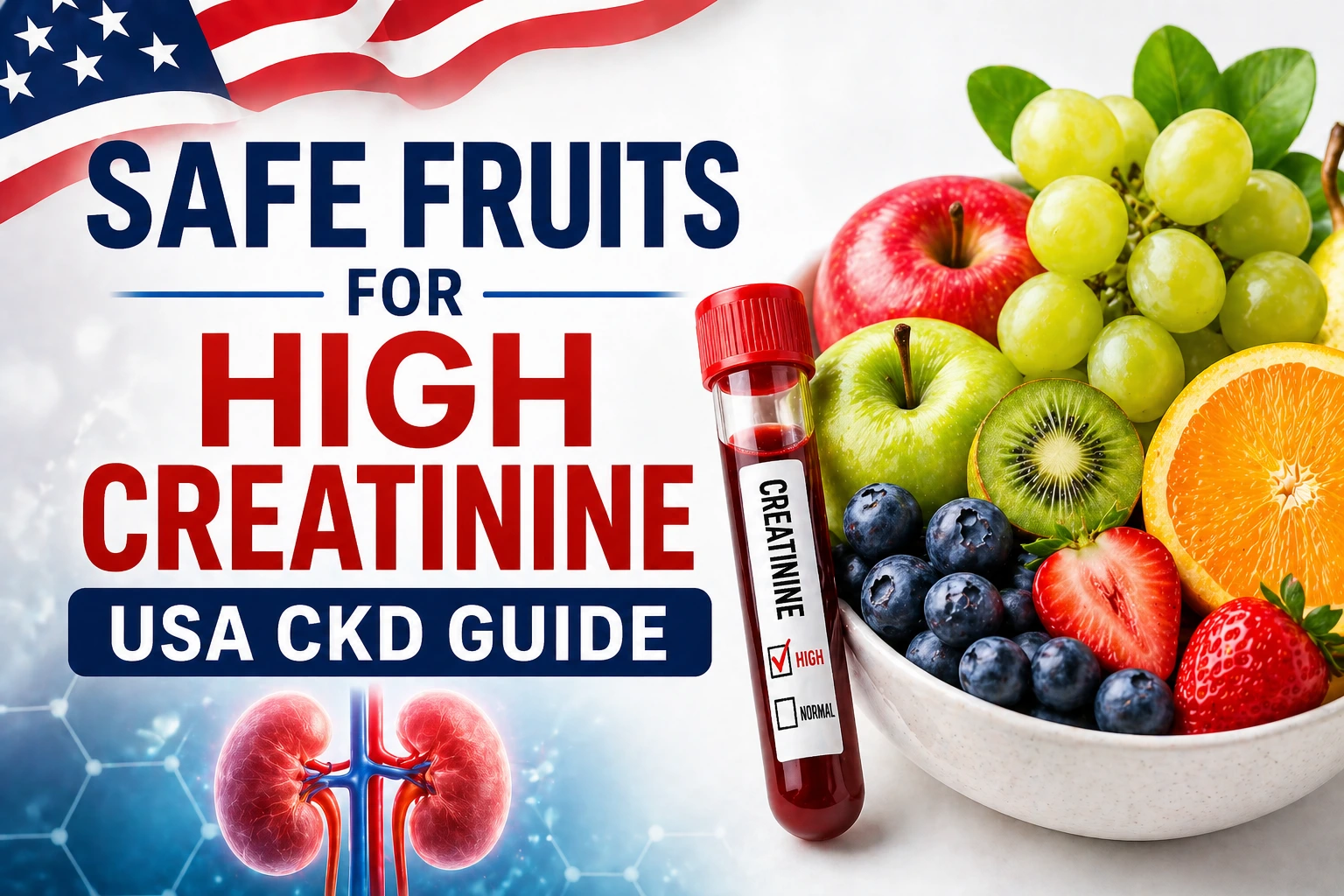
Apples, berries, and grapes are safe fruits for high creatinine and support kidney health.
If you’re looking into high creatinine stuff, a doctor in a white coat has probably told you that your creatinine levels are a bit high, or your kidneys are acting like a moody teenager who refuses to do their chores.
While navigating a kidney-friendly diet in the United States, land of the deep-fried everything; can feel like a challenge, it’s actually an opportunity to become a fruit connoisseur with the best fruits for high creatinine.
📞 Get a Kidney Health Consultation – Call Now!
When your creatinine is high, it’s basically a sign that your kidneys’ "trash disposal system" is running a bit slow. Creatinine is a waste product, and when it builds up, we need to stop throwing extra work at the kidneys.
The best fruits for high creatinine are those that don't bring a lot of "extra baggage" like heavy potassium or phosphorus. Think of these fruits as the low-maintenance friends who don't demand a three-course meal and a valet parking spot.
Berries: Strawberries, blueberries, and raspberries are the best fruits for kidney patients.
Apples: The classic "keep the doctor away" fruit actually holds up under scientific scrutiny. Any list of kidney-friendly fruits is incomplete without this.
Grapes: Specifically red grapes, which contain flavonoids that help reduce inflammation.
Watermelon: In moderation, it’s great for hydration, though you have to watch the fluid intake if your doctor has you on a limit.
Plums: A solid choice that offers sweetness without the potassium punch of a tropical fruit.
Peaches: These are great, but if you’re buying them canned, make sure they are in juice, not syrup. Your kidneys hate processed sugar almost as much as they hate high salt.
📞 Get a Kidney Health Consultation – Call Now!
Living with kidney disease doesn't mean you have to skip the fruit aisle. It just means you have to be the person who reads the labels (or, in this case, knows the biology).
Cherries are fantastic. They have been shown to help lower uric acid levels. Then there are pears. Pears are gentle, fiber-rich, and generally low in the stuff that makes kidneys work overtime. Just remember to eat the fruit, not the heavy syrup it sometimes comes in if you’re buying canned versions. We want fruit, not a sugar coma.
Potassium is usually a "good guy." It helps your muscles move, and your heart beat. But when kidneys aren't at 100 percent, they can't get rid of excess potassium. When potassium builds up, it can make your heart do a weird drum solo you didn't ask for.
If you need to stay low-potassium, stick to:
Clementines and Mandarins: Smaller than big oranges and easier for the body to manage.
Blackberries: High fiber, low potassium.
Apples: Seriously, the apple is the gold standard of the renal diet.
📞 Get a Kidney Health Consultation – Call Now!
Safety first! If your labs are showing high creatinine, you want fruits that act as "flushers" rather than "cloggers."
Lemon juice: Adding a squeeze of lemon to your water can help prevent kidney stones and provide Vitamin C without a massive potassium load.
Blueberries: These are basically tiny blue superheroes. They are packed with antioxidants called anthocyanins, which protect your cells from damage.
Red Grapes: These contain resveratrol, which is good for heart health, and since the heart and kidneys are basically best friends, helping one helps the other.
📞 Get a Kidney Health Consultation – Call Now!
Now for the "party poopers." Some fruits are just too much for a struggling kidney to handle. These are usually the high-potassium heavy hitters.
Bananas: The ultimate potassium bomb.
Oranges: Great for Vitamin C, but very high in potassium.
Kiwi: Tiny but mighty... in potassium.
Cantaloupe and Honeydew: These melons are surprisingly high in potassium.
Dried fruits: Raisins, apricots, and prunes are basically concentrated potassium nuggets. Avoid them like you avoid spoilers for your favorite TV show.
The answer is: It depends, but usually no. If you are in the early stages of kidney disease, your doctor might allow a small piece of a banana. However, for most people with elevated creatinine or CKD, the banana is the "forbidden fruit." A single medium banana has about 422 milligrams of potassium. For someone on a restricted diet, that’s a huge chunk of their daily allowance gone in four bites.
Yes! A thousand times, yes. The apple is the undisputed champion of the kidney world. Why?
It’s low in potassium.
It’s high in fiber (pectin), which helps lower cholesterol and glucose levels.
It’s portable and doesn't require a knife and a hazmat suit to eat on the go.
If you’re bored with plain apples, bake them with a little cinnamon (skip the sugar). It’s like a kidney-friendly apple pie minus the guilt and the stress on your renal system.
📞 Get a Kidney Health Consultation – Call Now!
A healthy kidney diet for US patients requires a bit of a lifestyle shift. In the United States, we are surrounded by processed snacks. The CKD diet is basically a "back to basics" approach.
The goal is to manage the "Big Three": Sodium, Potassium, and Phosphorus. Most fruits are naturally low in sodium and phosphorus, so the main villain we’re watching out for is our old friend, Potassium. A US-based CKD diet usually involves a lot of label reading and perhaps learning to love cauliflower more than you ever thought possible (but we’re sticking to fruits today!).
In addition, you must consult an expert like Dr. Puneet Dhawan if you want a specialized CKD diet or have questions like, “Which fruits increase creatinine?” Avoid the temptation of blindly believing anything written on the internet.
Picking the right fruit may help you keep your creatinine levels in check. Knowing the difference and picking the right stuff goes a long way in not just controlling your creatinine levels, but improving your renal health too.
📞 Get a Kidney Health Consultation – Call Now!
A: There’s no magic fruit, but apples, berries, and papaya are kidney-friendly and help support better function.
A: Go for a kidney-friendly diet with low-salt foods, fresh fruits, veggies, and controlled protein intake.
A: Staying well-hydrated with water is best; herbal drinks like barley water may also help a bit.
A: You can’t magically fix it in a week, but hydration, a clean diet, and avoiding heavy protein and salt can start improving levels.