Apr 25 , 2026
High creatinine is basically your kidneys’ way of saying, "Hey, we’re a little overwhelmed back here, can you give us a break?" Think of your kidneys as your body’s personal bouncers; they filter out the junk. When they get tired, creatinine (a waste product from muscle movement) starts to pile up. Here is how to eat your way back to their good side by choosing foods to avoid in creatinine issues.
High creatinine means there’s more creatinine than normal in your blood, which usually points to your kidneys not working properly. Creatinine is a waste product from muscles, and healthy kidneys remove it. When levels rise, it can signal kidney stress, damage, or reduced filtering ability.
Have any renal issues? Fill in the details and get an expert advice.
📞 Get a Kidney Health Consultation – Call Now!
Some of the major causes of high creatinine levels can be:
Kidney diseases or damage
Dehydration
High protein diet
Certain medicines (like painkillers or antibiotics)
Urinary blockage (stones, infection)
Intense exercise
📞 Get a Kidney Health Consultation – Call Now!
With high creatinine levels, you can expect the following symptoms
Fatigue and weakness
Swelling in feet or face
Shortness of breath
Nausea or loss of appetite
Changes in urination (more or less)
Trouble concentrating
When your creatinine is up, your kidneys are essentially working overtime without getting paid. To help them out, you need to avoid foods that are hard to process.
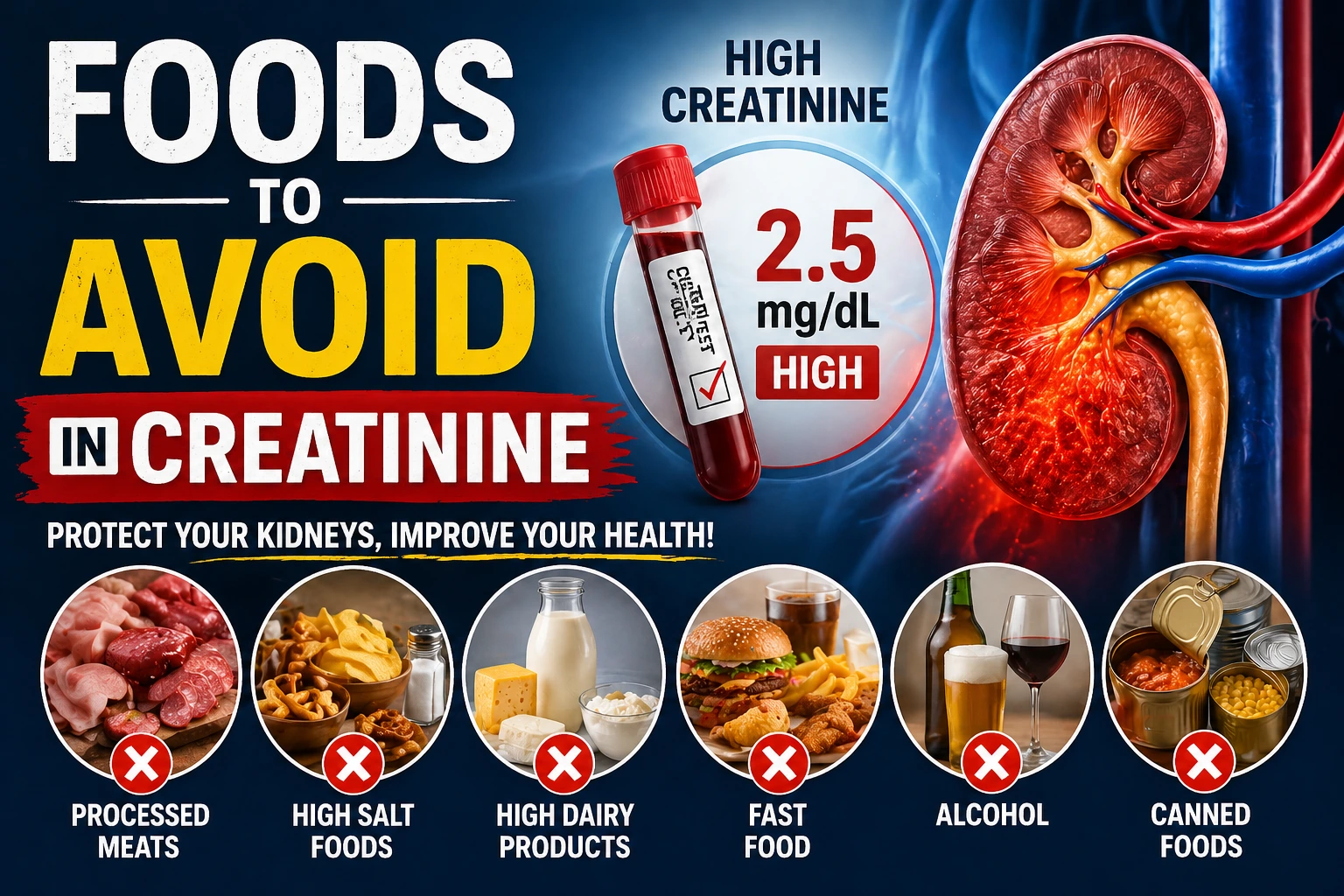
The biggest culprit? Processed meats. We’re talking about bacon, deli meats, and sausages. They are packed with sodium and nitrates, which are basically the arch-nemesis of a hardworking kidney. If it comes in a package and lasts for three years on a shelf, your kidneys probably won’t like it.
You also want to keep an eye on red meat. While protein is usually the hero of the story, too much of it (especially beef) creates more creatinine as it breaks down. It’s like throwing extra paperwork at someone who is already buried under a mountain of files.
Have any renal issues? Fill in the details and get an expert advice.
📞 Get a Kidney Health Consultation – Call Now!
It isn’t just about the meat. Some seemingly "healthy" foods can be secret double agents when your levels are spiked.
Dark-colored sodas: These are often loaded with phosphorus additives. Unlike the phosphorus found in plants, this kind is absorbed by your body like a sponge, putting a heavy load on your filtration system.
Canned foods: These are sodium traps. Even if you rinse the beans or veggies, there is often enough salt left to make your kidneys scream.
Whole wheat bread: This one hurts, right? Usually, we’re told whole wheat is king. But it’s higher in potassium and phosphorus than white bread. When creatinine is high, sometimes "refined" is actually kinder to your system.
Bananas and Avocados: I know, they are the stars of every health blog, but they are potassium heavyweights. High creatinine often means your kidneys struggle to balance potassium, so maybe skip the guac for a bit.
📞 Get a Kidney Health Consultation – Call Now!
Creating a kidney diet doesn't mean eating cardboard. It’s about balance. Instead of a "no-food-allowed" list, think of it as a "switch-and-swap" list.
|
Instead of this... |
Try this! |
|---|---|
|
Potato chips |
Unsalted popcorn |
|
Brown rice |
White rice or Bulgur |
|
High-potassium oranges |
Apples or Grapes |
|
Spinach |
Cabbage or Cauliflower |
|
Whole milk |
Macadamia nut milk |
The goal of a creatinine diet chart is to reduce the "Big Three": Sodium, Potassium, and Phosphorus. If you can keep those under control, you’re giving your kidneys a much-needed vacation.
Sodium is the sneaky villain in this story. It makes your body hold onto water, which raises blood pressure and puts a death grip on your kidneys. Avoid these "Salty Six" high-sodium zones:
Cured meats: Pepperoni belongs on a pizza, not in a kidney-friendly diet.
Frozen dinners: They are convenient, but they contain enough salt to season a small ocean.
Pickles and Olives: They’ve been soaking in brine for months. Your kidneys do not want that salt bath.
Soy sauce: Just one tablespoon can blow your entire daily sodium budget.
Pretzels and Salted Nuts: Great for a party, terrible for your creatinine levels.
Boxed stuffing and mixes: These are sodium bombs disguised as side dishes.
Diet is the heavy lifter, but creatinine treatment involves a few other lifestyle tweaks. First, stay hydrated, but don't go overboard. Drinking eight gallons of water won't "wash out" the creatinine; it might actually stress your kidneys more. Drink when you’re thirsty, but don't try to win any water-chugging contests.
Also, watch your supplements. If you’re a gym rat, you might be taking Creatine supplements to bulk up. Stop. Just stop. You’re literally pouring the very thing you're trying to lower into your body. It’s like trying to bail water out of a boat while someone else is pouring buckets back in.
If you are looking for a more holistic approach, the Karma Ayurveda USA creatinine diet focuses on the ancient wisdom of using herbs and specific food groups to rejuvenate kidney function. This approach isn't just about "avoiding" things; it's about "healing" through what you consume.
Boiled veggies: To reduce potassium levels through a process called "leaching."
Herbal support: Using natural diuretics like Punarnava to help the kidneys filter better without chemical stress.
Freshness: Moving away from anything in a box or a can and returning to the earth.
By following a structured plan like this, you aren't just managing a number on a lab report; you’re changing the environment inside your body so your kidneys can actually recover.
Have any renal issues? Fill in the details and get an expert advice.
📞 Get a Kidney Health Consultation – Call Now!
To wrap this up, remember that your diet is your strongest tool. You don't have to be a professional chef to get this right. Just remember the simple rules: if it's super salty, super processed, or super high in potassium, give it a pass for now.
Stick to light proteins like egg whites or small portions of chicken, choose low-potassium fruits like berries and pineapples, and keep your seasoning to herbs and lemon juice instead of the salt shaker.
Avoid salty, processed foods, red meat, fried items, and excess dairy as they put extra load on kidneys.
Fresh fruits, vegetables, whole grains, and staying well-hydrated can help support better kidney function.
Processed foods, red meat, high-sodium snacks, sugary drinks, and foods high in potassium (like bananas in excess).