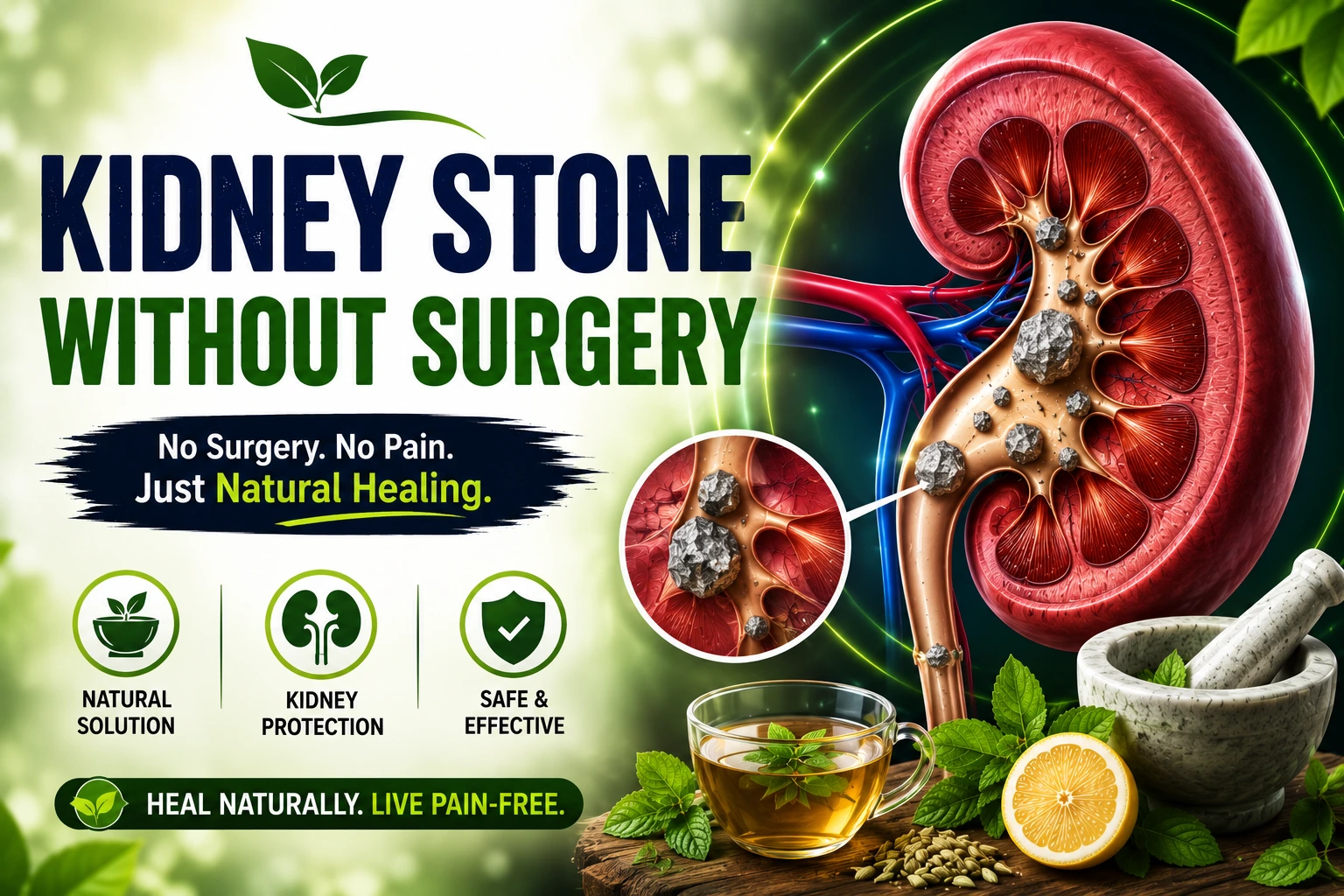
Jun 11 , 2026
When that familiar kidney pain strikes, your brain instantly screams for kidney stone pain relief. Usually, the default Western medical advice is to head to the ER, look at astronomical medical bills, and prepare yourself for an invasive procedure or a sound-wave blasting session. But what if you could evict these tiny, unwanted crystal tenants naturally?
Believe it or not, managing kidney stones without surgery is highly possible, scientifically backed, and a lot friendlier on your wallet. Let's look at how you can bypass the operating room, drop the agony, and use ancient wisdom alongside modern science to get your urinary tract back on track.
📞 Get a Kidney Health Consultation – Call Now!
Before we talk about blasting these stones with plants and water, let us address the elephant in the hospital room: the cost. If you opt for the standard surgical route in the United States, your wallet might end up crying harder than you did when the stone first started moving.
Depending on your state, your insurance deductible, and whether you end up in an outpatient clinic or a major metropolitan hospital, the financial hit varies wildly. Let us break down what you are looking at if you choose standard medical procedures versus a natural approach.
|
Treatment Type |
Average Cost Range (USA) |
Recovery Time |
Hospital Stay Required? |
|
Shock Wave Lithotripsy (ESWL) |
$7,250 – $16,450 |
2 to 3 days |
Usually Outpatient |
|
Laser Lithotripsy via Ureteroscopy |
$8,000 – $16,000 |
5 to 7 days |
Outpatient / Same Day |
|
Percutaneous Nephrolithotomy (PCNL) |
$15,000 – $30,000+ |
2 to 4 weeks |
1 to 2 days Inpatient |
|
Natural / Holistic Protocols |
$50 – $200 |
Continuous |
Absolutely None |
When you look at the kidney stones treatment cost USA statistics, it becomes completely obvious why so many people are looking for a non-surgical kidney stones exit strategy. Spending thousands of dollars to have a tube threaded up your plumbing is nobody’s idea of a good weekend.
📞 Get a Kidney Health Consultation – Call Now!
If you want to pass kidney stones without surgery, you need to understand how these little rocks form. Most stones are made of calcium oxalate. They form when your urine gets too concentrated, allowing minerals to bind together.
This is where Ayurvedic kidney stone management comes into play. For thousands of years, holistic traditions have used specific plants to break down these mineral bonds, relax the urinary tract, and flush the debris out smoothly. Instead of a cold metal scalpel, this method uses a targeted herbal medicine kidney stones approach to turn a sharp, jagged stone into smooth, passable sand.
Scientists have actually spent a lot of time testing these ancient remedies in labs to see if they hold up to modern scrutiny. A famous review published in the journal International Braz J Urol looked closely at how various plant extracts alter the crystallization of minerals in the kidneys. The researchers found that certain botanicals directly prevent calcium and oxalate from sticking together, effectively halting the growth of the stone before it becomes a major problem.
If you are hunting for a reliable kidney stones pain natural cure, you need to look at specific plants that act as lithotriptics (stone-breakers) and diuretics (things that make you pee). When combined, these properties create a high-pressure, stone-dissolving environment inside your urinary system.
Here are the heavy-hitting kidney stones Ayurvedic herbs that you should know about:
Pashanbheda (Bergenia ligulata): The literal translation of this herb's name is "to break stones." It works by inhibiting calcium oxalate crystal formation and relaxing the urinary muscles, allowing the stone to slide out without causing a massive spasm.
Varuna (Crataeva nurvala): This powerful plant helps reduce the production of stone-forming elements in the body and acts as a natural anti-inflammatory to soothe the lining of your urinary tract.
Punarnava (Boerhavia diffusa): A classic diuretic that increases urine volume, helping to sweep out remaining debris and prevent stagnation in the kidneys.
According to a clinical study published in the Journal of Ethnopharmacology, these specific botanical extracts significantly reduce the size of existing stones and lower the levels of stone-forming chemicals in the bloodstream. By utilizing these options, you are treating the root cause of the issue rather than just dealing with the emergency aftermath.
📞 Get a Kidney Health Consultation – Call Now!
If you want to navigate kidney stones without surgery successfully, you have to be aggressive with your home care protocol. You cannot just drink a single glass of water, take a nap, and hope for the best. You need a deliberate strategy to keep things moving.
You need to produce at least 2.5 liters of urine a day to flush a stone. Water is your primary weapon, but adding fresh lemon juice gives you a massive advantage. Lemons are packed with natural citrate, which binds to calcium and blocks stone growth. A study featured in the Journal of Urology confirmed that long-term lemonade therapy significantly increases urinary citrate levels, making it incredibly difficult for new stones to develop or existing ones to grow.
The intense agony of a stone does not just come from the rock itself; it comes from your ureter cramping down around it. Using heat packs on your back and side can help relax those internal muscles. Additionally, natural magnesium supplements act as a smooth-muscle relaxant, allowing the urinary tubes to widen slightly so the stone can pass with far less resistance.
Cut down on heavy sodium and heavily processed foods, which force your kidneys to excrete more calcium into your urine. Instead, focus on maintaining a healthy intake of dietary calcium (like yogurt or cheese), which surprisingly binds to oxalates in your stomach before they can ever reach your kidneys.

📩 Ask a Kidney Expert (Free 10-Min Consultation)
While fighting kidney stones without surgery is an excellent and highly effective route for small to medium stones, we have to keep it real: you cannot fix a bowling-ball-sized stone with lemon juice alone. If you experience a fever, chills, persistent vomiting, or an absolute inability to pass urine, that means you have a total blockage or an infection. In those specific scenarios, put down the herbal tea and head straight to a medical practitioner.
However, if your stone is under 6 millimeters and you are managing the discomfort, using a structured combination of hydration, dietary adjustments, and time-tested herbs can help you pass that stone cleanly, safely, and entirely on your own terms. Your kidneys, and your bank account, will absolutely thank you for it.
Kidney stones can often pass without surgery if they are small.
Drinking plenty of water is the most important step to flush stones out.
Lemon water helps because it prevents stones from growing.
Some Ayurvedic herbs like Pashanbheda, Varuna, and Punarnava may help support stone removal.
Staying active and using warm compresses can reduce pain and muscle spasm.
Eating less salt and processed food helps prevent new stones.
Proper diet and hydration can reduce the risk of future kidney stones.
Medical help is needed if there is fever, severe pain, vomiting, or blockage.
Small stones (usually under 6 mm) often pass naturally with the right care.
Disclaimer: It is always advisable that you consult a professional like Dr. Puneet Dhawan for renal stone treatment. Neglecting kidney stones may cause lacerations and other health complications.
📞 Get a Kidney Health Consultation – Call Now!
Yes, small kidney stones often pass naturally with proper hydration and care.
Drinking plenty of water with lemon juice helps flush stones faster.
Pashanbheda, Varuna, and Punarnava are commonly used supportive herbs.
If you have fever, severe pain, vomiting, or urine blockage, seek medical help.
Yes, low salt intake and good hydration can reduce stone formation risk.