Jul 28 , 2026
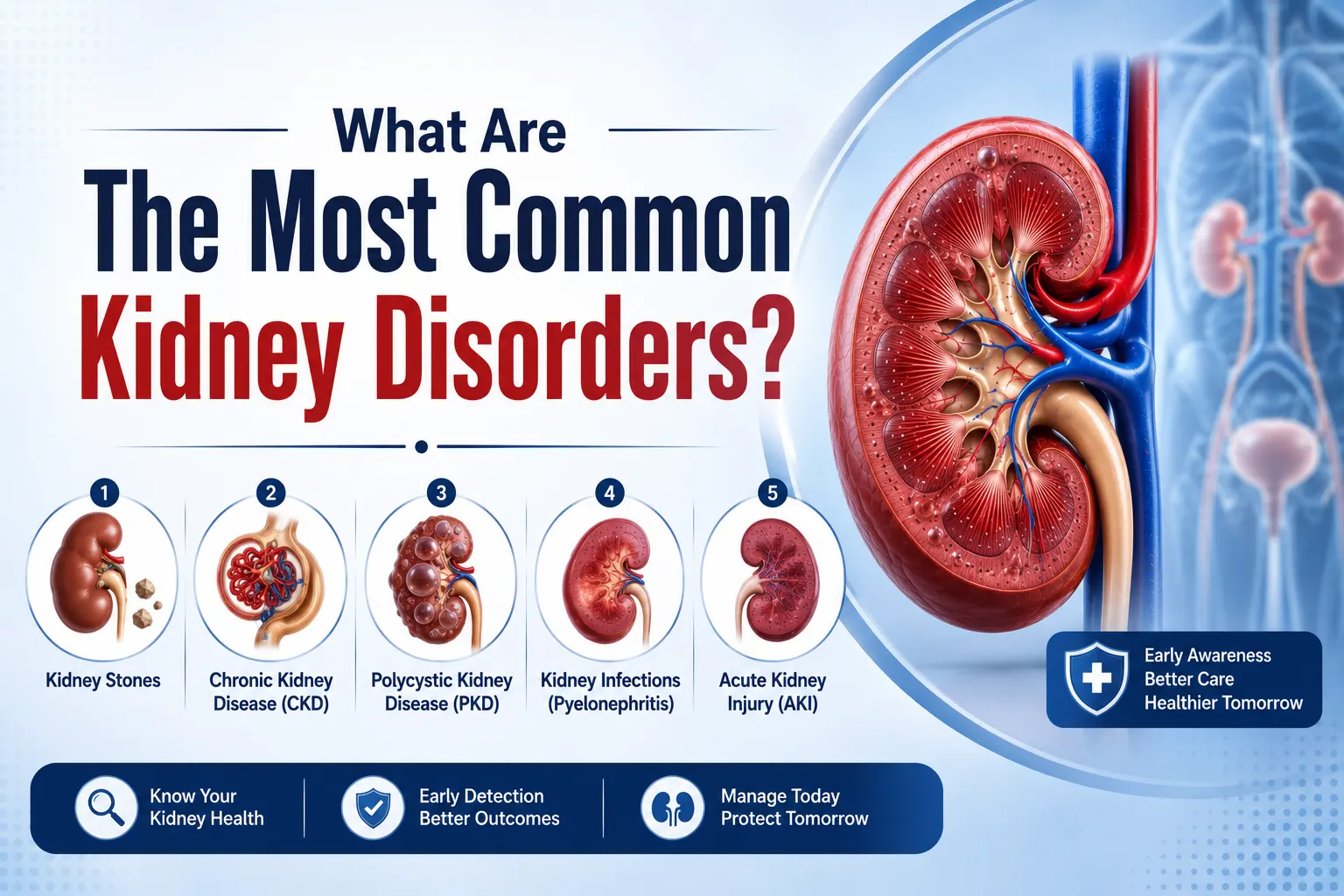
What are the most common kidney disorders? The short answer is that chronic kidney disease and acute kidney injury take the top spots, but kidney stones and infections are also incredibly frequent visitors.
Your kidneys are the unsung heroes of your anatomy. Each one is about the size of a computer mouse, yet they quietly filter every drop of your blood every thirty minutes. However, because these little workhorses are so quiet, things can sometimes go wrong without a single whisper of warning. Let's lift the hood on these bean-shaped filters and look at a comprehensive common kidney disease list to see what we are really dealing with.
This is the big boss of kidney-related diseases. Chronic Kidney Disease is a slow, stealthy condition where your organs gradually lose their ability to filter waste over months or years.
According to a comprehensive study by the Centers for Disease Control and Prevention (CDC), titled Chronic Kidney Disease in the United States, 2026, more than 1 in 10 adults—roughly 37 million people—are living with CKD. What is even wilder? About 87% of them have absolutely no idea. It is the ultimate passive-aggressive health issue; it does not complain out loud until the damage is quite advanced. The major instigators behind this slow burn are diabetes and high blood pressure, which wear down the delicate filtering units over time.
📞 Get a Kidney Health Consultation – Call Now!
CKD is like a movie that runs very slowly; whereas AKI is like a jolt! It is characterized by the abrupt cessation of kidney function within a matter of few hours or days.
It never occurs in an unexpected manner. According to the Global Health Review on Kidney Diseases by WHO, AKI develops due to significant events such as sepsis, major operations, dehydration, or accidental overdoses of drugs and so on.
If you have ever known someone passing a kidney stone, you know it involves a lot of curling into a fetal position on the floor. Kidney stones are hard, crystallized mineral deposits that form inside your renal chambers. While a small stone might slip through unnoticed, a larger one trying to migrate down a tiny tube is an unforgettable experience. They are incredibly common and mostly come down to genetics, not drinking enough water, or a diet too heavy in sodium.
The condition referred to in this context is genetically inherited. Polycystic kidney disease is a disease in which the formation of cysts and fluids in the organs occurs. Over several decades, these growing cysts can invade the body's healthy portions and cause each kidney to increase in size.
To keep things simple, let's look at how these conditions stack up against each other when it comes to speed, causes, and dramatic flair.
|
Disorder |
Speed of Onset |
Main Culprit |
Vibe Check |
|
Chronic Kidney Disease |
Years |
High blood pressure, Diabetes |
The silent roommate who never does the dishes. |
|
Acute Kidney Injury |
Hours to Days |
Severe infections, Medication toxicity |
A sudden power outage during a storm. |
|
Kidney Stones |
Weeks to Form |
Dehydration, Calcium buildup |
Stepping on a Lego, but from the inside out. |
|
Polycystic Kidney Disease |
Decades |
Genetics |
A family heirloom you really didn't ask for. |
📞 Get a Kidney Health Consultation – Call Now!
If someone is diagnosed with one of these issues, they become a kidney disease patient, joining a massive global community of people actively managing their health. Managing a renal disease requires a personalized approach.
For chronic conditions, an expert kidney disease doctor (known in medical circles as a nephrologist) will focus heavily on lifestyle tweaks and protecting your remaining function. This usually involves keeping your blood pressure strictly below 140/90 mm Hg and managing blood sugar. If the condition unfortunately progresses all the way to complete kidney failure, the conversation shifts to therapies like dialysis—which manually cleans your blood—or tracking down a kidney transplant.
The golden rule for maintaining excellent, lifelong kidney health is remarkably straightforward: stay well-hydrated, go easy on the salty takeout, avoid eating pain relievers like candy, and get your routine blood and urine checks at your annual physicals. Your twin filters will thank you for it!
The Silent Majority: The most common kidney diseases are silent in the early stages.
The Main Triggers: Diabetes and high blood pressure are two of the major causes of kidney issues.
Hydration Protects: Drinking plenty of fluids is your absolute best defense against the agonizing experience of passing kidney stones.
Be Mindful of Meds: Routinely overusing over-the-counter NSAIDs (like ibuprofen) can cause sudden, sharp harm to your kidney tissues.
📞 Get a Kidney Health Consultation – Call Now!
Diabetes is the top cause, contributing to a massive portion of all new kidney failure cases globally.
You usually won't feel early stages at all, so doctors rely on simple blood and urine tests to see how well they are filtering.
Acute injuries can often recover beautifully with quick treatment, but long-term chronic damage is generally permanent and focused on management.
It forcefully stretches and scars the microscopic, delicate blood vessels inside your filters, slowly choking off their blood supply.
Disclaimer: This article is meant purely for informational and educational purposes and should never replace professional medical advice, diagnosis, or treatment. Always consult with a qualified healthcare provider regarding any medical conditions or changes to your health regimen.