Jul 16 , 2026
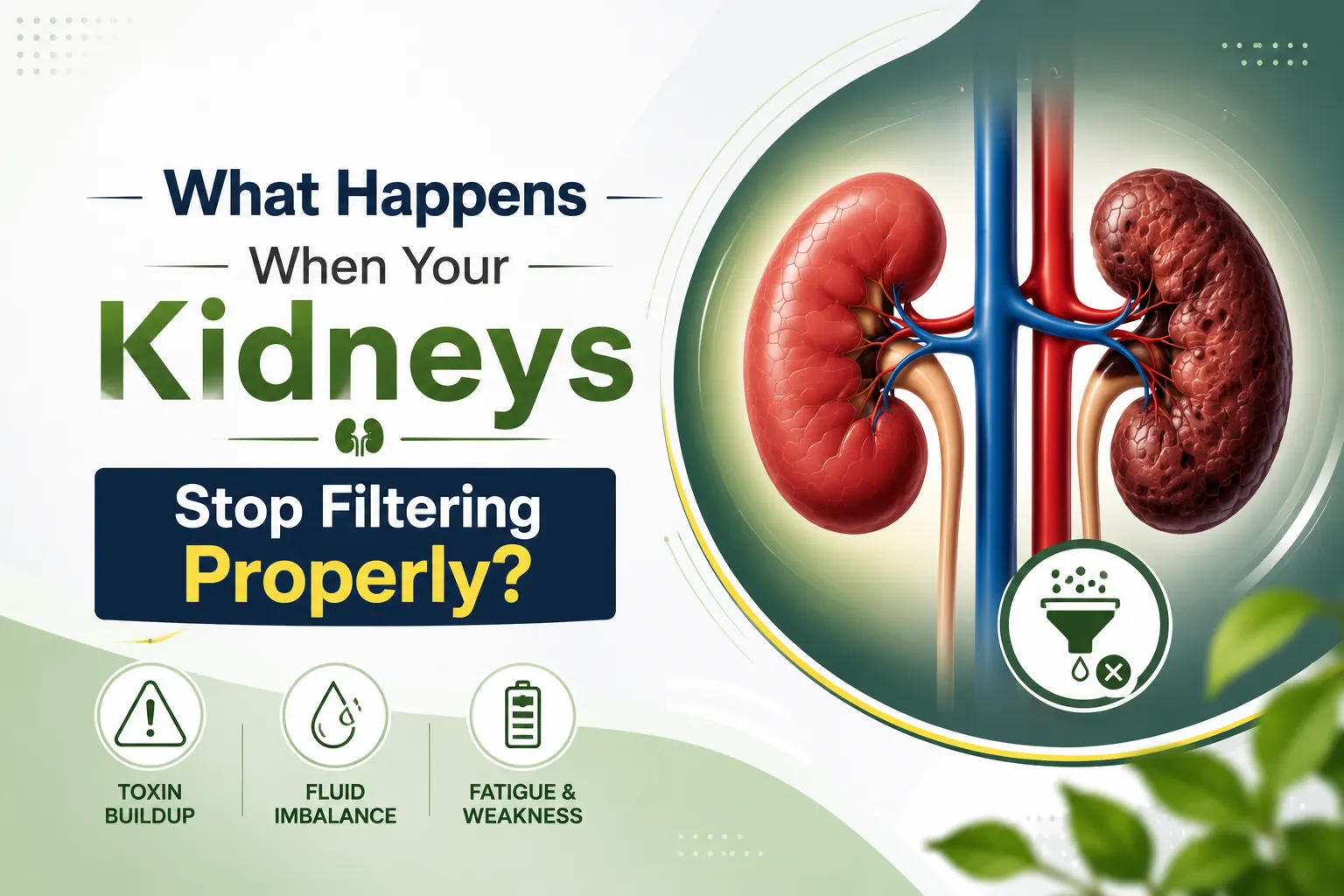
When your kidney is not functioning the way it should, waste and extra fluid start piling up in your blood instead of leaving your body through urine; basically, your body's plumbing backs up. It's not dramatic on day one, but left unchecked, it can snowball into something much bigger.
Most of us don't think about our kidneys until they act up. They're the quiet workers of the body; no six-pack abs, no Instagram fame; just two bean-shaped organs filtering about 150 quarts of blood every day. When they're doing their job, you never notice them. When they're not, that's when things get interesting (and not the fun kind).
📞 Get a Kidney Health Consultation – Call Now!
Think of your kidneys as the world's most committed bouncers. They stand at the door of your bloodstream and decide what stays and what goes. Toxins, extra salt, excess water; out. Nutrients, minerals, the good stuff, back in. They also help regulate blood pressure, keep your bones strong, and tell your body when to make red blood cells.
When a kidney is not functioning properly, this entire bouncer system falls apart. Waste products like creatinine and urea start building up. Fluid you should've peed out starts hanging around your ankles, lungs, or face. And your blood pressure, left unsupervised, tends to throw a bit of a tantrum.
Here's the sneaky part: Early kidney trouble is often silent. According to a global meta-analysis published in PLOS ONE, chronic kidney disease affects roughly 11 to 13% of the world's population, and a large chunk of that group has no idea anything's wrong yet. That's the kidney equivalent of a check-engine light that only comes on after the engine's already smoking.
Swelling in your ankles, feet, or around your eyes
Feeling tired all the time, even after decent sleep
Foamy or bubbly urine (yes, we're talking about your pee, deal with it)
Needing to urinate way more or way less than usual
Persistent nausea or a metallic taste in your mouth
Trouble concentrating; sometimes called "brain fog"
If several of these show up together, it's worth asking a kidney disease doctor to run some basic blood and urine tests. It's a five-minute inconvenience versus a potentially life-altering diagnosis down the road.
There's a difference between kidneys that are struggling and kidneys that have essentially clocked out. Kidney failure; also called renal failure; happens when the kidneys lose most or all of their ability to filter waste on their own. A study using U.S. national health survey data covering 1999 to 2018 found that early-stage chronic kidney disease climbed from about 9.3% to nearly 13% of adults over that 20-year window; proof this isn't some rare, freak occurrence. It's becoming disturbingly common, largely thanks to rising rates of diabetes and high blood pressure.
|
Stage |
What's Happening |
Kidney's Mood |
|
Early CKD |
Filtering slows down a bit |
"I'm fine, just tired" |
|
Moderate CKD |
Waste starts building up |
"I need a vacation" |
|
Advanced Stage |
Filtering nearly stops |
"I quit. Call HR (a nephrologist)." |
So, what happens when kidneys stop working properly? Your body basically becomes a house with no working drains. Waste backs up, fluid pools where it shouldn't, and other organs; especially the heart; start feeling the pressure too. Research has repeatedly linked declining kidney function with a higher risk of cardiovascular trouble, since a struggling filtration system puts extra strain on the whole circulatory setup.
📞 Get a Kidney Health Consultation – Call Now!
Here's the encouraging part: catching things early changes everything. Kidney function treatment today isn't limited to dialysis or transplants (though those remain crucial for advanced cases). Depending on the stage, options include blood pressure and blood sugar management, dietary tweaks, and newer medications that researchers have found can meaningfully slow disease progression; including certain diabetes drugs originally designed for blood sugar control. A review in the Journal of Clinical Medicine called several such advances genuine "landmarks" in slowing CKD's march forward, rather than just managing symptoms after the fact.
If you're noticing symptoms or have risk factors like diabetes, high blood pressure, or a family history of kidney disease, don't just Google your symptoms at 2 a.m. and spiral. Reach out for real kidney disease help; a simple blood test (checking your eGFR) and a urine test can tell doctors an enormous amount about how your kidneys are actually doing.
Your kidneys don't ask for much; a bit of water, a reasonably balanced diet, and not being ignored for a decade. But when a kidney is not functioning well, the ripple effects touch nearly every part of your health, from your energy levels to your heart. The good news? This is one of those health issues where early action genuinely pays off.
· The kidneys are responsible for filtering waste products and excess fluid from the blood. However, when they slow down, waste accumulates in the body.
· Kidney disease does not reveal itself in most cases until the early stages. Keep an eye on symptoms such as swelling, fatigue, and changes in urination pattern.
· It is estimated that 1 in 8 people worldwide may be affected by some form of chronic kidney disease that remains undetected in many cases.
· The advanced stage is the last phase of kidney disease and this is the level at which a doctor takes the diagnosis very seriously.
· Early detection of chronic kidney disease can significantly improve the outlook through lifestyle changes.
· In order to monitor your kidneys’ health frequently, all you may need is a simple blood and urine test.
📞 Get a Kidney Health Consultation – Call Now!
When your kidneys cease functioning properly, waste and fluid stay in your body instead of being washed out through urine.
While Early damage of kidneys can be managed, the latter course of kidney disease usually requires more extensive treatment like dialysis or for the advanced stages even a transplant.
The most likely symptoms not so far away will include excessive swelling of legs or face, a continuous state of fatigue, foaming urine and abnormal frequency of urinating.
Disclaimer: This blog is for general informational purposes only and isn't a substitute for professional medical advice, diagnosis, or treatment. If you're experiencing symptoms or have concerns about your kidney health, please consult a qualified doctor or nephrologist for personalized guidance.