Jul 28 , 2026
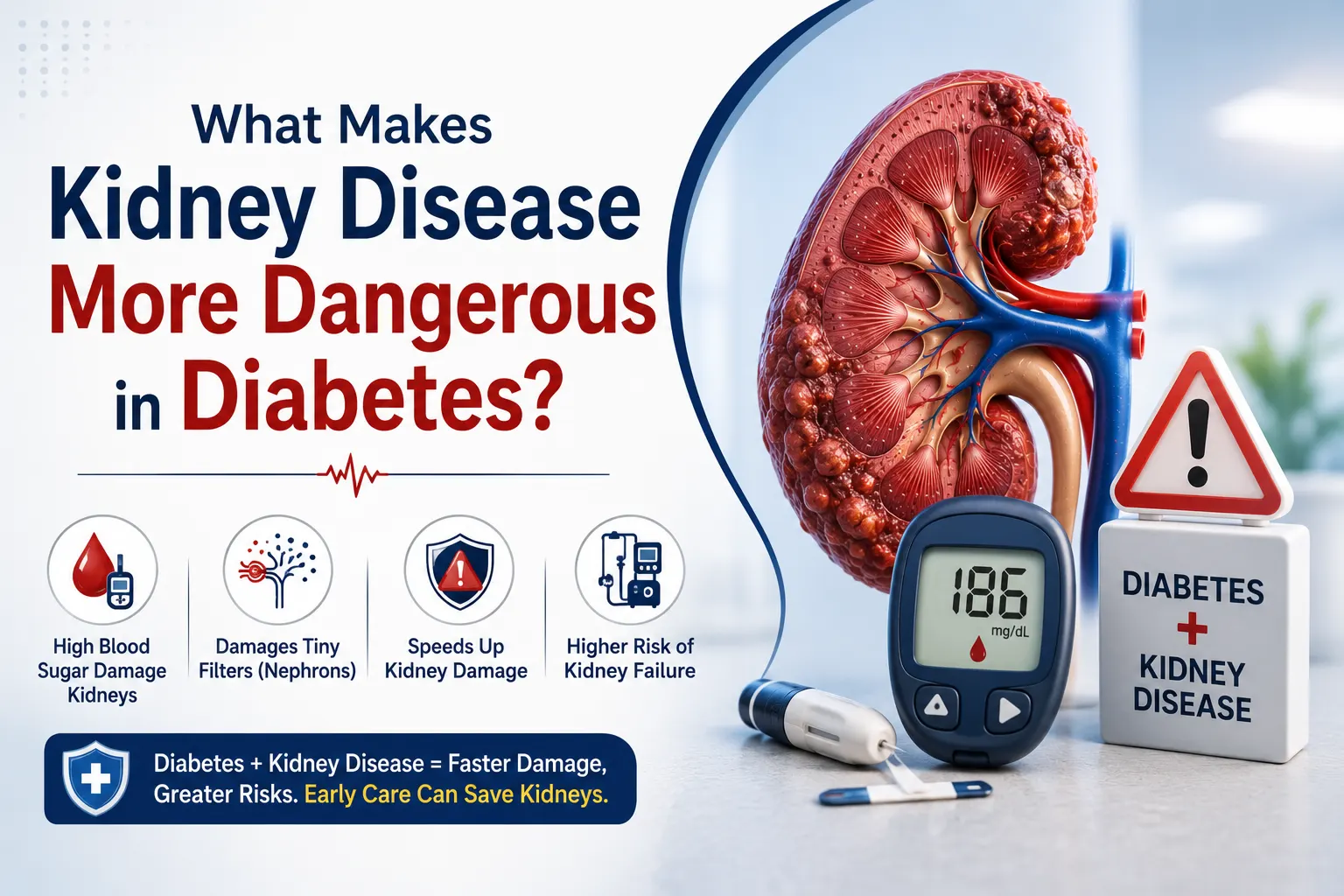
If you've ever wondered why doctors get twitchy about kidney checkups the moment "diabetes" shows up in your chart, this is why. Your kidneys are basically tiny, tireless filtration factories, working 24/7 to clean your blood, balance fluids, and kick out waste. Diabetes, especially when blood sugar runs high for years, slowly gums up the machinery. And once that machinery starts failing, you're not looking at a minor inconvenience; you're looking at chronic kidney disease, one of the most common and most underestimated complications of diabetes.
Here's the thing nobody tells you at diagnosis: your kidneys contain millions of tiny blood vessel clusters called nephrons, and these little guys are not fans of prolonged high glucose. Over time, excess sugar in the blood damages the delicate filtering units inside the kidney, causing them to leak protein and slowly lose efficiency. This isn't a "maybe it happens" kind of thing either; a large nationwide cohort study found that people with diabetes had roughly a 38% higher risk of developing chronic kidney disease compared to those without it, even after adjusting for age, sex, and other health conditions.
That's not a small bump. That's diabetes basically handing your kidneys a slow-motion parking ticket that turns into a towing notice if ignored long enough.
📞 Get a Kidney Health Consultation – Call Now!
Think of it like this: kidney disease alone is tough. Diabetes alone is manageable with the right habits. But CKD and diabetes together create a feedback loop that's genuinely unfair:
High blood sugar damages kidney filters → renal function drops
Poor renal function makes it harder to clear excess sugar and toxins → blood sugar control gets harder
Harder blood sugar control → more damage to blood vessels, including the ones in the kidneys
Repeat, indefinitely, unless someone breaks the cycle
Research backs this up plainly. A study published on diabetic kidney progression found that people with diabetic kidney disease had more than double the risk of a major decline in kidney filtration ability compared to people whose kidney disease came from other causes. Translation: when diabetes is the root cause, the kidneys tend to decline faster and harder, not just differently.
Add in the usual diabetes entourage; high blood pressure, high cholesterol, and long diabetes duration; and the risk climbs even more. One study on people with type 2 diabetes for 15+ years found that those with high blood pressure and high cholesterol were significantly more likely to land in the "high risk" category for kidney disease progression, based on standard kidney risk classification guidelines.
The genuinely annoying thing about this whole situation is that early kidney damage doesn't hurt. There's no alarm bell. No dramatic symptom montage. A kidney disease patient with diabetes can have declining kidney function for years before anything feels "off," which is exactly why routine screening (a simple blood and urine test) matters so much more once diabetes enters the picture.
|
Factor |
Diabetes Alone |
Diabetes + Kidney Disease |
|
Blood sugar control |
Tricky, but manageable |
Trickier; kidneys can't help clear excess glucose properly |
|
Blood pressure |
Often elevated |
Frequently harder to control, feeds back into kidney damage |
|
Symptoms |
Thirst, fatigue, etc. |
Often silent until later stages; sneaky as heck |
|
Medication choices |
Wide range available |
Narrower; some drugs need dose adjustment or avoidance |
|
Long-term outlook |
Manageable with lifestyle + meds |
Needs closer monitoring, dietary tweaks, and regular labs |
📞 Get a Kidney Health Consultation – Call Now!
📞 Get a Kidney Health Consultation – Call Now!
Not usually reversed, but its progression can often be slowed significantly with good blood sugar and blood pressure control.
Most doctors recommend at least once a year, though people with existing risk factors may need more frequent checks.
Rarely; early kidney damage is usually silent, which is exactly why routine screening matters so much.
It helps a lot, but managing blood pressure and cholesterol alongside it gives the kidneys much better long-term protection.
This blog is for general informational purposes only and isn't a substitute for professional medical advice, diagnosis, or treatment. Always consult a qualified healthcare provider regarding any questions about your health, especially before making changes related to diabetes or kidney care.