Jul 23 , 2026
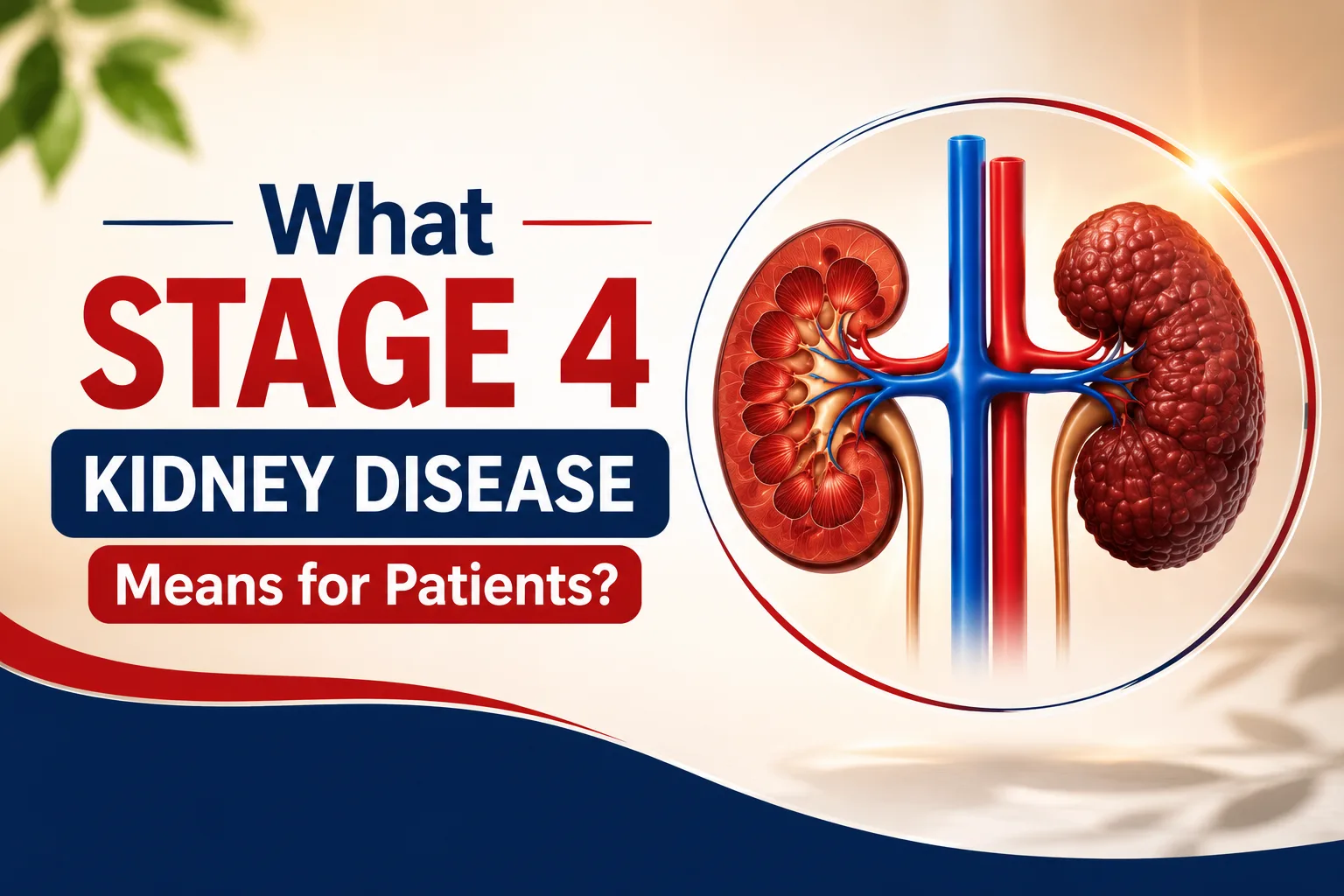
Stage 4 kidney disease means your kidneys are running at just 15-29% of their normal filtering power; serious, but not the end of the road. If you or someone you love just got this diagnosis, take a breath. This is a "let's get serious" moment, not a "panic and Google worst-case scenarios at 2 AM" moment (we've all been there, no judgment).
Let's talk about chronic kidney disease stage 4 like actual humans, minus the scary medical jargon and the doom-scrolling.
Kidney disease is staged on a scale of 1 to 5, based on something called eGFR (estimated glomerular filtration rate); basically, a report card on how well your kidneys are filtering waste out of your blood. Think of your kidneys as a coffee filter. Stage 1 is a fresh filter doing its job beautifully. Stage 4 is a filter that's seen better days and is straining to keep up, but hasn't given up entirely.
That's the honest stage 4 kidney disease meaning: your kidneys are working at roughly 15-29% capacity. Not great, but also not zero. There's a real difference between "struggling" and "shutting down," and stage 4 is squarely in struggling territory.
According to the KDIGO (Kidney Disease: Improving Global Outcomes) 2012 Clinical Practice Guideline, staging is based specifically on this eGFR range along with markers like protein in the urine; so your doctor isn't just eyeballing it, there's real data behind the number.
📞 Get a Kidney Health Consultation – Call Now!
Here's the plot twist most people don't expect: for a lot of patients, the biggest threat at this stage isn't actually kidney failure chronic progression; it's the heart. A well-known study published in the New England Journal of Medicine by Go et al. (2004) followed over a million adults and found that as kidney function declines, the risk of cardiovascular events and death climbs right alongside it; often faster than the risk of needing dialysis.
So yes, we watch the kidneys closely. But your doctor is also watching your blood pressure, cholesterol, and heart health like a hawk, because they're all tangled up together.
Every kidney disease patient experiences this differently, but common signs at this stage include:
Fatigue that coffee just can't fix
Swelling in the ankles, feet, or hands
Changes in how often (or how little) you pee
Nausea or a metallic taste that ruins your favorite snacks
Trouble concentrating (kidney disease brain fog is a real, annoying thing)
Muscle cramps, especially at night
If none of these sound familiar yet, that's actually common too; stage 4 can be sneaky quiet in its early days.
📞 Get a Kidney Health Consultation – Call Now!
Here's the good news wrapped in more good news: stage 4 CKD treatment is mostly about slowing things down and protecting what function you've got left. It's less "fix the kidneys" and more "stop poking the bear."
Blood pressure control (often the single biggest lever)
Medications like ACE inhibitors, ARBs, or newer SGLT2 inhibitors
Dietary adjustments; usually less sodium, and sometimes less protein and potassium
Managing diabetes tightly, if that's part of the picture
Regular monitoring of eGFR and blood work every few months
Early conversations about dialysis or transplant, just so nothing feels rushed later
The landmark MDRD (Modification of Diet in Renal Disease) study back in the 1990s helped establish that dietary protein management can meaningfully influence how kidney disease progresses, which is why your nephrologist might suddenly care a lot about your steak portions.
📞 Get a Kidney Health Consultation – Call Now!
Stage 4 vs. Other Stages: A Quick (and Slightly Cheeky) Comparison
|
Stage |
eGFR Range |
What It's Like |
|
Stage 1-2 |
60-120+ |
Kidneys humming along, mostly unbothered |
|
Stage 3 |
30-59 |
Kidneys sending polite "we need to talk" emails |
|
Stage 4 |
15-29 |
Kidneys sending urgent texts in all caps |
|
Stage 5 |
Below 15 |
Full renal failure; dialysis or transplant territory |
A diagnosis like this can feel heavy, and that's completely fair. But good kidney care isn't just prescriptions and lab tests; it's also having a support system, asking your care team every question that pops into your head (even the "weird" ones), and giving yourself grace on the hard days. Plenty of people live full, meaningful lives with chronic kidney disease stage 4 for years by staying on top of their care.
Chronic kidney disease stage 4 means kidneys are working at 15-29% capacity; serious, but manageable
Heart health matters just as much as kidney health at this stage
Common symptoms include fatigue, swelling, and appetite changes
Treatment focuses on slowing progression, not reversing damage
Diet, blood pressure control, and regular monitoring are the daily heavy lifters
Emotional support and open conversations with your care team matter too
📞 Get a Kidney Health Consultation – Call Now!
Not all; many people manage stage 4 for years through medication and lifestyle changes without ever needing dialysis.
Generally high-sodium, high-potassium, and high-phosphorus foods, though it varies person to person, so a renal dietitian's input helps.
Typically, every 3 months, though your nephrologist may adjust that based on how your labs are trending.
Disclaimer: This blog is for general informational purposes only and isn't a substitute for professional medical advice, diagnosis, or treatment. Always consult your doctor or nephrologist about your specific condition before making any health decisions.