Aug 21 , 2026
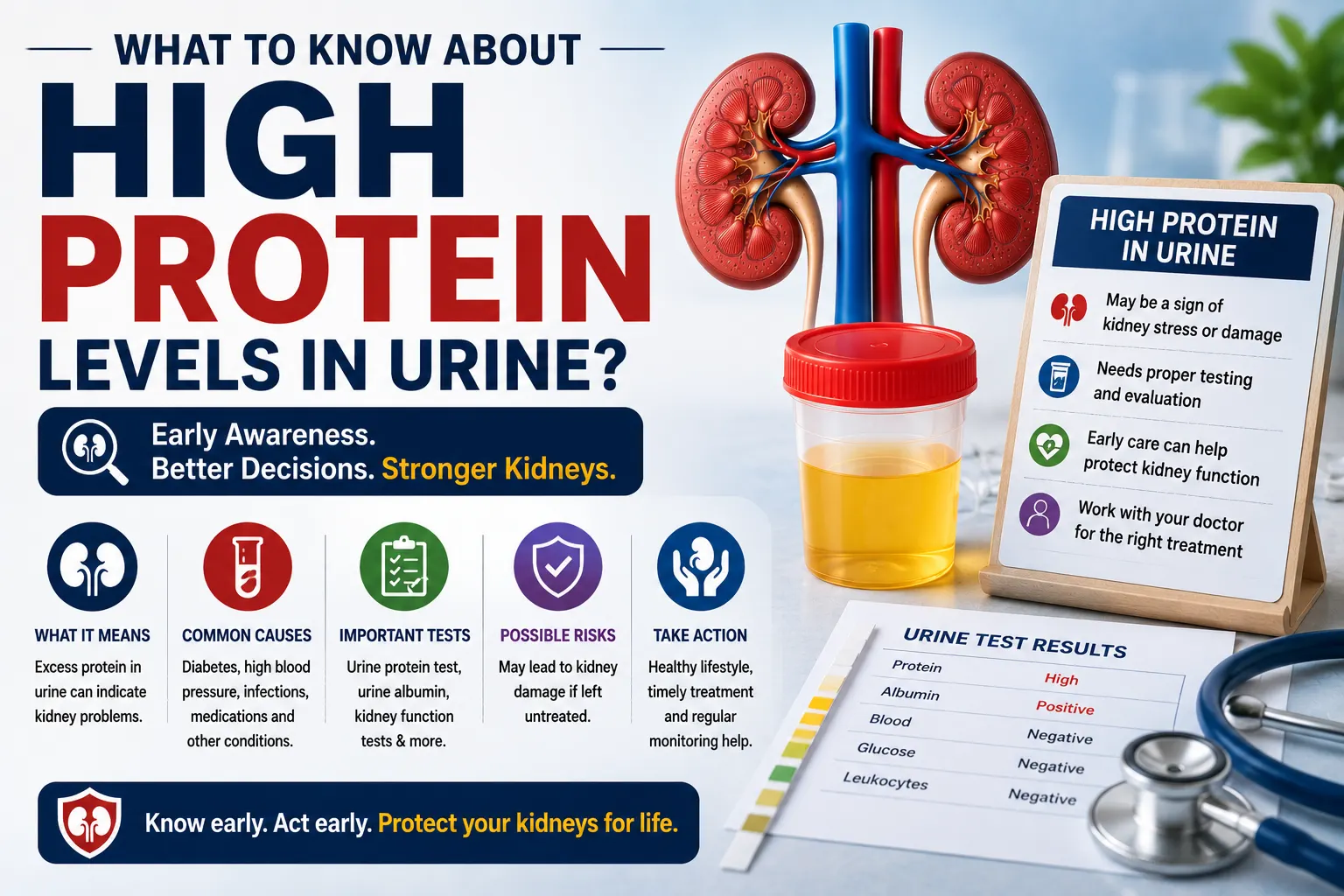
Short answer: a little protein in your urine now and then is usually nothing to lose sleep over, but if it keeps showing up, it's your body's way of tapping you on the shoulder and saying "hey, maybe check on your kidneys?" Let's unpack what that actually means, because "protein in your pee" sounds alarming when you read it on a lab report at 11 PM and immediately spiral into WebMD.
If you're exploring Ayurvedic treatment for kidneys or looking into a natural treatment for kidney disease, it's still important to understand what your urine test is actually telling you and discuss persistent changes with a qualified healthcare professional.
Your kidneys are basically your body's bouncers. They filter your blood all day, every day, letting waste out and keeping the good stuff; like protein; inside where it belongs. When those bouncers get a little tired or a little damaged, they start letting protein slip past the velvet rope and out into your urine. Doctors have a fancy word for this: proteinuria. Say it three times fast, I dare you.
A tiny amount of protein in urine is actually normal. Your body isn't a perfect machine (none of us are, we're all just trying our best). But when the amount creeps up, especially consistently, that's when it becomes a signal worth listening to rather than ignoring.
📩 Ask a Kidney Expert (Free 10-Min Consultation)
There isn't just one reason your kidneys might start slacking off. Some common culprits include:
Dehydration; yes, sometimes it's just that you forgot to drink water again
Intense exercise; a hard workout can temporarily bump up protein levels
High blood pressure; over time, this puts real strain on the kidneys
Diabetes; one of the biggest long-term causes of kidney stress
Infections or fever; your body's chaos mode can show up in your urine too
Kidney disease itself; sometimes the protein is the first hint something deeper is going on
A study published in the Journal of the American Society of Nephrology found that even mild, persistent proteinuria was linked to a higher risk of kidney function decline over time; which is basically science's way of saying "don't shrug this off if it keeps happening."
If you're researching Ayurvedic herbs for kidney disease, keep in mind that herbs and supplements aren't automatically suitable for everyone with proteinuria. Kidney function, medications, and the underlying cause all matter.
📞 Get a Kidney Health Consultation – Call Now!
Good question, and yes; you'll often hear it described specifically as kidney proteinuria, since the kidneys are the organ actually responsible for the leak. Think of it less as a separate condition and more as the "kidney edition" of the same story: protein escaping where it shouldn't.
Here's the annoying part; in the early stages, you often feel completely fine. That's the plot twist with kidney issues in general; they're sneaky. But as things progress, you might notice:
Foamy or bubbly urine (like you poured a mini cappuccino into the toilet)
Swelling in your hands, feet, or face
Fatigue that coffee just can't fix
Loss of appetite
Frequent urination, especially at night
|
Situation |
Should You Panic? |
|
One-time high reading after a killer gym session |
Nope, chill, drink water |
|
Foamy pee that lingers for weeks |
Worth a chat with your doctor |
|
High blood pressure + protein in urine |
Time to actually book that appointment |
|
Swelling + fatigue + protein in urine |
Please don't Google it at 2 AM, just call someone |
📩 Ask a Kidney Expert (Free 10-Min Consultation)
This is where a simple kidney test comes in; usually just a urine sample, sometimes paired with a blood test to check how well your kidneys are filtering things overall. Doctors may also run something called a urine albumin-to-creatinine ratio (ACR), which sounds intense but is really just a more precise way of measuring the leak.
Research published in Kidney International has repeatedly shown that catching proteinuria early through routine screening significantly improves long-term outcomes, especially in people with diabetes or high blood pressure. Basically: catching it early is the difference between "minor tune-up" and "full engine overhaul."
If a routine test flags elevated protein, don't panic-scroll; but don't ignore it either. This is genuinely one of those "better safe than sorry" situations. A kidney disease doctor (a nephrologist, if we're using the official title) can help figure out whether it's a one-off blip or something that needs ongoing attention.
Staying on top of this stuff is really just part of taking care of your overall renal health, the same way you'd get your eyes checked or your teeth cleaned. Kidneys don't ask for much; mostly just water, decent blood pressure, and not being ignored.
If you're considering kidney Ayurvedic treatment, it's a good idea to first understand why the protein is elevated and whether there is an underlying kidney condition. Ayurveda or other complementary approaches should not replace appropriate medical evaluation.
For people specifically searching for the best herbs for kidney diseases, there isn't one herb that is universally "best" for every kidney condition. The appropriate choice depends on the person's diagnosis, kidney function, medications, and overall health.
A small amount of protein in urine is normal; consistently high levels are the real flag
Proteinuria can be caused by everything from dehydration to diabetes to actual kidney disease
Foamy urine and swelling are two signs worth paying attention to
A simple urine test can catch this early, often before symptoms even show up
Repeated or unexplained high protein levels deserve a proper medical check, not a Google diagnosis
If considering Ayurvedic treatment for kidneys, discuss herbs and supplements with a qualified healthcare professional first
📞 Get a Kidney Health Consultation – Call Now!
Not always; it can also happen from dehydration, exercise, or a fever, so one high reading isn't an automatic red flag.
Yes, if it's caused by something temporary like intense exercise or dehydration, it usually resolves once your body settles back down.
Doctors often suggest cutting back on excess salt and processed foods, since these can add extra strain on the kidneys.
If you have diabetes, high blood pressure, or a family history of kidney disease, an annual check is a smart habit to build.
Not necessarily; sometimes it's just the angle or speed of your stream, but if it happens consistently, it's worth mentioning to your doctor.
Disclaimer: This blog is for general informational purposes only and isn't a substitute for professional medical advice, diagnosis, or treatment. If you're concerned about your kidney health or notice unusual symptoms, please consult a qualified doctor rather than relying on this article alone.