Aug 10 , 2026
Short answer: your ankles puffing up like bread dough is often your kidneys' way of telling you something's off. And honestly, if you're searching for kidney disease help right now because your shoes suddenly don't fit by dinnertime, you're already asking the right question.
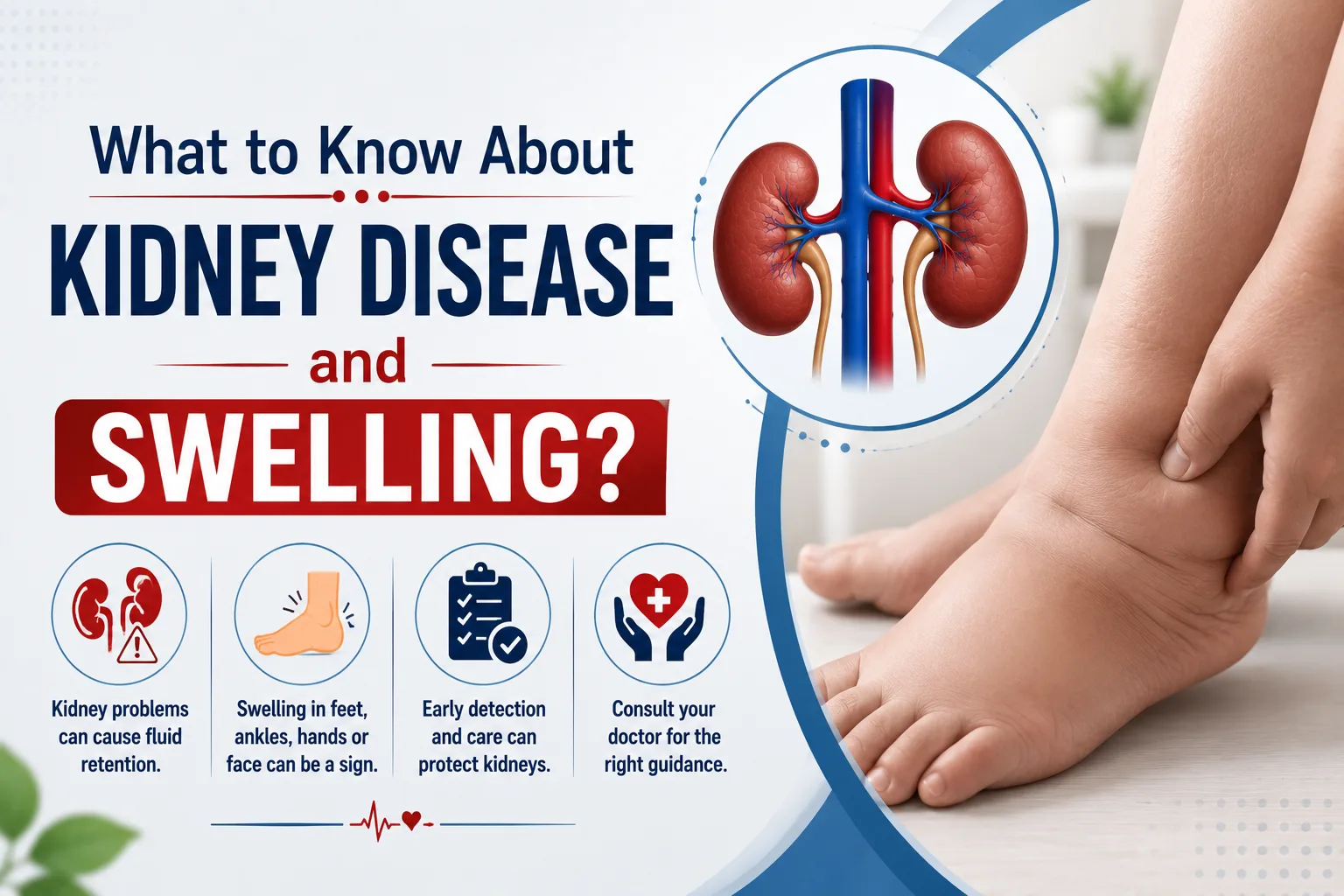
Okay so here's the deal with kidneys. Nobody thinks about them until they act up. They just sit there in your lower back doing the unglamorous work: filtering your blood, tossing out waste, keeping your fluid levels in check; and they never ask for credit. Then one day they start dragging their feet, and instead of an email or a warning light on your dashboard, your body just... swells up. Ankles. Fingers. Eyelids in the morning, like you cried all night even though you slept fine.
I want to walk through why that happens, what it usually means, and where the line is between "eh, ignore it" and "call your doctor today."
📞 Get a Kidney Health Consultation – Call Now!
Picture your kidneys as bouncers outside a club, and the club is your bloodstream. Their whole job is deciding what stays and what gets shown the door; extra sodium, extra water, waste products, all of it should get kicked out through your urine. When kidney function starts slipping, the bouncers get lazy. Stuff that should've left the building sneaks back in and pools in your tissue instead. Congratulations, your ankles are now hosting an unplanned house party.
Doctors call this edema. It's actually one of the earlier signs of kidney disease that shows itself, sometimes before anything else feels wrong at all. A cross-sectional look at almost twenty years of NHANES data (1999 through 2018) found kidney disease rates in the U.S. have been climbing steadily, especially in the earlier stages people tend to brush off. So no, this isn't some rare oddity; it's more common than most people assume.
Swelling isn't one-size-fits-all. Where it shows up actually tells you something.
Legs, ankles, feet; the classic "why won't my shoes zip" swelling, usually worse by evening because gravity's doing its thing
Hands and fingers; rings suddenly feel like they belong to a smaller person
Face and around the eyes; puffiest in the morning, first thing you notice in the mirror
Belly, in more advanced cases; this one you don't sit on, get it checked
The American Kidney Fund explains it pretty simply: damaged kidneys can't clear out enough sodium and water, so it builds up in your blood vessels and eventually leaks out into the surrounding tissue. It's not your body being dramatic. It's just plumbing that's not draining right anymore.
📞 Get a Kidney Health Consultation – Call Now!
No, and please don't spiral over it. Swollen feet after a long flight? Normal. Puffiness after a salty dinner or a hot day? Also normal. Bodies swell for all kinds of boring reasons that have nothing to do with your kidneys.
What tips the scales toward "worth a doctor visit" is when it sticks around, keeps getting worse over days, or comes with other stuff: fatigue that won't quit, less frequent urination, or urine that looks weirdly foamy.
|
Everyday Swelling |
Kidney-Related Swelling |
|
|
Timing |
Comes and goes with the day |
Sticks around and doesn't really quit |
|
One side or both |
Often just one leg (bad seat on the plane) |
Usually both, evenly |
|
Extra symptoms |
None, you're fine |
Tiredness, less peeing, foamy urine |
|
Press-and-hold test |
Bounces right back |
Leaves a dent for a few seconds |
|
Your reaction |
"I need better shoes" |
"Okay, I should probably get bloodwork" |
For anyone already managing this, swelling isn't just annoying; it's information. A sudden increase, especially alongside a few pounds of unexplained weight gain over a couple of days, usually means fluid is piling up faster than your body can deal with. This isn't a small club either; CDC estimates put roughly 1 in 7 U.S. adults somewhere on the chronic kidney disease spectrum, and a lot of them don't know it yet.
When things progress toward renal failure, the swelling tends to get worse and spread further, sometimes even affecting breathing if fluid builds up around the lungs. That's not a "wait a few days and see" situation. That's a today situation.
There's no magic pill here, unfortunately. Real kidney disease help looks more like a set of unglamorous habits than one big fix:
Cutting back on sodium (RIP to your beloved instant noodles)
Watching fluid intake if your doctor's told you to
Taking meds consistently, especially diuretics if you've been prescribed them
Getting regular bloodwork and urine tests so nothing sneaks up on you
Keeping diabetes and blood pressure in check, since those two are, according to the National Kidney Foundation, the biggest drivers behind kidney disease overall
Nobody's going to write a bestseller called "The Joy of Sodium Restriction." But it genuinely works, and that's kind of the whole point.
Good kidney care isn't really about treating swelling after it shows up. It's about catching problems way before your ankles start narrating them for you. A basic checkup, a blood pressure check, a simple urine test; these things catch trouble early, long before symptoms get loud. Kidneys are quiet. They don't complain until things are already pretty far along.
📞 Get a Kidney Health Consultation – Call Now!
Swelling is often one of the earliest visible clues something's wrong with your kidneys
It happens because damaged kidneys can't clear extra sodium and fluid the way they should
Not every swollen ankle means kidney trouble, but persistent, symmetrical swelling is worth checking out
If you already have kidney disease, sudden swelling plus weight gain deserves quick attention
Sodium control, consistent meds, and regular testing do more heavy lifting than anything flashy
No, not always, it's often just heat or a long day, but if it lingers or comes back often, get it checked.
Most people notice it first in their ankles, feet, hands, or around their eyes.
Yes, usually through less sodium, prescribed diuretics, and staying on top of regular kidney checkups.
If it sticks around, keeps worsening, or comes with fatigue, foamy urine, or shortness of breath.
Not necessarily; swelling can show up at different stages, so testing is what really tells you where you stand.
This article is meant for general information only and isn't a substitute for professional medical advice, diagnosis, or treatment. Kidney conditions look different from person to person, so please talk to a qualified healthcare provider about your own symptoms and situation.