Aug 10 , 2026
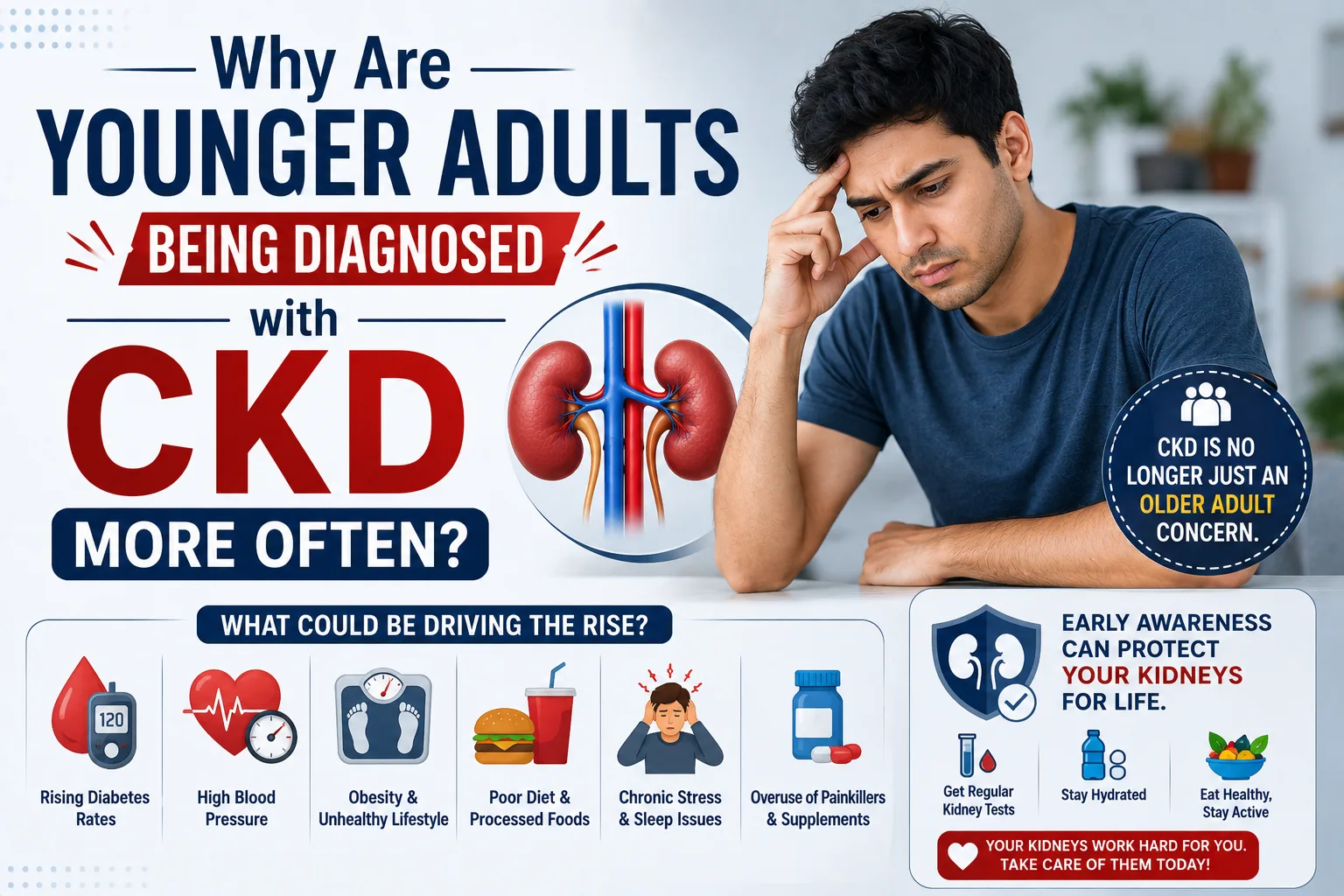
Because the same lifestyle habits that give you a 2 a.m. TikTok scroll and a diet of instant noodles are quietly wearing down your kidneys years before your first grey hair shows up. Yes, chronic kidney disease (CKD), once considered a "grandpa problem," is now knocking on the doors of people in their 20s and 30s; and honestly, it's a bit rude of it to show up this early.
Let's be real: nobody in their twenties is thinking about their kidneys. You're thinking about rent, relationships, and whether oat milk actually tastes good in coffee. Kidneys are the quiet, unbothered roommate of your body; they never complain, never demand attention, and just keep filtering your blood in the background. Which is exactly the problem. By the time symptoms of early CKD show up, the damage is already done. So, let's talk about why this "silent" disease is suddenly a lot louder in younger crowds.
📞 Get a Kidney Health Consultation – Call Now!
Type 2 diabetes and high blood pressure used to be "future you's" problem. Not anymore. A large global analysis using Global Burden of Disease (GBD) 2021 data found that among adolescents and young adults aged 15–39, cases of CKD showed rising trends in incidence, mortality, and disease burden, moving in the opposite direction of the improving numbers seen in children. Translation: the kids are (relatively) fine, but the "young adult" bracket is where the real trouble is brewing.
Another deep dive specifically tracking CKD linked to hypertension found that the disease burden, measured through disability-adjusted life years, has been climbing steadily, and interestingly, high-income North America saw one of the sharpest increases in this burden over recent years. So yes, this isn't just a "somewhere else" problem; it's very much a "your neighborhood" problem too.
If your fridge looks more like a vending machine, your kidneys have noticed. Research on ultra-processed foods (UPFs); think packaged snacks, sugary drinks, and instant everything- has repeatedly linked higher intake to declining kidney function. One large cohort study following over 14,000 adults for more than two decades found that greater consumption of ultra-processed foods was tied to a higher likelihood of developing CKD, with sugary drinks and processed meats standing out as the biggest culprits.
And it's not a one-study fluke; a massive dose-response meta-analysis covering 786,216 participants backed the same pattern, reinforcing that this isn't just correlation paranoia; it's a consistent, repeatable trend across populations.
Type 1 diabetes isn't sparing kidneys either. A 2025 study tracking T1DM-related CKD among people aged 15–39 across more than 200 countries found rising trends that researchers flagged as a genuine emerging global health challenge rather than a one-region issue.
Add chronic stress, irregular sleep, minimal physical activity, and a general "I'll drink water tomorrow" attitude, and you've got the perfect storm for early kidney strain. None of these things individually sound dramatic, but stacked together over a decade? That's how a 28-year-old ends up with kidney function numbers that would make their grandma raise an eyebrow.
|
Category |
Grandma's Generation |
Today's Young Adults |
|
Diet |
Home-cooked, low sugar |
Instant noodles, energy drinks, "meal-prep" that's actually just chips |
|
Blood pressure checks |
Once a year at the clinic |
Once every never, unless the smartwatch nags |
|
Diabetes onset |
Usually after 50 |
Now showing up in 20s and 30s |
|
Water intake |
"Drink water, beta" |
"I had one iced coffee, that counts, right?" |
|
Kidney disease awareness |
Low, but so was the risk |
Higher, but so is the risk; great combo |
CKD in young adults is genuinely rising, not just better detected; GBD data shows increasing incidence and burden in the 15–39 age group.
Ultra-processed foods, especially sugary drinks and processed meats, are consistently linked to kidney function decline.
Early-onset diabetes and hypertension are major contributors and are appearing younger than before.
Kidneys don't send loud warning signals; regular check-ups matter even if you "feel fine."
Small daily habits (hydration, less processed food, movement) genuinely add up over years.
📞 Get a Kidney Health Consultation – Call Now!
Both play a role, but the data itself shows real increases in incidence, not just better detection.
Not alone, but it's a strong, repeatedly proven contributor when combined with other risk factors.
Puffy ankles, constant tiredness, and foamy pee are worth a doctor's visit, not a Google diagnosis.
It helps support kidney function, but it can't undo existing damage; think prevention, not cure.
If there's family history, diabetes, or high blood pressure, yes; otherwise, a basic check during annual physicals is enough.
This blog is for general awareness and is not medical advice. It doesn't replace professional diagnosis or treatment. If you have concerns about kidney health, please consult a qualified doctor or nephrologist rather than relying solely on this article.