Jul 22 , 2026
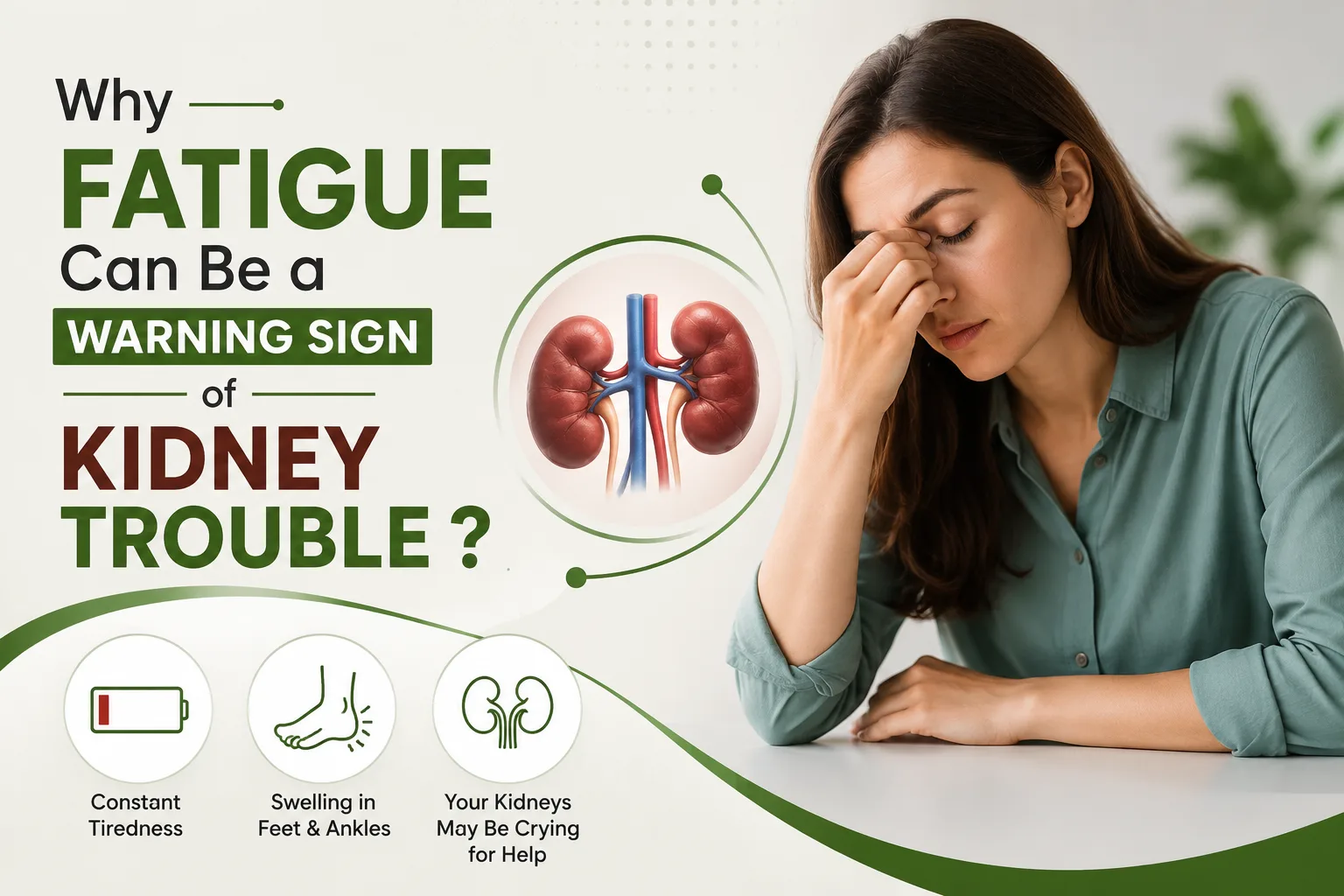
You know that feeling when your alarm goes off, and you genuinely contemplate selling all your worldly possessions just to stay in bed for another hour? We’ve all been there. But if you’re constantly dragging your feet through invisible quicksand, it might not just be a late-night binge-watching session; relentless exhaustion can actually be a sneaky sign of kidney disease.
Most of the time, we blame our busy schedules, stress, or the fact that we looked at our phones until 2 AM. But our kidneys, those two bean-shaped multitaskers quietly working away in your lower back, are often the unsung heroes of our daily energy levels. When they start to struggle, they don’t always shout; instead, they send a subtle hint, using fatigue as a kidney warning sign to wave a tiny red flag.
📞 Get a Kidney Health Consultation – Call Now!
To understand why a kidney disease patient might feel so bone-tired, we have to look at what these organs actually do. They aren't just high-tech waste filters; they are mini chemical factories. One of their coolest jobs is producing a hormone called erythropoietin (let’s just call it EPO, because life is short).
EPO tells your bone marrow to make red blood cells, which are the delivery trucks carrying oxygen throughout your body.
Healthy Kidneys: Produce plenty of EPO, resulting in lots of red blood cells. This keeps you awake.
Struggling Kidneys: EPO production drops, meaning fewer red blood cells. That results in constant fatigue.
This drop in red blood cells leads to anemia, a classic side effect of chronic kidney disease. A landmark study published in the Journal of the American Society of Nephrology (JASN) highlighted that anemia is one of the most significant, direct contributors to the profound fatigue reported by individuals facing diminished renal function. When your muscles and brain don't get enough oxygen, even walking to the fridge can feel like running a marathon in flip-flops.
📞 Get a Kidney Health Consultation – Call Now!
Beyond the oxygen issue, kidneys are responsible for filtering out the junk your body creates every day. When your renal function slows down, those waste products build up in your bloodstream. It’s called uremia.
Imagine never taking out the trash in your kitchen. Eventually, the room becomes unusable. In your body, that buildup of metabolic waste leaves you feeling groggy, slightly nauseous, and completely drained.
|
How You Think Fatigue Happens vs. How It Actually Happens |
|
What We Blame: "It's because I didn't get my extra-shot oat milk latte today." |
|
The Real Culprit: Your internal filters are running a bit behind on their cleaning schedule. |
|
What We Blame: "I'm just getting older, things creak now." |
|
The Real Culprit: A drop in EPO hormone means your muscles are literally holding their breath for oxygen. |
📞 Get a Kidney Health Consultation – Call Now!
We all get tired. But there is a distinct difference between "I had a long week" tired and the exhaustion that serves as a sign of kidney disease.
Normal Tired: A good night's sleep or a lazy Sunday fixes it.
Kidney Tired: You sleep for 9 hours, wake up, and immediately want a nap.
If your exhaustion is paired with other subtle clues, like puffiness around your eyes, swollen ankles (thanks, fluid retention!), or changes in how often you need to run to the restroom, it's worth paying attention to. Seeking out proper kidney care early on can make a world of difference in how you feel every day.
Fortunately, managing these symptoms isn't something you have to figure out alone. There is plenty of excellent kidney disease help available, ranging from simple dietary adjustments to medications that help stimulate red blood cell production, getting your energy levels back on track.
Listen to the Lull: Regular tiredness bounces back with sleep; chronic kidney exhaustion does not.
Hormone Havoc: Fewer red blood cells mean less oxygen to your brain and muscles, leading to anemia.
Toxin Overload: A buildup of daily waste in the blood acts like a heavy blanket on your metabolism.
Action Matters: Catching changes in your energy early makes managing your overall health much easier.
A: Yes, a basic blood test checking your eGFR and creatinine levels can easily tell a doctor how well your filters are working.
A: The anemia caused by kidney trouble reduces the red blood cells that help regulate your internal body temperature.
A: While staying hydrated is great, it won't fix the hormone imbalances or anemia if your kidneys are genuinely struggling.
A: It tends to be a heavy, heavy cloud that stays consistently exhausting all day long, regardless of the clock.
📞 Get a Kidney Health Consultation – Call Now!
This article is for informational and educational purposes only and should not be taken as professional medical advice. If you are experiencing persistent, unexplained fatigue or suspect any health issues, please consult with a qualified healthcare professional to receive an accurate diagnosis and appropriate care plan.