Jul 31 , 2026
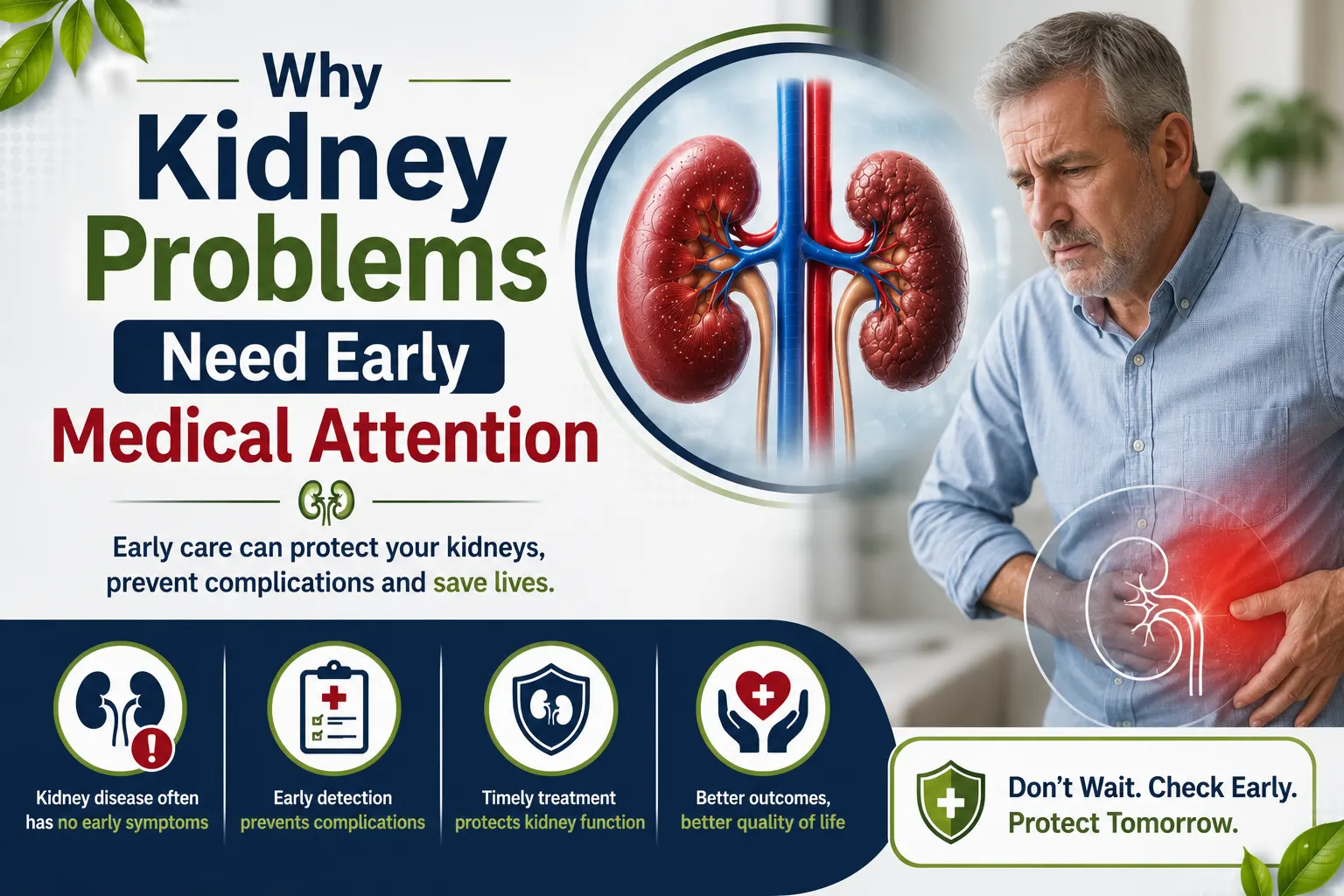
Because your kidneys are basically silent superheroes, and they only start "complaining" once things have already gotten messy. The short answer: seeing a kidney disease doctor early can be the difference between a quick fix and a lifelong routine of dialysis appointments.
That's the sneaky part. Kidney disease is often called a "silent" condition because early damage doesn't hurt, itch, or ruin your appetite. You could lose up to 50% of your renal function before you notice anything's off. By the time symptoms show up- swelling, fatigue, weird foamy urine (yes, we're going there); the disease may have already been quietly setting up shop for years.
Think of your kidneys like your car's brakes. You don't wait for total brake failure to get them checked, right? You go in at the first squeak. Kidneys deserve the same energy.
📞 Get a Kidney Health Consultation – Call Now!
Slow down the damage before it becomes permanent
Catch underlying causes like diabetes or high blood pressure that are quietly wrecking things
Avoid expensive, invasive treatments later (dialysis is not a fun subscription to be on)
Give you a real shot at reversing some forms of kidney stress, not just managing them
A widely cited study published in the Journal of the American Society of Nephrology found that patients who received nephrology care early in the course of chronic kidney disease had significantly better outcomes and slower disease progression than those referred later. Translation: showing up early to the doctor isn't just "being cautious," it's genuinely strategic.
Another study from The Lancet on chronic kidney disease highlighted that early detection and management of risk factors like hypertension and diabetes reduced the rate of kidney function decline substantially. So yes, that annual blood pressure check your doctor keeps nagging you about? It's doing more than you think.
Everyone loves to Google their symptoms and self-diagnose with the confidence of a med school graduate. But worsening kidney disease symptoms are sneaky, and they often masquerade as "I'm just tired" or "must be something I ate." Watch out for:
Persistent fatigue that coffee can't fix
Puffy ankles or eyes (not just from crying at movies)
Changes in how often; or how much; you pee
Foamy or bubbly urine
Unexplained nausea or loss of appetite
Muscle cramps, especially at night
If two or more of these are hanging around for weeks, that's your cue to stop Googling and start calling.
📞 Get a Kidney Health Consultation – Call Now!
|
Approach |
What You're Doing |
What Your Kidneys Are Doing |
|
"I'll just drink more water" |
Feeling proactive |
Politely unimpressed |
|
WebMD deep dive at 2 AM |
Convincing yourself it's fine |
Filtering toxins, unbothered by your panic |
|
Actually seeing a kidney disease doctor |
Getting real answers |
Finally getting the attention they deserve |
|
Ignoring the swelling for "a few more weeks" |
Hoping it disappears |
Quietly sending distress signals |
Funny table aside, the point stands: real kidney care requires real medical input, not vibes and hydration apps.
A kidney disease doctor, usually a nephrologist, doesn't just hand you a pamphlet and send you off. They run blood and urine tests to check levels like creatinine and GFR (glomerular filtration rate), review your medical history, and build a plan tailored to you. If you're already a kidney disease patient, they'll also help manage related issues like anemia, bone health, and blood pressure, all of which tend to gang up on kidney function over time.
And if you're just starting to worry but don't have a diagnosis yet, that's exactly when you need kidney disease help; not after things escalate. Early conversations with a specialist often prevent the need for more serious interventions down the line.
📞 Get a Kidney Health Consultation – Call Now!
Kidneys don't do drama. They don't send warning texts. They just quietly do their job until they can't anymore. So don't wait for the "big symptoms" to show up before taking them seriously. A simple check-up now could save you a mountain of stress (and medical bills) later.
Kidney disease often shows no symptoms until significant damage has occurred
Early medical attention can slow or even partially reverse kidney damage
Studies from JASN and The Lancet confirm early nephrology care improves outcomes
Watch for fatigue, swelling, and changes in urination as early red flags
Regular check-ups are far cheaper (and less scary) than late-stage treatment
If you notice ongoing fatigue, swelling, or changes in urination, it's time to book that appointment instead of Googling your symptoms at midnight.
In many cases, yes; early intervention can slow or partially reverse damage, especially when caused by manageable conditions like high blood pressure or diabetes.
Simple blood and urine tests, like creatinine levels and GFR, give doctors a clear picture of how well your kidneys are working.
Not always, but these two conditions are the most common culprits, so keeping them in check goes a long way in protecting your kidneys.
Stay hydrated, keep blood pressure and sugar levels in check, and don't skip your follow-up appointments, even when you're feeling fine.
This blog is for general informational purposes only and isn't a substitute for professional medical advice, diagnosis, or treatment. Always consult a qualified kidney disease doctor or healthcare provider regarding any medical condition or symptoms you may be experiencing.