Jul 02 , 2026
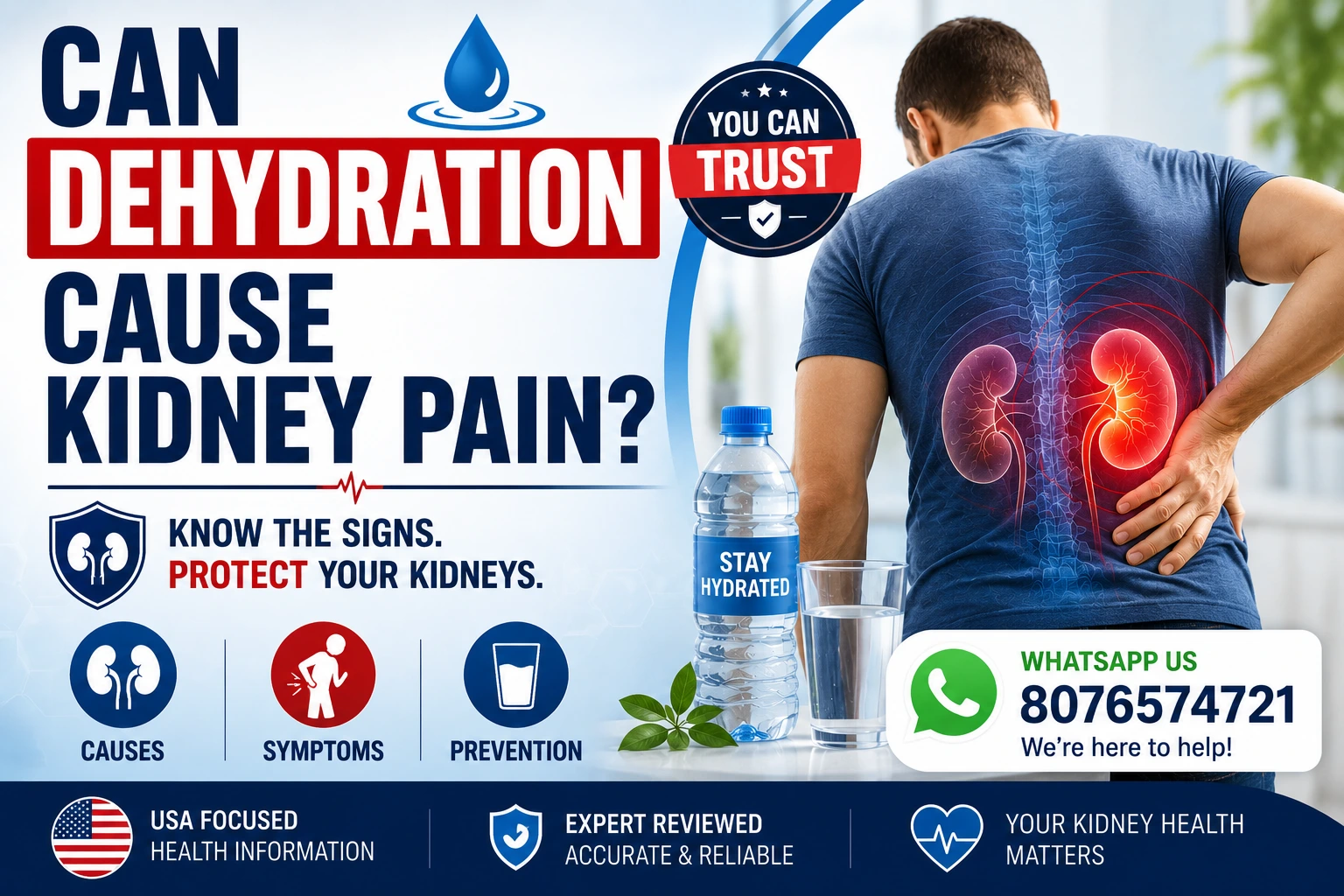
Short answer: yeah, it can. If you've been skimping on water and you suddenly feel a weird ache near your lower back, your kidneys might just be staging a tiny protest. If you've ever wondered, " Can dehydration hurt your kidneys, the answer is yes, especially when it becomes severe or happens repeatedly. It's usually nothing scary, but it IS your body's way of waving a little flag at you. Let's talk about why this happens, what it actually feels like, and what to do so you're not lying awake at 2 am Googling "am I dying."
📞 Get a Kidney Health Consultation – Call Now!
Picture your kidneys as two very dedicated, slightly dramatic interns. Their entire job is to filter your blood and clear out waste, and they need water to pull it off smoothly. Skip water for long enough, and it's like asking them to do their job with half the tools missing. They'll manage, but they'll be cranky about it.
When you're dehydrated, your blood becomes thicker and more concentrated, so your kidneys have to work harder to filter it. That extra effort can cause some tension or mild inflammation around the kidney area, and boom, that's the dull ache you're feeling near your lower back or sides. In many cases, kidney pain from dehydration improves once your body gets enough fluids again.
There's actual research behind this, too. A study in the Clinical Journal of the American Society of Nephrology (2011, Wesley Kim and team) found that people who didn't drink enough water consistently saw their kidney function decline faster over time. So this isn't just something your aunt says, there's real science nodding along here.
📞 Get a Kidney Health Consultation – Call Now!
This is the confusing part because back pain, muscle pain, and kidney pain can all feel suspiciously similar. Here's how to tell them apart without panicking:
A dull, nagging ache on one or both sides of your lower back, right under the ribs
Pain that sticks around no matter how you sit, stand, or stretch (muscle pain usually shifts when you move)
More of a "pressure" or "fullness" feeling than a sharp stab
Sometimes shows up with dark pee, tiredness, or a headache tagging along
Gets noticeably better once you start drinking water again
If the pain is sudden, intense, or comes with fever, blood in your urine, or you're throwing up, that's not a "drink more water and see" situation; that's a "call your doctor" situation. Severe dehydration kidney pain tends to be more noticeable and may take longer to improve, but dehydration pain is generally mild and fades with proper hydration. Anything sharper or scarier deserves an actual checkup.
📩 Ask a Kidney Expert (Free 10-Min Consultation)
Nobody wakes up and decides, "Today I shall dehydrate myself." It usually sneaks up on you. Common reasons include:
Just not drinking enough water during the day, especially when it's hot out
Sweating a ton from a workout or the weather, and not replacing it
Being sick with vomiting or diarrhea, which drains fluids fast
Too much coffee or alcohol, both are sneaky little dehydrators
Some medications that make you pee more than usual
Being a chronic "I'll drink water later" person (we see you)
A study from the National Institutes of Health (2018, Backer and colleagues) tracked hydration habits against kidney stone risk and found that people who drank less water regularly were way more likely to develop kidney stones, which, side note, are also famous for causing some seriously unpleasant kidney pain. So staying dehydrated isn't just uncomfortable now; it can snowball into bigger headaches later.
📞 Get a Kidney Health Consultation – Call Now!
Because spiraling into worst-case-scenario thinking over a possibly empty water bottle helps nobody, here's a simple breakdown:
|
What You're Feeling |
Probably Just Dehydration |
Might Be a Stone or Infection |
|---|---|---|
|
Type of pain |
Dull, achy, mild pressure |
Sharp, sudden, intense |
|
Where it hurts |
Both sides, lower back |
Usually, one side can spread to the groin |
|
Pee color |
Dark yellow |
Could be cloudy, pink, or bloody |
|
Fever |
Nope |
Often yes |
|
Does water help |
Yes, within a few hours |
Not really |
|
Other clues |
Tired, headachy, a bit foggy |
Nausea, vomiting, and painful urination |
This table is your first gut check, not a diagnosis. If anything in that second column sounds familiar, skip the guesswork and see a doctor.
Good news: if dehydration really is the culprit, the fix is genuinely simple. Here's what usually helps:
Rehydrate slowly. Chugging a giant bottle in one go won't speed things up and might just make your stomach unhappy
Add some electrolytes if you've been sweating buckets or sick, plain water alone doesn't replace lost sodium and potassium
Rest for a bit instead of pushing through a workout or a long day
Lay off the coffee and alcohol for a day so your body can actually catch up
Keep an eye on your pee color; pale yellow means you're winning
Worth noting too: a study published in the Journal of the American College of Nutrition (2002, Armstrong and team) found that even mild dehydration, just 1 to 2 percent of your body weight in fluid loss, can mess with how you think and feel physically. So "a little thirsty" is doing more damage than it gets credit for.
There's no perfect number that applies to literally everyone, no matter what your fitness app keeps telling you. It depends on your size, activity level, the weather, and your overall health. For a general ballpark, the National Academies of Sciences, Engineering, and Medicine (2004 Dietary Reference Intakes report) suggests around 3.7 liters a day for men and about 2.7 liters for women, including water from food and drinks, not just your water bottle.
Honestly, the easiest way to track this without becoming obsessive is just glancing at your pee. Pale yellow, you're golden. Dark amber, time to drink up. If you're experiencing kidney pain, dehydration can often be one of the first things your doctor will rule out before looking for other causes.
📞 Get a Kidney Health Consultation – Call Now!
Jokes aside for a second, because this part matters. Most dehydration-related kidney pain clears up once you rehydrate properly, but go see a doctor if:
The pain is sudden, severe, or only on one side
You spot blood in your urine
There's a fever involved
The pain hasn't budged after a full day of drinking water
You're barely peeing, or not peeing at all
These can be signs of something more serious, like kidney stones or an infection, and that needs a real diagnosis, not just a bigger water bottle and good intentions. They may also be among the signs of dehydration and kidney damage, particularly if dehydration has been ongoing or severe.
Dehydration really can cause kidney pain, or at least something that feels uncomfortably close to it, and it happens more often than people think. Sometimes, dehydration and lower back pain occur together because the kidneys sit in the lower back area, making it easy to confuse kidney discomfort with muscle pain. Most of the time, the fix is boring but effective: drink water consistently, not just when you suddenly remember you exist as a hydrated being. That said, your body isn't always subtle when something bigger is going on, so if the pain feels off, intense, or comes with other red flags, don't tough it out; get it checked.
Your kidneys work nonstop, every single day, without complaint. The least you can do is hand them a glass of water now and then.
📩 Ask a Kidney Expert (Free 10-Min Consultation)
Yes, dehydration can reduce blood flow to the kidneys and cause a dull ache or discomfort.
It usually feels like a dull pain or pressure in the lower back or sides, below the ribs.
If dehydration is the cause, drinking fluids and rehydrating often helps the pain improve.
Seek medical care if the pain is severe, one-sided, comes with fever, blood in urine, or doesn't improve after rehydration.
Drink enough water daily, replace fluids lost through sweating or illness, and avoid prolonged dehydration.