Jul 02 , 2026
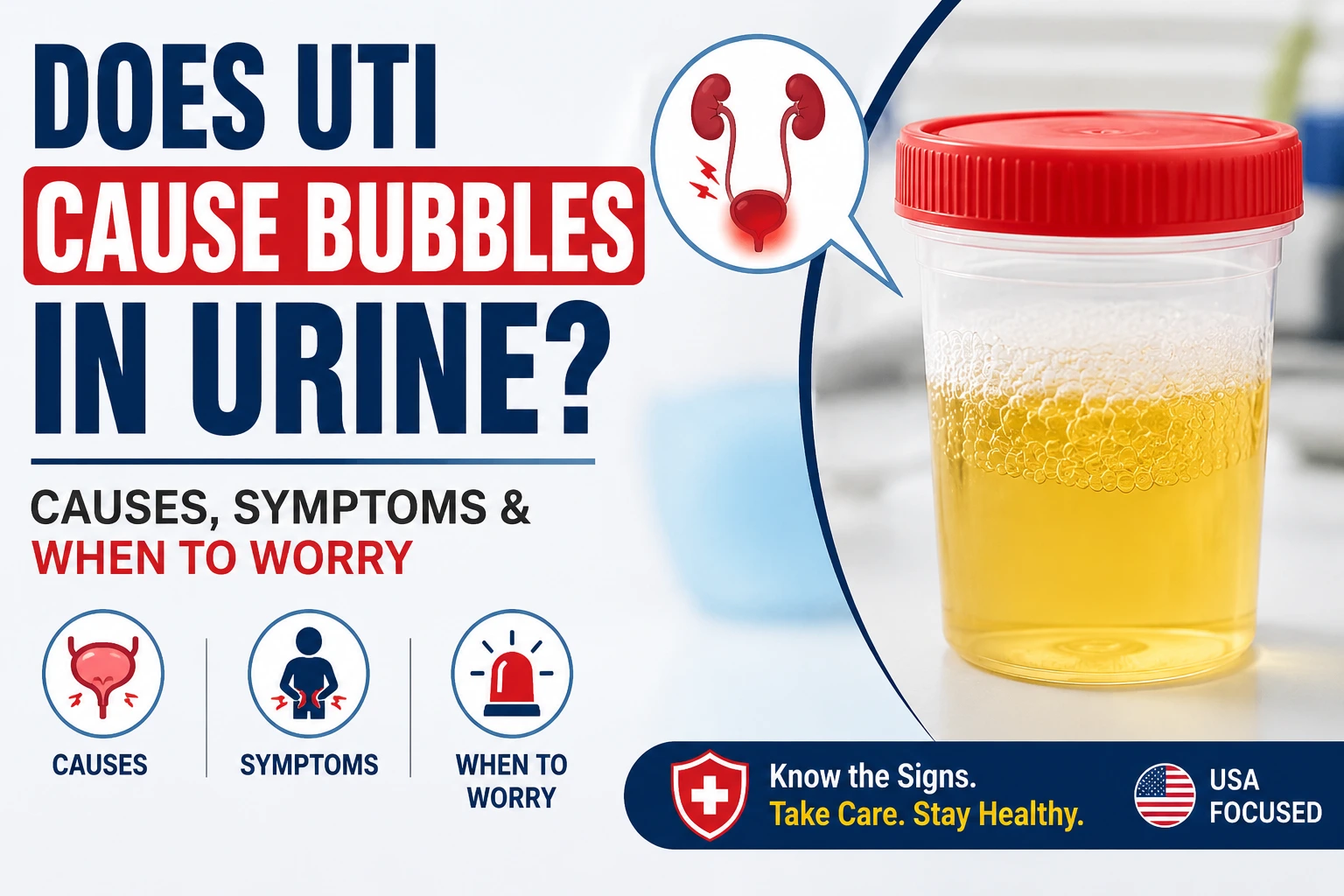
Yes, a UTI can sometimes cause bubbles or foam in your urine. If you're wondering, can a UTI cause foamy urine? The answer is yes, but before you spiral into a 2 a.m. Google hole, here's the deal: bubbly pee is usually not a five-alarm fire. It can happen with urinary tract infections, but it's also caused by a bunch of totally boring, harmless things like peeing too fast or being a little dehydrated. So, let's break down what's actually going on down there, when bubbles mean "drink some water and relax," and when they mean "okay, maybe call the doctor."
📞 Get a Kidney Health Consultation – Call Now!
Urine is mostly water, but it's also got proteins, salts, and other compounds floating around in it. When you pee with some force (gravity helps, toilet bowl water helps), it can churn up bubbles the same way shaking a soda bottle does. Normally, these bubbles pop and disappear within a few seconds.
The bubbles stick around for longer than a minute or two
They show up every single time you pee, not just occasionally
The foam looks thick, like beaten egg whites, rather than a few quick, fizzy bubbles
That pattern is your body's way of waving a small flag, not necessarily screaming "emergency." Among the many causes of foamy urine, a urinary tract infection is just one possibility.
📞 Get a Kidney Health Consultation – Call Now!
When bacteria invade your urinary tract, they irritate the lining of your bladder and urethra. This irritation can cause your body to leak small amounts of protein or mucus into your urine, and protein is basically the VIP guest at every bubble party. More protein, more surface tension, more foam. So if you've ever wondered, does a UTI make urine foamy? This is the reason it can happen.
A study published in the Clinical Journal of the American Society of Nephrology (Fogazzi GB et al., 2008) looked at how changes in urinary protein levels affect the physical characteristics of urine, including foaming, and found that even mild, temporary protein increases (the kind that can happen during an infection) can visibly change how bubbly urine appears. This doesn't mean every bubble equals an infection, but it does explain the mechanism.
UTIs usually come with a whole entourage of other symptoms too, so bubbles rarely show up alone. If you're asking yourself, why is my urine bubbly with a UTI, look for these signs as well:
A burning feeling when you pee
Needing to go constantly, even right after you just went
Cloudy, dark, or strong-smelling urine
Pelvic pressure or lower belly discomfort
Mild fever in some cases
If bubbles are hanging out with two or three of these friends, that's a more convincing case for a UTI than bubbles showing up solo.
📞 Get a Kidney Health Consultation – Call Now!
Honestly, most foamy pee has nothing to do with infection at all. Here's the lineup of usual suspects and other bubbles in urine causes:
Peeing with force or from a height. Standing up versus sitting down, or just having a strong stream, can whip up foam purely through physics.
Dehydration. When you're not drinking enough water, urine becomes more concentrated, and concentrated urine foams more easily. This is one of the most common and least dramatic explanations.
Toilet bowl chemistry. Cleaning products, residual soap, or even the angle of the bowl can create bubbles that have nothing to do with your body.
Diet. Eating a lot of protein-heavy meals can temporarily increase the protein your kidneys filter out, leading to occasional foam.
Medications or supplements. Certain medications can change urine composition enough to cause temporary foaming.
If you notice foamy urine after peeing, but it disappears after a day of good hydration, it's probably nothing more than a plumbing quirk.
📞 Get a Kidney Health Consultation – Call Now!
This is the part where caution matters, because persistent foamy urine is also one of the early signs doctors look for when checking kidney function. The kidneys are supposed to keep protein in the bloodstream where it belongs; when they're not filtering properly, protein leaks into urine, a condition called proteinuria.
Research published in the American Journal of Kidney Diseases (Currie G et al., 2010) examined patient-reported foamy urine as a potential early indicator of proteinuria and concluded that while foaming alone isn't diagnostic, persistent and pronounced foam warrants further testing in patients with other risk factors like diabetes or high blood pressure.
That's an important distinction: foamy urine by itself is not a diagnosis of anything. It's a clue, not a verdict. The only way to know what's actually happening is a simple urine test, which your doctor can order in about five minutes. This is also when to worry about foamy urine, especially if it keeps happening or is accompanied by other concerning symptoms.
|
What You're Noticing |
Likely Cause |
What To Do |
|---|---|---|
|
Bubbles pop within seconds and happen occasionally |
Normal physics, fast urine stream |
Nothing, you're fine |
|
Bubbles after a low-water day |
Dehydration |
Drink more water, recheck tomorrow |
|
Bubbly urine, UTI symptoms like burning, urgency, and cloudy urine |
Possible UTI |
See a doctor for a urine test |
|
Persistent thick foam happens every time |
Possible proteinuria |
Schedule a check-up, mention diabetes or blood pressure history if relevant |
|
Bubbles only after a high-protein meal |
Dietary, temporary |
Monitor usually resolves on its own |
|
Foam with swelling in legs, fatigue |
Possible kidney concern |
See a doctor soon, don't wait it out |
📞 Get a Kidney Health Consultation – Call Now!
If you bring up bubbly urine to a doctor, they're not going to stare into a toilet bowl and make a judgment call. They'll usually run a urinalysis, a quick dipstick test that checks for protein, blood, white blood cells, and bacteria all at once. If bacteria or white blood cells show up, that points toward infection. If protein shows up without infection markers, that points toward kidney function being looked at more closely.
A review in The BMJ (Glassock RJ, 2010) on the evaluation of proteinuria pointed out that a single abnormal urine test isn't usually treated as conclusive on its own; doctors typically repeat the test to rule out temporary, harmless causes like dehydration, exercise, or even just standing up for a long time before testing, before assuming a chronic issue.
So even if your test comes back with something showing up, it's not automatically bad news. It's a starting point for more questions, not an ending point.
Bubbles in urine can absolutely be linked to a UTI, but they're more like a side character in that story than the main plot. The bigger giveaways for an infection are burning, urgency, and cloudy or smelly urine. Some people may even notice bubbles in urine but no pain, which isn't always a sign of infection. If bubbles show up alone, especially after a dehydrated day or a high-protein meal, they're probably just doing their normal bubble thing.
That said, if the foam sticks around persistently, looks unusually thick, or comes with swelling, fatigue, or a family history of kidney issues, it's worth getting checked rather than guessing. Bodies aren't always subtle, but they're also not always dramatic either; sometimes a weird symptom is just a weird symptom. A quick urine test will tell you far more than any amount of bowl-staring ever could.
Disclaimer: This article is for general information and isn't a substitute for medical advice. If you're concerned about your symptoms, please check in with a healthcare provider who can actually look at your specific situation.
📞 Get a Kidney Health Consultation – Call Now!
Yes. A UTI can sometimes cause bubbles or foam in urine due to inflammation and temporary protein or mucus in the urine.
No. Foamy urine can also happen because of dehydration, a strong urine stream, or excess protein in the urine.
See a doctor if bubbly urine is persistent or comes with burning, fever, blood in urine, swelling, or severe pain.
Yes. Dehydration makes urine more concentrated, which can lead to temporary bubbles or foam.
Doctors usually perform a urine test (urinalysis) to check for infection, protein, blood, and other abnormalities.