Jul 21 , 2026
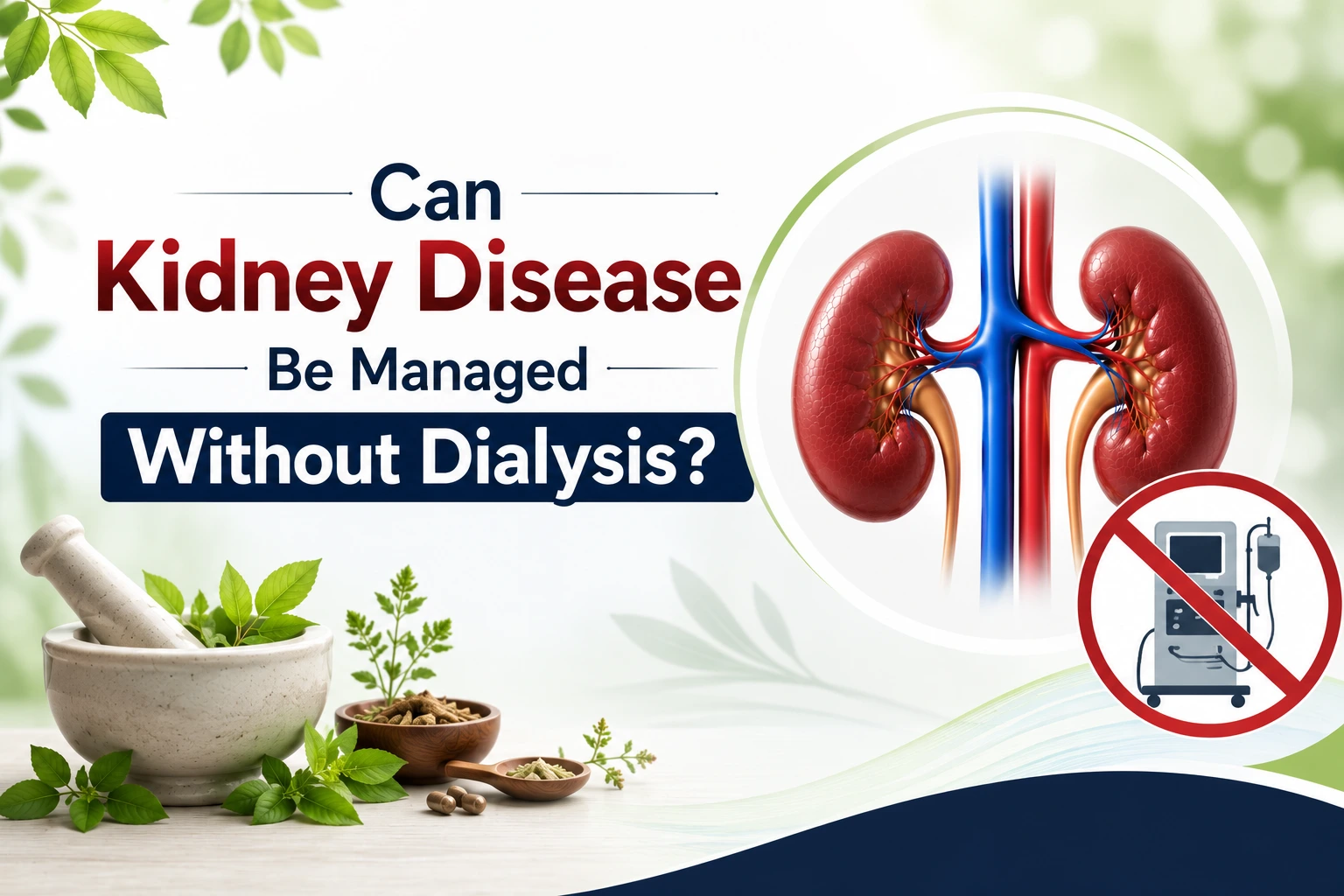
Yes, kidney disease can absolutely be managed without dialysis, depending on your health goals and the stage of your condition. While it is not a magic cure, a structured medical approach can keep your body balanced, control symptoms, and preserve your quality of life for a significant period.
When people hear the words "kidney failure," their minds usually jump straight to a massive, loud machine humming in a sterile clinic three days a week. It sounds exhausting because, well, it can be. But here is a little secret the medical world is finally talking about louder: you have options. Choosing a kidney failure treatment without dialysis is an entirely valid, medically backed path known as Conservative Kidney Management (CKM) or active supportive care.
Let’s dive into how this works, what your days might look like, and how to keep those bean-shaped life-savers happy without hooking yourself up to a plumbing system.
📞 Get a Kidney Health Consultation – Call Now!
Opting out of the machine does not mean you are pulling the covers over your head and giving up. Far from it. It means you are choosing an active, aggressive style of kidney care focused on protecting the function you have left, keeping your symptoms quiet, and making sure your lifestyle stays yours.
Think of your kidneys as a delicate filter system. When you are dealing with a renal failure scenario, those filters are tired. Instead of replacing them with a machine, active medical management uses a fine-tuned combination of medications, precise nutrition, and blood pressure control to ease the workload on your remaining healthy tissue.
A major clinical review published in the Clinical Journal of the American Society of Nephrology (the Carson et al., 2009 study) followed older adults who chose this route. The researchers found that for many elderly individuals with other complex health issues, choosing a conservative path provided a remarkably similar quality of life compared to those who went through the rigors of standard dialysis.
To pull off a successful kidney failure treatment without dialysis, your care team will rely heavily on a highly personalized prescription pad and a very specific grocery list.
Blood Pressure Management: High blood pressure is like a firehose blasting through a delicate window screen. Doctors use specific medications, like ACE inhibitors or ARBs, to turn down the pressure and protect your remaining filters.
Anemia Control: When your kidneys struggle, your red blood cell count can drop, leaving you feeling like you are walking through wet cement. Synthetic hormone shots (like ESAs) help boost your energy levels.
The Fluid Balance: Since your kidneys aren't clearing water as efficiently, diuretics (water pills) become your best friend to prevent your ankles from turning into balloons.
Then comes the food. A natural treatment for kidney failure always winds through the kitchen. You will want to keep a close eye on three big troublemakers: sodium, potassium, and phosphorus. Too much sodium raises your blood pressure, too much potassium can make your heart beat erratically, and excess phosphorus turns your bones into chalk. Working with a renal dietitian helps you eat beautifully without overwhelming your system.
Let’s look at how these approaches stack up against each other when managing advanced kidney failure chronic stages.
|
Feature |
Standard Dialysis |
Conservative Management (No Dialysis) |
|
Primary Goal |
Clean the blood mechanically to extend life as long as possible. |
Protect remaining kidney function and maximize daily comfort. |
|
Time Commitment |
3–4 hours per session, 3 times a week at a center (usually). |
Regular doctor visits and simple daily medication routines. |
|
Dietary Rules |
Very strict (heavy fluid restrictions, tight potassium limits). |
Personalized, moderate restrictions based on your lab work. |
|
Travel Impact |
Requires mapping out clinics wherever you go. |
You pack your pills and go enjoy your trip. |
Another landmark paper, the Montez-Rath et al., 2024 study published in the Annals of Internal Medicine, looked at older adults facing kidney failure. It highlighted that while dialysis can sometimes add a few extra months of life, a non-dialysis approach gives patients significantly more "home time"; meaning fewer days stuck in hospital beds or clinic chairs, and more days sitting on your own couch watching your favorite shows.
📞 Get a Kidney Health Consultation – Call Now!
Navigating this terrain requires the right kidney disease help. You shouldn't try to build a non-dialysis treatment for kidney failure patients purely out of internet advice and wishful thinking. It takes a dedicated team; including your nephrologist, a renal dietitian, and sometimes a palliative care specialist, to monitor your blood work and adjust your medications on the fly. They ensure your body stays in a state of equilibrium, keeping symptoms like nausea, itching, or fatigue safely at bay.
It’s an Active Choice: Choosing a kidney failure treatment without dialysis is a highly structured medical strategy, not a decision to stop treatment.
Quality Over Quantity: Clinical studies show that for specific patient groups, skipping the machine offers a comparable quality of life with much more independence.
Kitchen Control: Shifting your diet to manage protein, sodium, and potassium is one of the most powerful natural tools you have.
Teamwork Matters: Success relies on close monitoring by a medical team to manage fluid balance, blood pressure, and anemia.
📞 Get a Kidney Health Consultation – Call Now!
While damaged kidney tissue rarely grows back, a conservative treatment plan can successfully stabilize your remaining function and stop it from dropping further for a long time.
It varies widely based on your remaining function and overall health; some individuals thrive for months or even years with careful medication and dietary management.
Yes, a transplant is a completely separate option from dialysis, and some eligible patients can receive a pre-emptive transplant without ever hooking up to a machine.
No, modern supportive kidney care places a massive emphasis on symptom management, utilizing highly effective medications to ensure you stay comfortable and pain-free.
This article is for informational and educational purposes only and should not be taken as professional medical advice. Always consult with a qualified healthcare provider or nephrologist to discuss your specific medical condition, laboratory results, and personalized treatment options before making any major healthcare decisions.