Aug 18 , 2026
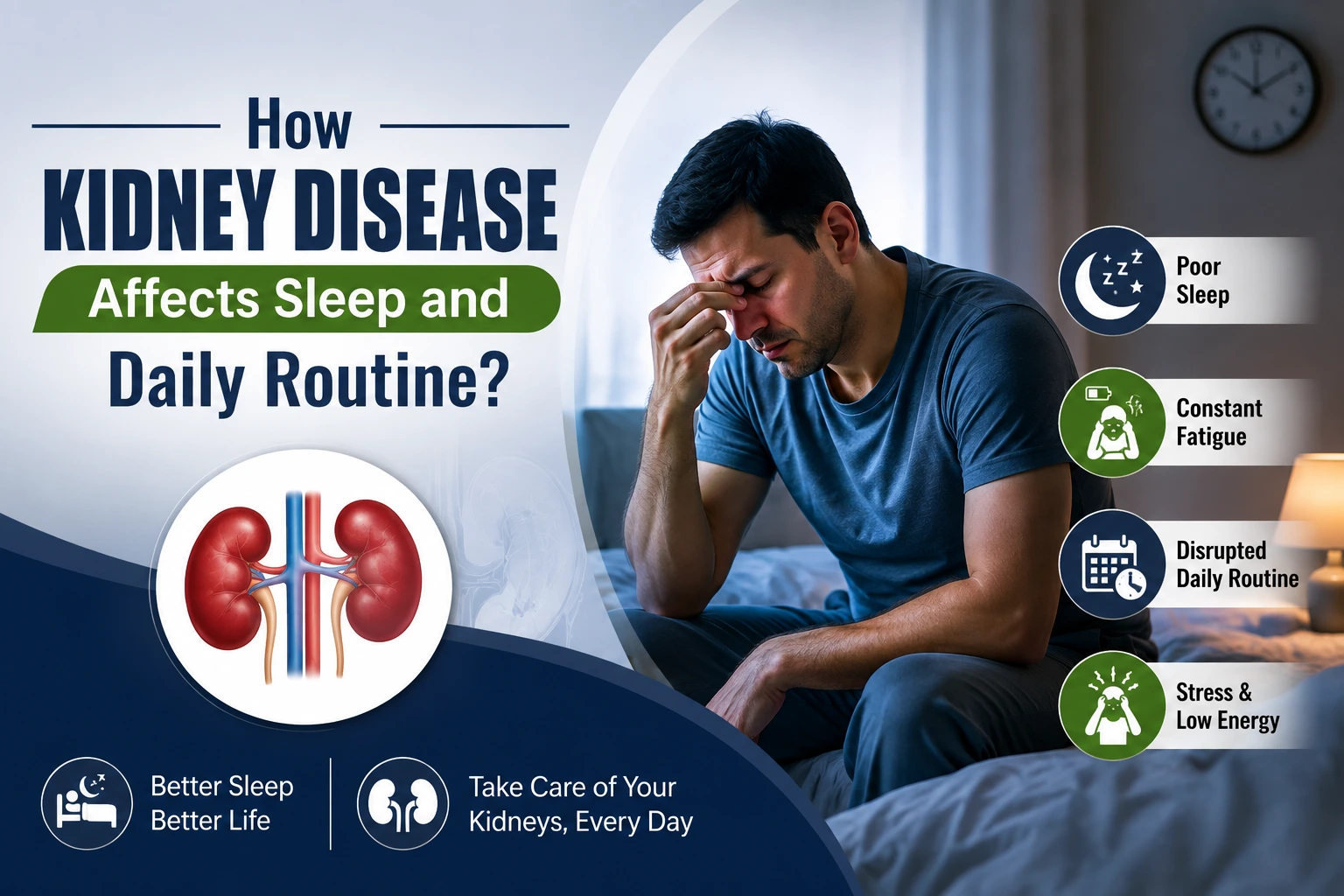
Short answer: badly, and in more ways than you'd expect. If you're a kidney disease patient lying awake at 2 AM staring at the fan going round and round, wondering why your legs won't just sit still for five minutes; that's not bad luck, that's your kidneys talking.
Nobody really warns you about this part when you first get the diagnosis. Everyone's busy explaining diet restrictions and creatinine numbers, and meanwhile your sleep quietly falls apart in the background. Let's actually talk about that bit; the part that doesn't make it into the pamphlets.
📞 Get a Kidney Health Consultation – Call Now!
Think of your kidneys as the house help who normally take the trash out every single day without fail. Now imagine they call in sick. Repeatedly. That's roughly what happens with chronic kidney disease; waste products that should be leaving your bloodstream just... stay. They hang around, irritate your nerves, throw your hormones off balance, and generally make "falling asleep peacefully" feel like a luxury item.
I looked into the research on this because I didn't want to just say "trust me,"; and honestly, the numbers are wilder than I expected. A 2024 meta-analysis in Sleep and Biological Rhythms pooled data from over 18,000 people and found that CKD patients are roughly five and a half times more likely to develop restless leg syndrome than people with healthy kidneys. Five and a half times. That's not a "maybe you're just stressed" number, that's a real, measurable pattern doctors have been documenting for years.
And RLS doesn't even show up alone. An umbrella review looking across dozens of studies on kidney failure chronic cases found close to half of patients dealing with sleep apnea, and roughly a quarter fighting restless legs on top of plain old insomnia. Basically, your sleep gets attacked from three or four directions at once, which feels a little unfair, honestly.
Here's the lineup of usual suspects, in no particular order because they all take turns being annoying:
Restless Leg Syndrome; that itchy, crawly, "I need to move my leg RIGHT NOW" sensation, often tied to low iron levels which are super common once kidneys start slowing down.
Sleep apnea: pauses in breathing overnight, oddly more frequent once kidney function drops.
Cramps and itching; toxin buildup can genuinely make your skin feel like it's crawling. Not fun, not exaggerating.
Getting up to pee, or fluid shifting around; a whole different problem if you're watching fluid intake closely.
Just plain worrying, because nothing helps you drift off like mentally replaying your last lab report.
📞 Get a Kidney Health Consultation – Call Now!
Here's the annoying bit nobody mentions: bad sleep doesn't stay in bed. It follows you around all day. Miss a proper night's rest and suddenly you're misplacing your phone, snapping at people over nothing, and eyeing a fourth cup of tea before lunch even happens. For anyone trying to protect their renal health, this turns into a loop that feeds itself; poor sleep drains you, exhaustion messes with your appetite and mood, and stress on top of that can circle back and affect the kidneys again.
A study in the Journal of Clinical Sleep Medicine actually tracked this; RLS symptoms tend to get worse as kidney disease advances, and that directly drags down how people function during the day. Less energy for work, for family, for basically anything beyond just getting through it.
|
A regular person's night |
A kidney patient's night |
|
Counts sheep to fall asleep |
Counts minutes until the legs finally calm down |
|
Wakes up once, maybe for water |
Wakes up like it's a part-time night job |
|
Groggy in the morning, then fine |
Needs a nap by 11, another by 3 |
|
Blames phone scrolling for the tiredness |
Blames toxins, hormones, and general kidney chaos |
📩 Ask a Kidney Expert (Free 10-Min Consultation)
Real kidney care isn't just pills and dialysis dates on a calendar; sleep needs to be part of that conversation too, and honestly it usually isn't, which is a shame. A few things that genuinely tend to help, backed by both research and plain old common sense:
Sticking to roughly the same sleep and wake time, weekends included (yes, even Sundays).
Getting iron levels checked and managed, since low iron is a known trigger for RLS in this group.
Cutting caffeine and phone scrolling a couple hours before bed; easier said than done, I know.
Actually bringing up sleep problems in kidney disease with your nephrologist instead of quietly accepting it as "just part of the deal."
A short evening walk or gentle stretching, which seems to ease RLS symptoms for a fair number of people.
None of this magically fixes everything overnight, but together it makes a real difference in how a kidney disease patient feels, both at 3 AM and at 3 PM.
Kidney disease and poor sleep are closely linked through toxin buildup, low iron, and hormonal shifts.
Restless leg syndrome and sleep apnea show up far more often in CKD patients than in the general population.
Bad sleep snowballs; it worsens fatigue, mood, and can loop back to affect kidney health further.
Small, boring lifestyle habits (consistent sleep schedule, iron checks, less screen time) genuinely help.
Sleep issues deserve a real conversation with your nephrologist, not a shrug and a "that's just how it is."
📞 Get a Kidney Health Consultation – Call Now!
It's real; toxin buildup and hormone changes genuinely interfere with normal sleep, so you're not overthinking anything.
Mostly it comes down to iron deficiency and toxin buildup, both of which become more common as kidney function drops.
It won't cure the kidneys, but better sleep cuts down stress and fatigue, which genuinely supports overall management.
Very normal, and it's usually tied to disrupted nighttime sleep rather than any lack of effort on your part.
Honestly, both, since the two often need to coordinate for this to actually get better.
Disclaimer: This blog is meant for general awareness only and isn't medical advice. Sleep issues tied to kidney disease can vary a lot from person to person, so please talk to a qualified nephrologist or doctor about your specific situation before making any changes.