Aug 13 , 2026
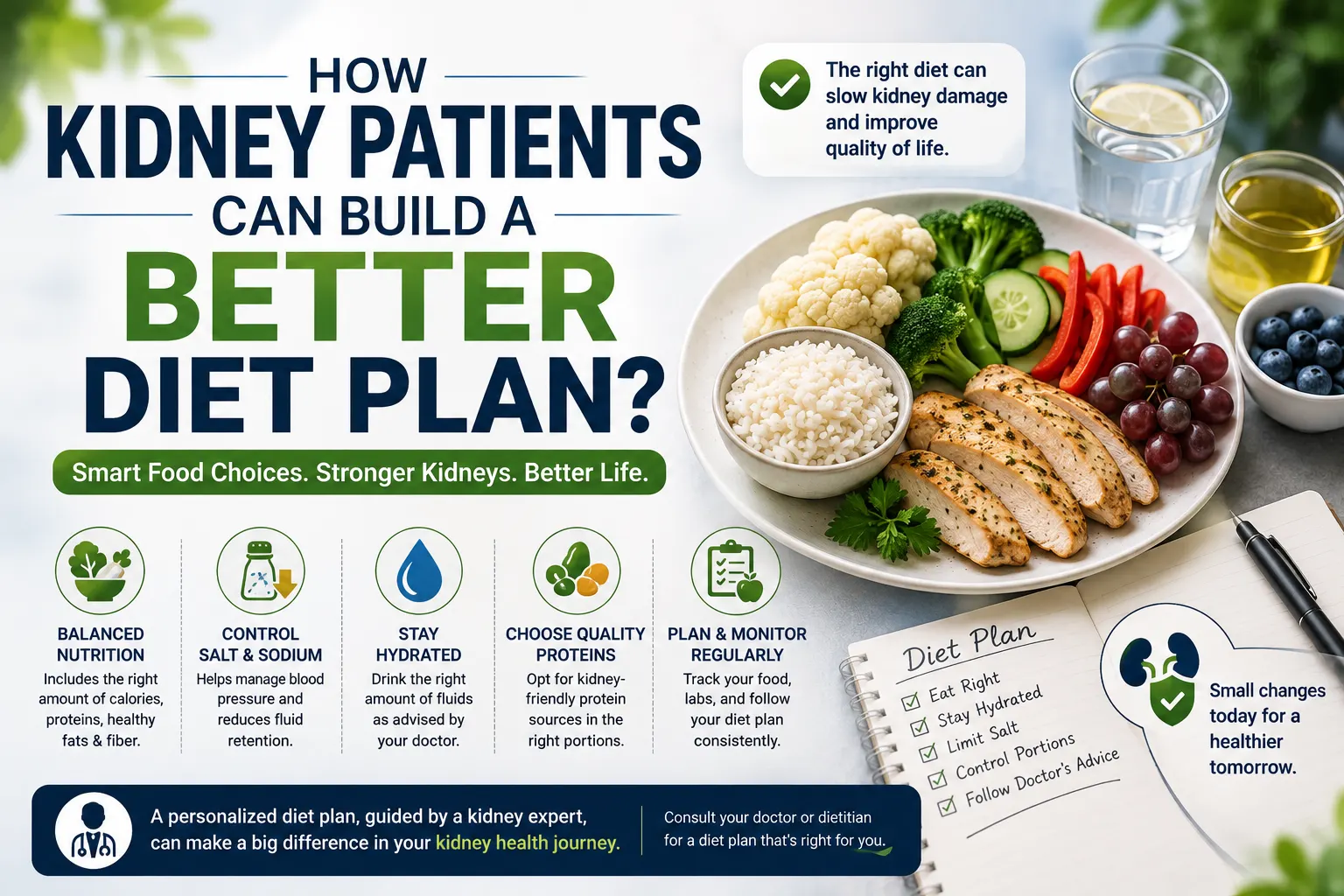
If you’re a kidney disease patient, building a better diet plan means shifting your focus from "giving up everything delicious" to smartly managing your sodium, potassium, and phosphorus intake without losing your sanity. It sounds like a tall order, but once you get the hang of balancing these sneaky elements, you can actually eat quite well while giving your hard-working organs a much-needed break.
Let’s be honest: discovering you need a diet plan for kidney patients can feel a bit like being told your favorite foods are now public enemy number one. Suddenly, grocery shopping feels like navigating a minefield, and your kitchen looks less like a place for snacks and more like a high school chemistry lab. But here is the good news: you do not have to survive solely on plain white rice and air. Navigating chronic kidney disease management is entirely doable once you understand what your kidneys actually want from you (spoiler: it is mostly just a little less manual labor).
📞 Get a Kidney Health Consultation – Call Now!
When it comes to renal health, three specific elements tend to hog the spotlight. Your kidneys act like a highly sophisticated water treatment plant. When their filtering capacity slows down, these three minerals start building up in your system like uninvited guests who won't leave your living room.
We all know sodium loves to hold onto water. For a kidney disease patient, too much salt means extra fluid building up in the blood vessels, which jacks up blood pressure and forces the heart to work overtime.
The Fix: Ditch the table shaker. Lean heavily on garlic powder, onion powder, lemon juice, and smoked paprika.
The Science: A major study published in the Journal of the American Society of Nephrology (the CRIC Study) confirmed that tight control over dietary sodium significantly reduces the risk of kidney function decline and cardiovascular events.
Potassium keeps your heart beating steadily, which is great, but too much of it can cause dangerous heart rhythms.
The Fix: Keep an eye on the heavy hitters like bananas, avocados, and potatoes. You don't necessarily have to ban them forever, but portion control becomes your new best friend.
When phosphorus levels spike, it starts stealing calcium right out of your bones, leaving them fragile. Worse, it combines with that calcium to create hard deposits in your blood vessels.
The Fix: Be incredibly wary of "hidden" phosphorus. Organic phosphorus found in plant foods (like beans) is only partially absorbed by the body, whereas the inorganic phosphorus food additives used in processed foods (like dark colas and fast food) are absorbed almost completely.
📞 Get a Kidney Health Consultation – Call Now!
Shifting to a kidney-friendly diet does not mean your meals have to taste like cardboard. It is all about making strategic, lateral moves. Instead of focusing on what you are missing, look at what you can swap in to keep your meals satisfying.
|
The "Maybe Avoid This" Option |
The "Your Kidneys Will Thank You" Swap |
Why It Works |
|
Dark Colas & Canned Soups |
Whole fruit waters & homemade low-sodium broths |
Avoids massive hits of hidden phosphorus additives and sodium bombs. |
|
White Potatoes & Bananas |
Cauliflower mash, apples, and berries |
Delivers great texture and sweetness with a fraction of the potassium. |
|
Processed Deli Meats |
Freshly cooked chicken breast or fish |
Slashes the sodium and chemical preservatives while keeping high-quality protein. |
|
Whole Wheat Bread |
White or sourdough bread |
A rare instance where refined grains win because they are much lower in phosphorus. |
📩 Ask a Kidney Expert (Free 10-Min Consultation)
Protein is essential for keeping your muscles strong and helping your body heal, but processing it creates waste products that your kidneys have to clear out. Eating massive amounts of protein is like sending an avalanche of paperwork to an overworked office assistant.
To keep your kidney care strategy on point, work with a renal dietitian to find your personal "Goldilocks zone" for protein—not too little, not too much. A comprehensive review published in The New England Journal of Medicine highlighted that structured, low-protein diets can significantly slow down the progression of kidney dysfunction by reducing the workload on individual filtering units (nephrons).
Ditch the Salt Shaker: Flavor your food with herbs, citrus, and spices instead of sodium-heavy pantry blends.
Read the Ingredients: Check labels specifically for the word "phos"—if you see it in the additive list, put the package back on the shelf.
Embrace Cauliflower: It can be mashed, riced, or roasted, making it the ultimate low-potassium chameleon for your dinner plate.
Stay Hydrated (Safely): Fluid limits vary wildly based on your specific stage of kidney health, so always follow your doctor's exact liquid baseline.
Team Up: Never try to guess your way through this; a certified renal dietitian is your absolute best asset.
📞 Get a Kidney Health Consultation – Call Now!
Yes, but you will need to carefully manage your portions and keep an eye on your overall daily potassium limits.
Whole grains naturally contain much higher levels of phosphorus and potassium, making white or sourdough bread a safer everyday choice.
Look closely at the ingredient list for any chemical words containing "phos," such as dicalcium phosphate or sodium triphosphate.
No, you just need to moderate your intake so your body gets enough muscle-building blocks without overloading your system with waste.
Absolutely not, because most commercial salt substitutes replace sodium with potassium, which can dangerously spike your levels.
Disclaimer: This article is for informational, educational, and entertainment purposes only and does not constitute professional medical advice, diagnosis, or treatment. Every individual's kidney health profile is unique, and fluid or mineral restrictions change drastically depending on your specific lab results. Always consult your nephrologist or a certified renal dietitian before making any changes to your current diet plan.