Sep 08 , 2026
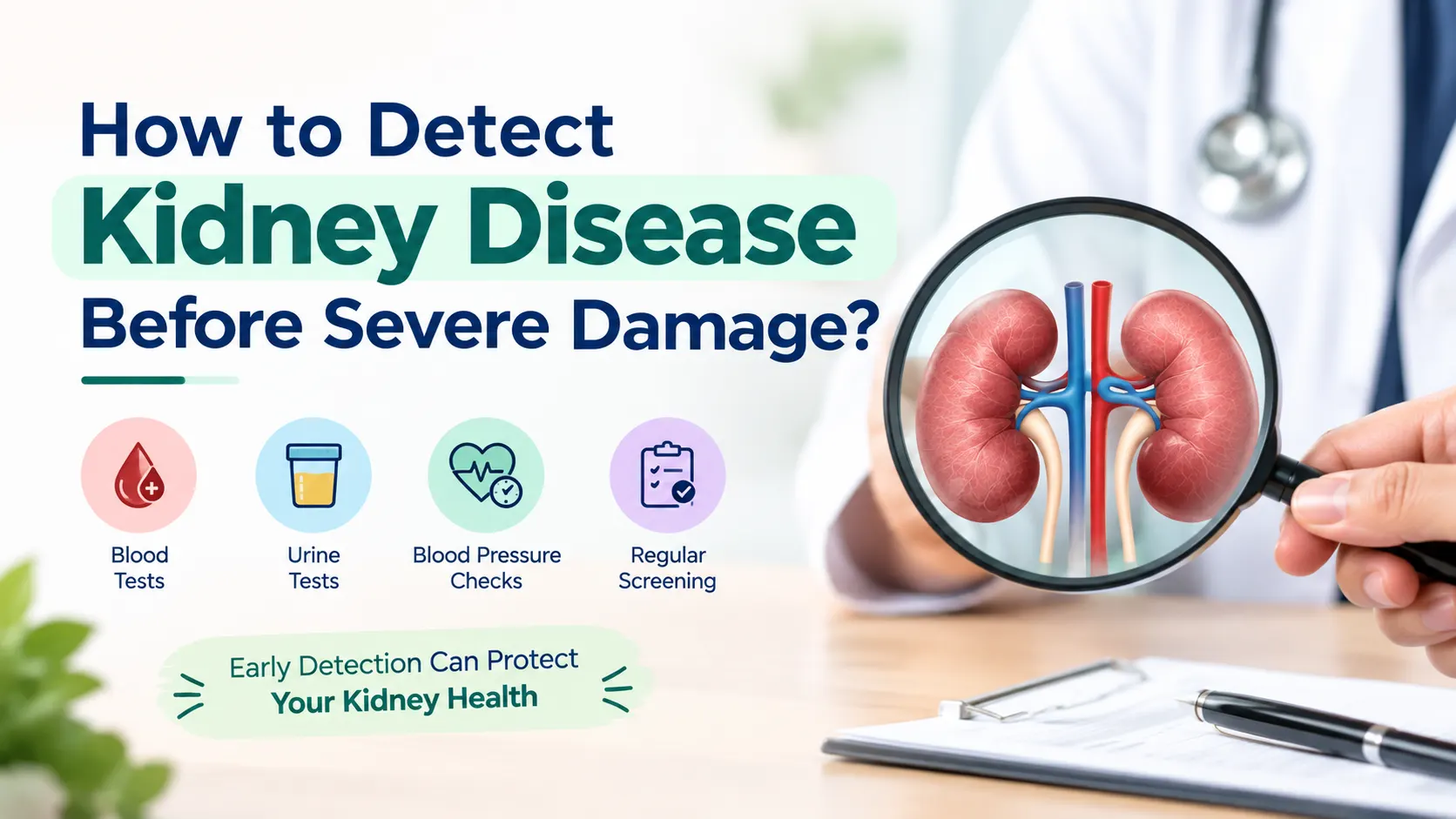
Short answer: you catch it by watching for the quiet clues your body drops long before your kidneys wave a white flag, and by getting a sign of kidney disease checked with a simple blood or urine test instead of waiting for a "big" symptom. That's really it. The tricky part isn't the detection; it's that kidneys are professional secret-keepers, and most people find out something's wrong only after the damage has already settled in.
So, if your kidneys aren't going to complain loudly, you have to know what to listen for.
📩 Ask a Kidney Expert (Free 10-Min Consultation)
Before you panic and diagnose yourself with everything on the internet, know this: a single sign of kidney disease rarely means disaster. But a pattern of these is worth paying attention to:
Puffy ankles, feet, or under-eyes (fluid your kidneys should be showing the door)
Foamy or bubbly urine (a possible clue about protein leaking where it shouldn't)
Constant fatigue that coffee refuses to fix
Changes in how often, or how little, you pee
Persistent itchy skin or a metallic taste in your mouth
Trouble concentrating, like your brain is stuck in airplane mode
None of these scream "kidneys!" on their own; fatigue could just mean you binge-watched too much television. But together, over weeks, they're worth a conversation with your doctor.
A systematic review published in ScienceDirect on primary-care CKD screening found that catching and managing kidney disease early can slow progression by roughly half; sometimes even reverse mild damage. That's not a small win; that's the difference between managing a condition with lifestyle tweaks and eventually needing dialysis.
Similarly, the ONDAAS study; a large primary-care screening project; found that testing for albumin in urine (not just the usual blood test) picked up significantly more cases of kidney trouble that would've otherwise gone unnoticed, especially in people whose blood tests looked "fine." This is exactly why early kidney detection leans on more than one test; a single number rarely tells the whole story.
If you remember nothing else, remember these two:
|
Test |
What it checks |
Why it's the MVP |
|
eGFR (blood test) |
Estimated filtering speed of your kidneys |
Tells you how well your kidneys are keeping up with life |
|
UACR / urine albumin |
Protein leaking into urine |
Catches damage even when eGFR still looks "normal" |
Think of eGFR as your kidney's speedometer and UACR as the dashboard warning light. You want to check both, because a car can be speeding along just fine while quietly leaking oil.
📩 Ask a Kidney Expert (Free 10-Min Consultation)
Good kidney care isn't a dramatic overhaul; it's boring, repeatable stuff: staying hydrated, going easy on excess salt and painkillers, managing blood pressure and blood sugar, and not skipping your annual kidney test just because you "feel fine." People with diabetes or high blood pressure especially benefit from yearly screening, since these two conditions are responsible for the majority of kidney disease cases worldwide.
If you're also exploring natural kidney treatment, don't assume that natural automatically means appropriate for your kidneys. Herbs and supplements can sometimes interact with medications or affect kidney function, so it's worth discussing them with your doctor before adding anything new.
If you already know something feels off, don't just Google symptoms at 2 a.m.; that's a one-way ticket to self-diagnosed panic. Reach out for real kidney disease help from a doctor who can order the right tests and interpret them with your full health picture, not just one number in isolation.
And if a routine test flags reduced renal function, that's not a life sentence; it's information. Early-stage kidney issues are often manageable, sometimes even reversible, with the right follow-up.
For people interested in the best Ayurvedic herbs for kidneys, it's especially important to check with a healthcare professional before using them, particularly if you already have abnormal kidney tests or take prescription medicines.
Kidney disease is often silent; don't wait for obvious symptoms before getting tested.
Watch for patterns: swelling, foamy urine, fatigue, and urination changes together are worth checking.
Two tests matter most: eGFR (blood) and UACR (urine albumin).
Annual screening is especially important if you have diabetes, high blood pressure, or a family history.
Early detection can slow, and sometimes reverse, kidney damage.
Any Ayurvedic treatment for kidneys should be discussed with your doctor before being added to your routine.
Usually it's something subtle like mild swelling in the ankles or foamy urine, not sudden pain.
In many early cases, yes; especially with better blood pressure and blood sugar control.
Once a year is a solid rule of thumb, more often if you have diabetes or hypertension.
Rarely; kidneys usually fail quietly, without any pain at all until it's advanced.
Not by itself, but paired with swelling or urine changes, it's worth mentioning to your doctor.
Disclaimer: This blog is for general information only and isn't a substitute for professional medical advice, diagnosis, or treatment. Kidney health depends on individual factors, so please consult a qualified doctor before making decisions based on anything you've read here.