Jul 30 , 2026
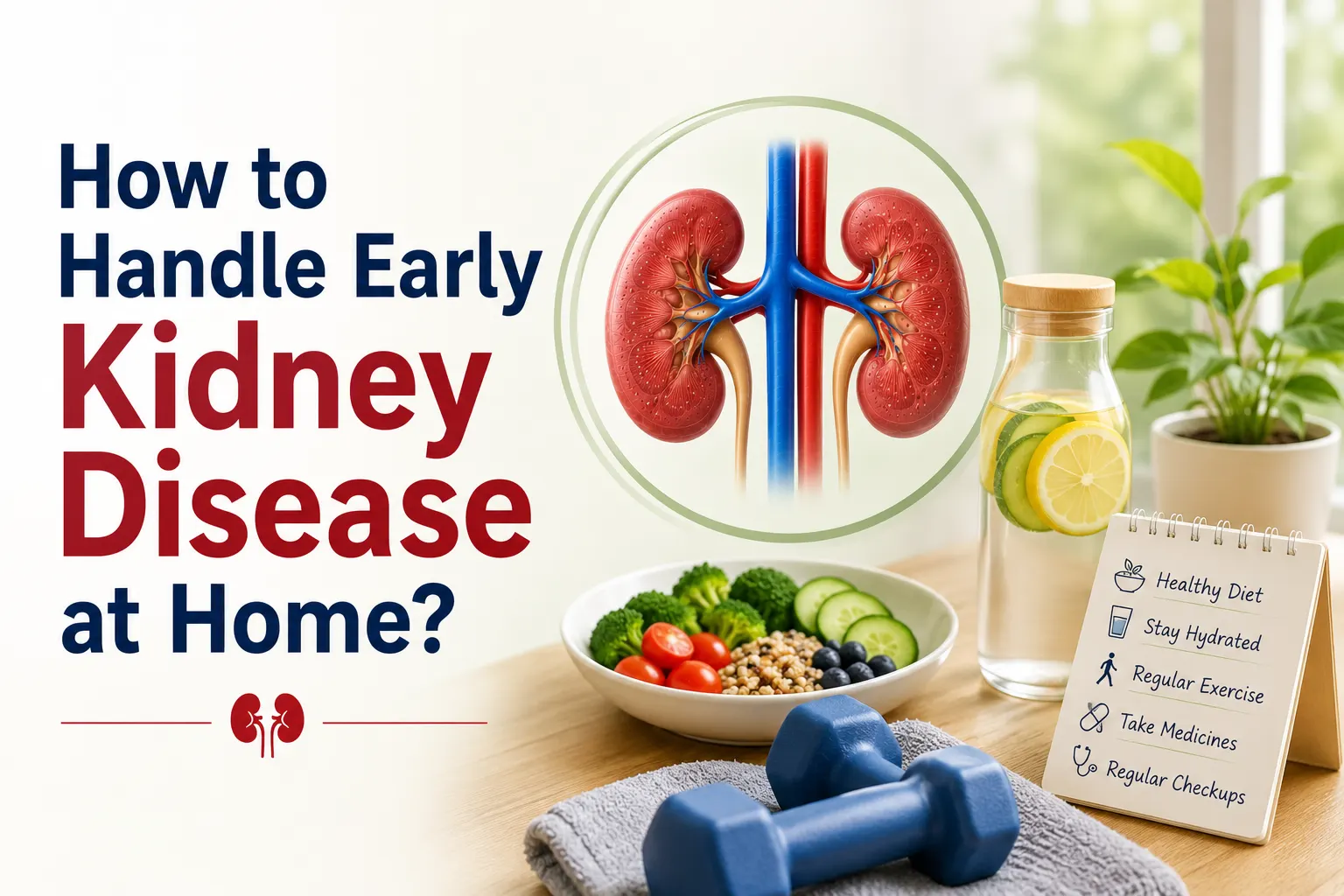
Yes, you can absolutely manage early-stage kidney disease at home, with the right mix of diet, monitoring, and honestly, a little discipline. Real kidney disease help doesn't always start in a hospital room. Most of the time, it starts in your kitchen, your morning walk, and the way you talk yourself out of that third samosa.
Let's be real for a second. When most people hear "kidney disease," their brain immediately jumps to dialysis machines and worst-case scenarios. But if you or someone you love has just been told "hey, your kidneys are showing early signs of trouble," take a breath. Early-stage CKD (Chronic Kidney Disease), especially Stage 1, is often more of a "let's fix your habits" situation than a "call the ambulance" one. Your kidneys are quiet organs. They rarely complain until things get serious, which is exactly why catching it early is such a big win.
Stage 1 kidney disease basically means your kidneys are still filtering well (doctors call this your eGFR, and at this stage it's usually 90 or above), but there's some early sign of damage, like a bit of protein leaking into your urine where it shouldn't be. Think of it as your kidney sending you a polite little memo: "Hey, things are fine right now, but let's not push it."
This is genuinely good news. The National Kidney Foundation notes that at Stage 1, there usually aren't strict dietary restrictions yet; the focus is on eating well, watching blood pressure, and not turning a blind eye to the warning.
📩 Ask a Kidney Expert (Free 10-Min Consultation)
Here's where the actual stage one kidney disease treatment conversation gets simple. It's less "medical procedure" and more "lifestyle overhaul, but make it sustainable."
1. Rethink your plate, don't punish it: You don't need to swear off food forever. Just shift the ratio; more vegetables, fruits, whole grains, and lean proteins; less processed junk, sugary drinks, and salt bombs disguised as snacks. If you have high blood pressure, aim to keep sodium under roughly 2,300 mg a day (that's about one teaspoon of salt, total, from everything you eat).
2. Keep tabs on blood pressure and blood sugar: These two are basically your kidneys' frenemies. Uncontrolled hypertension and diabetes are the top two reasons kidney function declines faster than it should. A cheap BP monitor at home is one of the best investments you'll make this year; better than that air fryer you barely use.
3. Move your body, even a little: You don't need to train for a marathon. A daily brisk walk does more for renal function than most people realize. Research on home care for kidney disease consistently shows that regular movement supports better blood pressure control, weight management, and overall metabolic health; all of which take pressure off your kidneys.
4. Hydrate, but don't overdo it: "Drink more water" is decent general advice, but for kidney patients, more isn't automatically better. Talk to your doctor about what's right for your specific case instead of chugging water like it's a competitive sport.
5. Ditch the cigarettes, ease up on the painkillers: Smoking and the casual, "it's just one ibuprofen" habit are sneaky contributors to kidney strain over time. Small swaps here add up to real protection.
6. Track your numbers like a hawk: Routine check-ups and lab tests aren't just paperwork; they're how you and your doctor actually see whether your efforts are working.
Here's the fun part: the "just eat better and move more" advice isn't just something your aunty repeats at every family function. It's backed by real research.
A study published in PLOS ONE by Weis et al. (2013), titled "Renal Function Can Improve at Any Stage of Chronic Kidney Disease," followed over 400 CKD patients and found that even though kidney function decline is generally seen as unstoppable in CKD, improvement has actually been documented in certain patients. The researchers found that patients who improved had achieved significantly more of their recommended treatment targets, things like blood pressure control, than those who didn't. Translation: hitting your numbers actually moves the needle.
Separately, a study in the journal Kidney International Reports looking at a 10-year intensive lifestyle intervention found that sustained lifestyle changes may help preserve eGFR over time, reinforcing that this isn't just wishful thinking; it's measurable.
And a study published in BMC Nephrology on self-care behavior in CKD patients found that both strong self-care habits and good disease knowledge were linked to a lower risk of rapid kidney function decline, with the two factors reinforcing each other. Basically: knowing what's going on with your body, and actually acting on it, is half the battle.
📞 Get a Kidney Health Consultation – Call Now!
|
Habit |
Why Your Kidneys Care |
|
Cutting salt |
Less water retention, lower BP, kidneys work less overtime |
|
Daily walks |
Better circulation, less strain, and a decent excuse to leave the house |
|
Checking BP at home |
Catches trouble before it becomes a "we need to talk" appointment |
|
Skipping random painkillers |
Fewer sneaky toxins your kidneys have to filter out |
|
Regular lab tests |
The report card nobody loves but everybody needs |
📩 Ask a Kidney Expert (Free 10-Min Consultation)
Home management is fantastic for early-stage kidney issues, but it's not a replacement for actual medical guidance. If you're a kidney disease patient and notice swelling, unusual fatigue, changes in urination, or your lab numbers are trending the wrong way, that's your cue to loop in a nephrologist, not Google harder. Good kidney care is a partnership between what you do daily and what your doctor tracks periodically.
The honest truth about kidney disease help is that it's rarely one dramatic fix; it's a hundred small, boring, consistent choices that quietly add up. And the earlier you start, the easier it is to improve kidney function before things get complicated.
Stage 1 kidney disease is manageable, often without medication, through lifestyle changes.
Diet, blood pressure control, and physical activity are your three biggest levers at home.
Real studies show lifestyle changes can genuinely slow or even improve kidney function decline.
Home care works best alongside, not instead of, regular medical monitoring.
Catching kidney trouble early gives you way more control over the outcome.
📞 Get a Kidney Health Consultation – Call Now!
Sometimes function can stabilize or even improve with strict lifestyle changes, but "reversed" isn't guaranteed for everyone, so keep your doctor in the loop.
Cut back on processed foods, excess salt, and sugary drinks rather than eliminating entire food groups.
Yes, a daily brisk walk is genuinely one of the simplest and most effective things you can do for your kidneys.
Follow your doctor's schedule, but routine check-ups every few months are typical for early-stage monitoring.
Not always; more water isn't automatically better for kidney patients, so check with your doctor on the right amount for you.
Disclaimer: This blog is for general informational purposes only and isn't a substitute for professional medical advice, diagnosis, or treatment. Kidney disease affects everyone differently, so please consult a qualified healthcare provider before making changes to your diet, exercise, or treatment plan.
